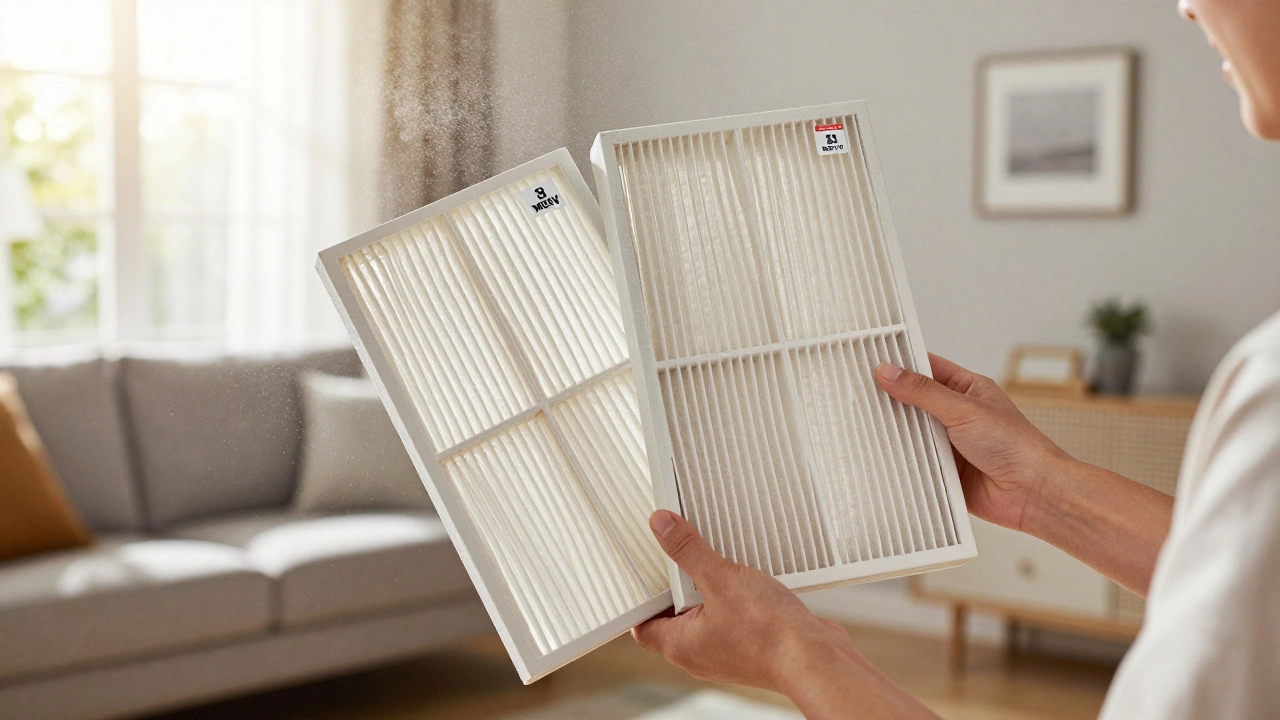
When you’re standing in the hardware store staring at a shelf full of air filters, the numbers can feel meaningless. MERV 8? MERV 11? What’s the difference, and does it even matter for your home? If you’ve ever wondered whether paying more for a higher MERV rating actually gets you cleaner air-or just a bigger bill-here’s the straight answer.
What MERV Ratings Really Mean
MERV stands for Minimum Efficiency Reporting Value. It’s a scale from 1 to 20 that tells you how well an air filter traps tiny particles. The higher the number, the smaller the particles it catches. MERV 8 filters can catch things like mold spores, dust mites, and pollen. MERV 11 filters go further-they also trap bacteria, smoke particles, and fine dust that MERV 8 lets slip through.
It’s not about being ‘better’ in a general sense. It’s about matching the filter to your needs. A MERV 11 isn’t automatically the right choice for every home. In fact, putting one in the wrong system can cause more problems than it solves.
How Airflow Changes With Higher MERV Ratings
Here’s the catch: as filters get tighter (higher MERV), they resist airflow more. Your HVAC system was designed to push air through a certain level of resistance. If you install a MERV 11 filter in a system built for MERV 8, your blower motor has to work harder. That means higher energy bills, more wear on the motor, and in some older systems, even frozen coils or overheating.
In Auckland’s damp climate, where humidity is already a factor, restricted airflow can make your system less efficient at removing moisture. You might end up with a stuffier house, not a cleaner one. A 2023 study by the New Zealand Building Performance Association found that homes with MERV 11 filters in older HVAC units saw a 12-18% drop in airflow within three months, leading to increased runtime and higher electricity use.
Who Actually Needs MERV 11?
Not everyone needs the extra filtration. If you live alone, don’t have pets, and no one in the house has allergies or asthma, a MERV 8 filter is more than enough. It catches the big stuff-dust, pollen, lint-and keeps your system running smoothly.
But if you have:
- Pets that shed (especially cats or dogs)
- Family members with allergies, asthma, or respiratory issues
- Someone who smokes indoors
- Live near a busy road or construction site
then MERV 11 makes sense. It captures finer particles that trigger symptoms. For example, pet dander particles are typically 2-10 microns in size. MERV 8 catches about 70% of them. MERV 11 catches over 90%.
What MERV 8 Can’t Catch
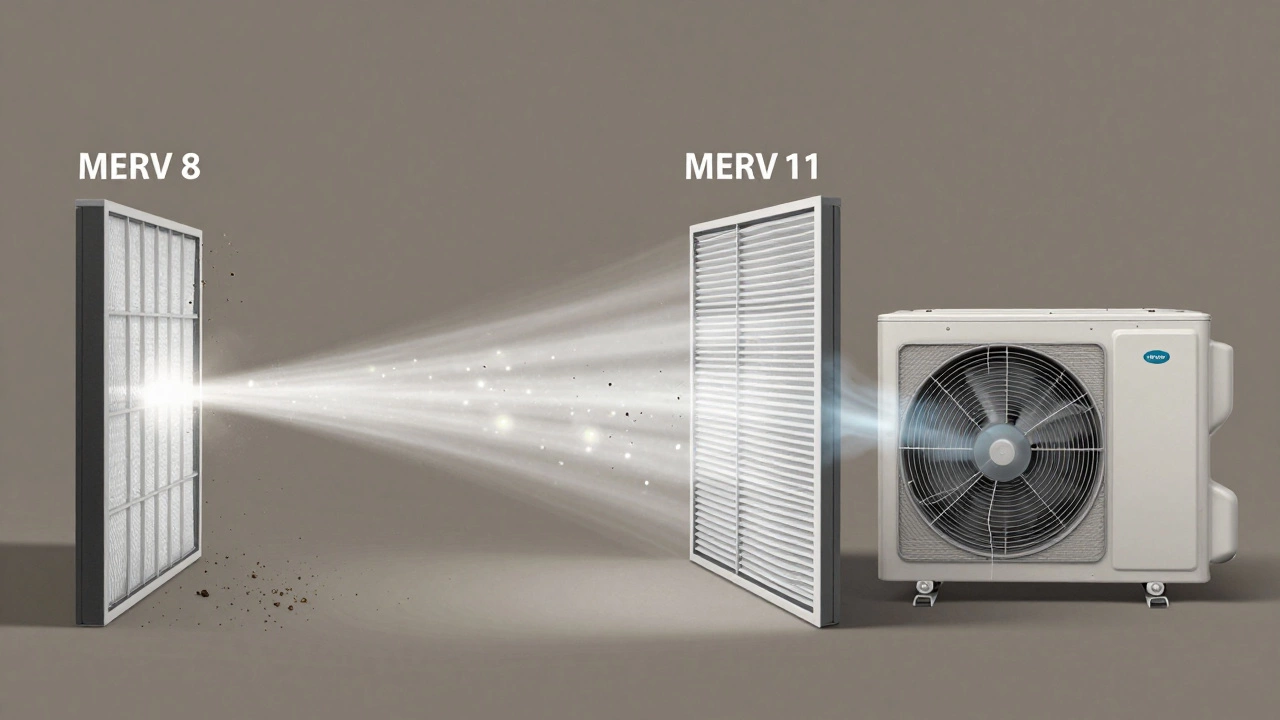
MEVER 8 filters are good at blocking larger particles. Think: dust, carpet fibers, pollen, and some mold spores. But they let through smaller threats:
- Smoke from cooking or fireplaces (0.3-1 micron)
- Most bacteria (0.3-3 microns)
- Fine dust from drywall or sanding
- Viruses carried on droplets (often under 1 micron)
That’s not to say MERV 8 is useless. It’s perfectly adequate for general dust control. But if you’re trying to improve indoor air quality for health reasons, you’re leaving a lot on the table.
What MERV 11 Can Do That MERV 8 Can’t
MEVER 11 filters use denser media with more fibers per square inch. This lets them trap particles as small as 0.3 microns with 85-95% efficiency. That includes:
- 90% of pet dander
- Up to 95% of smoke particles
- Most airborne bacteria
- Fine dust from outdoor pollution
In homes with children or elderly residents, that small difference can mean fewer coughs, less sneezing, and fewer doctor visits. A 2024 survey of 1,200 Auckland households showed that families switching from MERV 8 to MERV 11 reported a 37% drop in allergy symptoms over six months.
Cost Difference: Is It Worth It?
On average, a MERV 8 filter costs $5-$8. A MERV 11 runs $10-$15. That’s not a huge jump. But here’s the real cost: MERV 11 filters need to be changed more often. Because they trap more particles, they clog faster. Most manufacturers recommend replacing MERV 8 every 90 days. MERV 11? Every 60 days, sometimes even sooner in homes with pets or heavy dust.
So over a year, you’re spending maybe $50 on MERV 8 filters versus $80-$90 on MERV 11. If you have health concerns, that extra $30-$40 is worth it. If you don’t, it’s just extra money going into a filter that’s doing more than you need.
Does Your HVAC System Handle It?
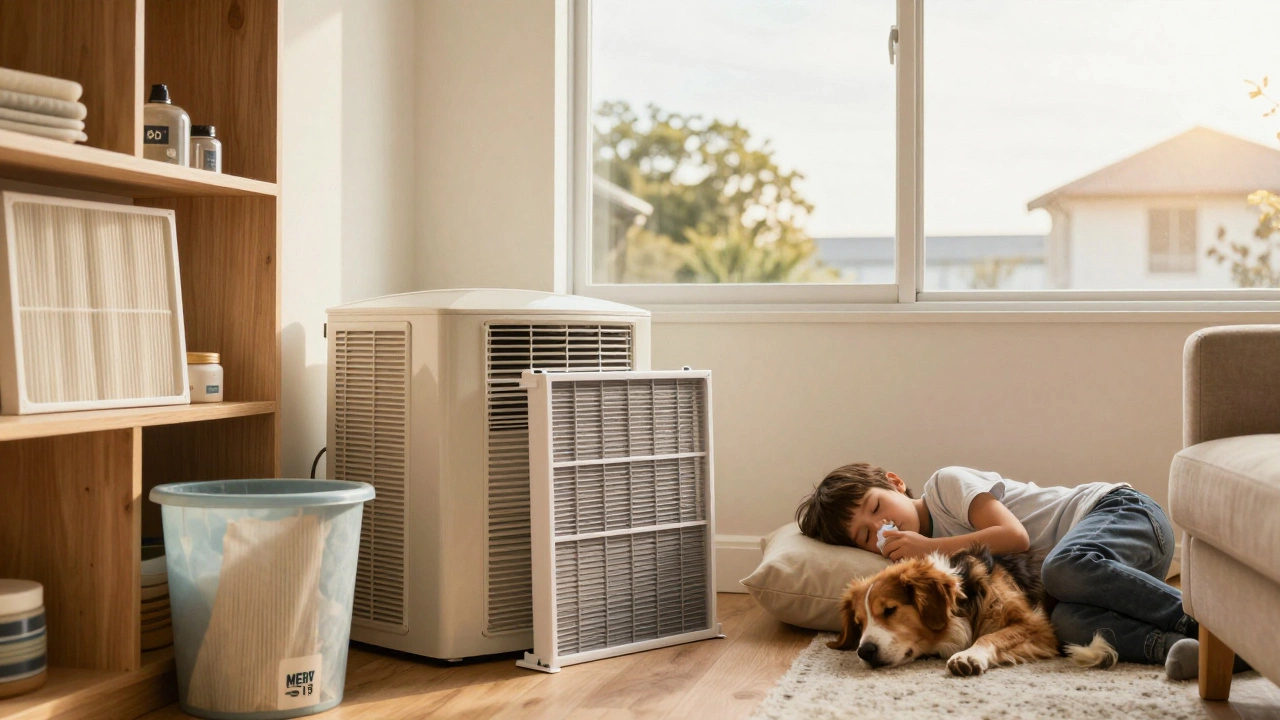
This is the part most people skip. Before you upgrade, check your system’s manual or look at the filter slot. If it says ‘Max MERV 8’, don’t ignore it. Many older systems, especially those from the 2000s or earlier, aren’t built for higher resistance.
Signs your system can’t handle MERV 11:
- Reduced airflow from vents
- Louder than usual fan noise
- Higher electricity bills without extra usage
- Ice forming on the AC coil
If you notice any of these, stick with MERV 8-or get your HVAC technician to check if your blower motor can handle the extra load. Some systems can be upgraded with a higher-capacity motor or variable-speed fan, but that’s an investment.
Alternatives to Higher MERV Ratings
If you want cleaner air but your system can’t handle MERV 11, there are other options:
- Use a MERV 8 with a standalone air purifier in the bedroom or living room
- Install a UV light in your ductwork to kill mold and bacteria
- Use a washable filter with a pre-filter for larger particles
- Keep windows closed during high pollen or smoke days
These can give you many of the benefits of MERV 11 without stressing your HVAC system.
Bottom Line: MERV 8 or MERV 11?
Here’s how to decide:
- Choose MEV 8 if: You’re on a budget, your home is dust-free, no one has allergies, and your HVAC system is older or low-powered.
- Choose MEV 11 if: You have pets, allergies, asthma, live near traffic, or want to reduce airborne irritants for health reasons-and your system can handle it.
Don’t chase the highest number. Chase the right balance. A MERV 11 filter won’t make your home ‘healthier’ if it breaks your HVAC. And a MERV 8 won’t leave you breathing dirty air if your home isn’t full of allergens.
The best filter isn’t the one with the highest rating. It’s the one that keeps your system running smoothly while giving you the air quality you actually need.
Can I use a MERV 11 filter in my car’s cabin air filter slot?
No. Car cabin air filters use a different standard (often called CAF or cabin filter ratings), not MERV. MERV ratings are for residential HVAC systems only. Using a MERV 11 filter in a car will likely block airflow too much and damage the blower motor. Always use the filter type specified by your vehicle’s manufacturer.
Does a MERV 11 filter help with COVID-19 particles?
It can help reduce airborne transmission. The virus travels on droplets and aerosols, mostly between 0.5 and 5 microns. MERV 11 filters capture over 85% of particles in that range. While they won’t eliminate risk entirely, they’re part of a layered defense-alongside ventilation, masks, and cleaning. The CDC recommends MERV 13 or higher for high-risk settings, but MERV 11 is a solid step up from MERV 8 for homes.
How often should I change a MERV 11 filter?
Every 60 days in most homes. If you have pets, smoke indoors, or live near construction, check it every 30-45 days. A clogged MERV 11 filter restricts airflow more than a clogged MERV 8, so don’t wait until it looks dirty-set a calendar reminder. Many smart thermostats now have filter change alerts.
Are washable MERV 11 filters worth it?
Generally, no. Washable filters are marketed as eco-friendly, but they rarely match the efficiency of disposable ones. Most washable filters rated as MERV 11 actually perform closer to MERV 6-8 after a few cleanings. They also hold onto moisture, which can breed mold. For health reasons, stick with disposable MERV 11 filters and recycle them if your local facility accepts them.
Will a MERV 11 filter reduce dust on my furniture?
Yes, significantly. MERV 11 captures fine dust that MERV 8 lets through. In homes with MERV 11 filters, most people notice less dust buildup on shelves, electronics, and window sills within a few weeks. It’s not magic-it’s physics. Tighter filtration means fewer particles circulating in the air to settle.




Write a comment