
Oil Addition Calculator
Check Your Engine Oil Safely
Determine the correct amount of oil to add based on your engine type and dipstick reading. Always turn off the engine before adding oil.
Current Oil Level
Results
Enter your dipstick reading and engine type to see safe addition amount.
Every time you check your engine oil, you wonder: should the engine be running when I add more? It’s a simple question, but the wrong answer can cost you money, time, or even your engine. Let’s cut through the noise and give you the straight truth - no fluff, no myths, just what actually works.
Why This Question Even Matters
Adding oil isn’t like topping up your windshield washer fluid. Engine oil circulates under pressure, heats up to over 100°C, and moves through tight clearances. If you get this wrong, you risk overfilling, inaccurate readings, or even engine damage. Most people think it’s fine to add oil while the engine is running because they’ve seen mechanics do it. But mechanics aren’t adding oil - they’re checking it after a warm-up, then refilling with the engine off.
The real issue isn’t safety - it’s accuracy. You’re not just adding oil. You’re trying to hit the right level on the dipstick. And that level changes depending on whether the oil is sitting in the pan or still swirling through the engine.
The Official Rule: Turn It Off
Every car manufacturer - from Toyota to Tesla - says the same thing: turn off the engine before adding oil.
Here’s why:
- When the engine is off, oil drains back into the oil pan. That’s where the dipstick measures from.
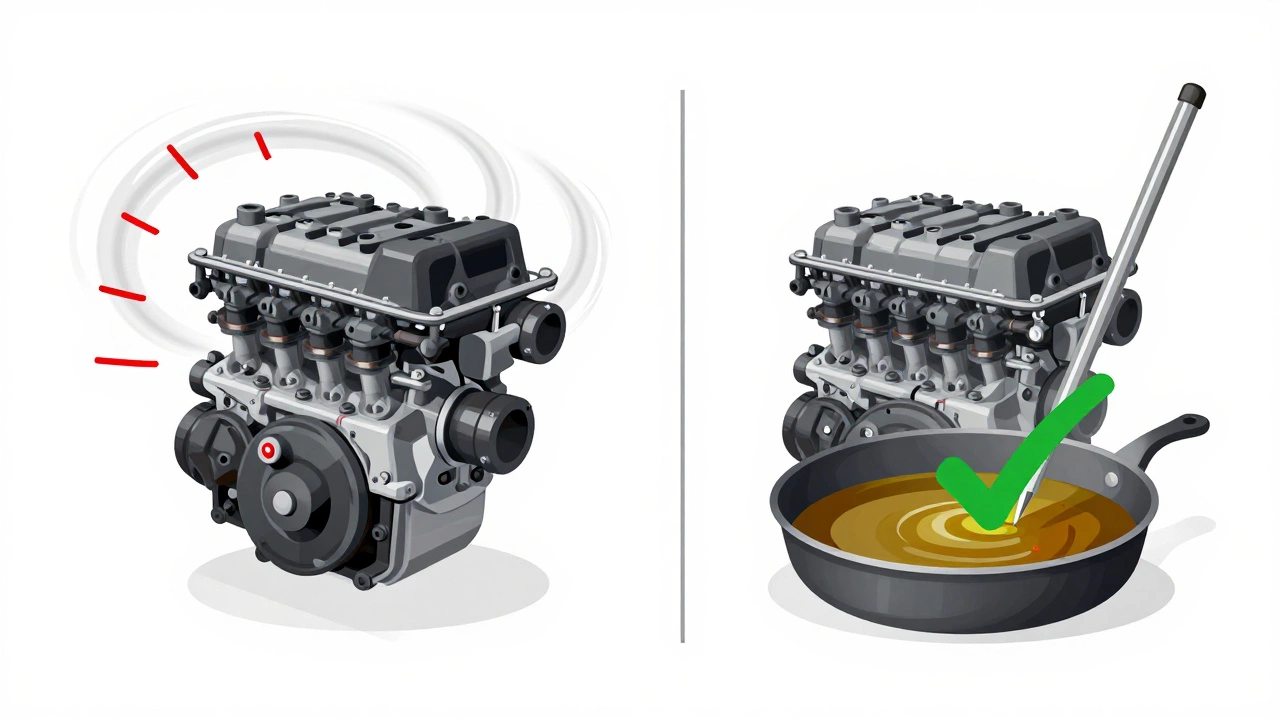
- If the engine is running, oil is being pumped into the valve train, timing chain, and other parts. The level in the pan drops temporarily, making you think you’re low - so you add more than needed.
- Overfilling by even half a quart can cause foaming, increased pressure, and damage to seals or the PCV system.
- Hot oil splashes. You’re not just risking a mess - you’re risking burns.
Even if your car manual doesn’t spell it out, the dipstick design assumes the engine is off. The markings are calibrated for a static oil level. Running the engine breaks that calibration.
What About Checking Oil? Should the Engine Be On Then?
Here’s where people get confused. Checking oil is different from adding it.
Most manufacturers recommend checking oil after the engine has been off for at least 5 minutes. Why? Because it takes time for oil to drain back into the pan. If you check right after driving, you’ll see a lower level - not because you’re low, but because oil is still in the upper parts of the engine.
So the correct sequence is:
- Drive the car for 5-10 minutes to warm the oil.
- Park on level ground.
- Turn off the engine and wait 5 minutes.
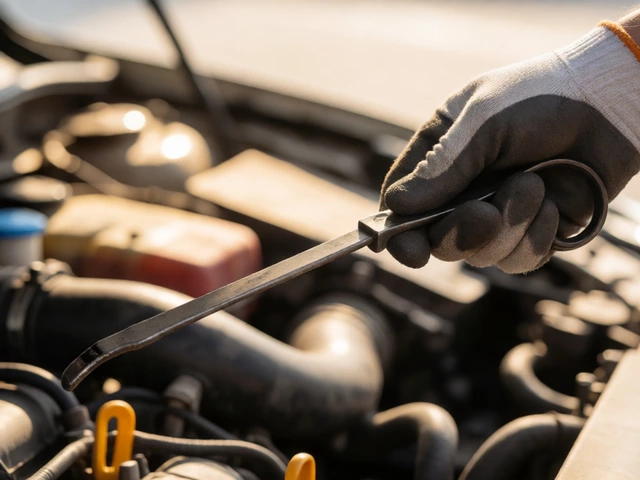
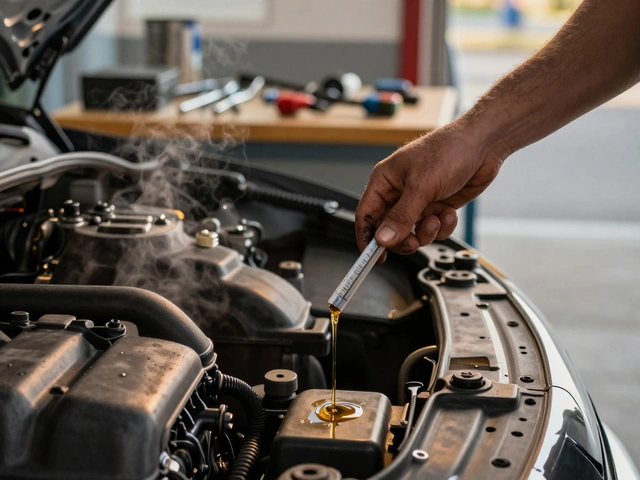
- Remove the dipstick, wipe it clean, reinsert, then pull it out again.
- If the level is below the low mark, add oil with the engine off.
That’s it. No shortcuts. No exceptions.
What Happens If You Add Oil With the Engine Running?
You might get away with it once. But here’s what’s likely to happen:
- Overfilling: The dipstick shows low because oil is circulating. You add a quarter liter. Then you check again - it’s still low. You add more. Now you’re 1 liter over. That’s enough to cause oil foaming, which reduces lubrication and can lead to bearing failure.
- Spills and burns: Hot engine parts can ignite spilled oil. You’re not just risking damage to your car - you’re risking fire.
- Inaccurate readings: Even if you don’t overfill, you’ll never know the real level. That means you’re guessing when to change oil next.
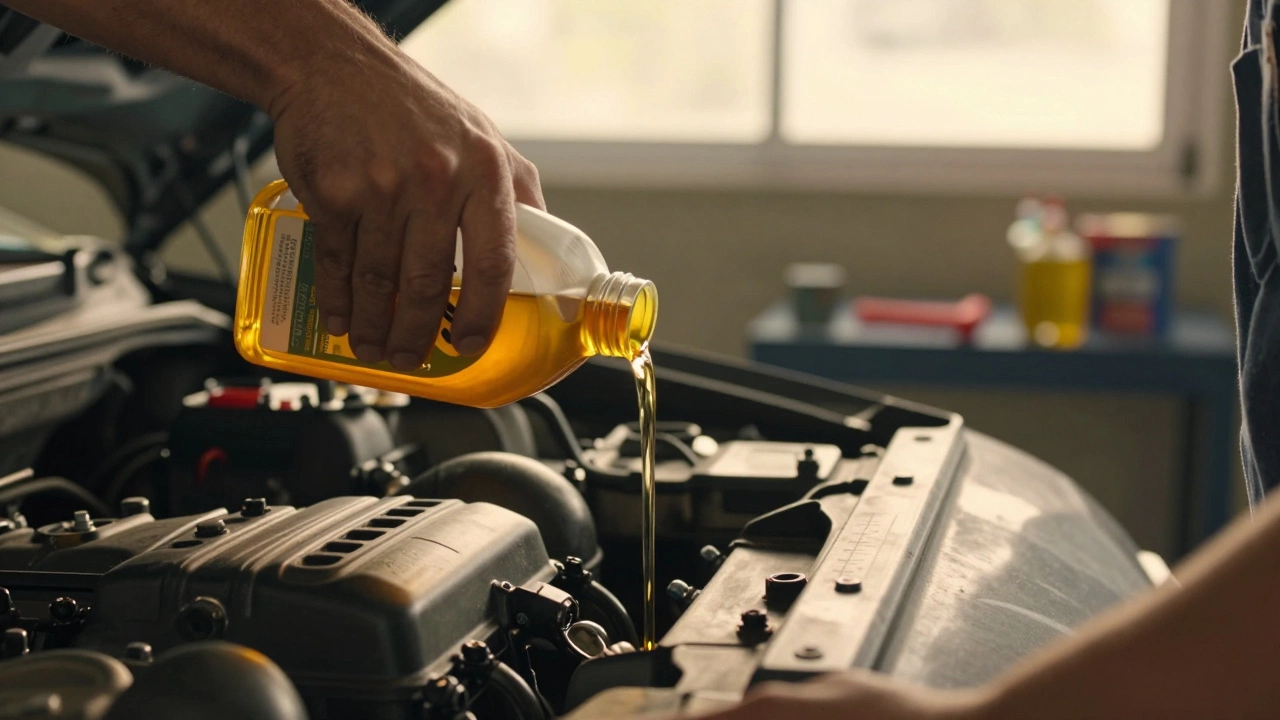
One mechanic in Auckland told me about a customer who added oil while the engine was running. He added 750ml, thinking he was just topping up. Two weeks later, the engine started smoking. Turned out the PCV valve was clogged from excess pressure. Repair cost: $1,800. All because he didn’t wait five minutes.
When Is It Okay to Add Oil While Running?
Short answer: never.
There’s no legitimate scenario where adding oil with the engine running is recommended. Not for performance cars. Not for diesel trucks. Not even for older models.
Some people say, “My dad always did it.” That doesn’t make it right. Older cars had simpler systems. Modern engines run tighter tolerances. A 2025 Toyota Corolla has oil clearances measured in microns. A tiny bit of excess oil can cause big problems.
And no, “I just added a little” doesn’t matter. Oil is dense. One tablespoon is 15ml. The difference between safe and dangerous is often less than 100ml.
How Much Oil Should You Add at Once?
Don’t go full jug. Most engines hold between 4 and 6 liters total. The dipstick usually has a range - low to full - that’s about 1 liter difference.
Here’s a simple rule: add no more than 250ml at a time. Then wait a minute, recheck. Repeat if needed.
Why? Because oil settles slowly. You might think you’re still low after adding 250ml, but if you wait 60 seconds, it’ll drain down and show you the real level.
Adding too much too fast is the #1 reason people overfill. And overfilling is harder to fix than being low. You need to drain it out - which means jacking up the car, removing a plug, and catching oil. Messy. Time-consuming. Expensive.
What If You’re Low and Need to Drive?
Let’s say you’re on the highway and the oil light comes on. You’re 20 minutes from home. Should you stop and add oil now?
Yes - but not while the engine is running.
Find a safe spot. Turn off the engine. Wait 5 minutes. Add oil. Then drive slowly to your destination. Don’t rev it. Don’t rush. Your engine can survive 20 minutes on low oil if you’re careful. But it won’t survive 20 minutes with too much oil or with oil that’s foaming.
Don’t risk it. Stop. Wait. Add. Drive.
Pro Tips for Oil Checks
- Use the same oil type and grade you already have in the engine. Mixing types isn’t dangerous in small amounts, but it’s not ideal.
- Check oil levels weekly, especially if you drive in stop-and-go traffic or extreme heat.
- Keep a small bottle of the right oil in your trunk. You never know when you’ll need it.
- Wipe the dipstick with a lint-free cloth. Paper towels leave fibers that can clog oil passages.
- Don’t trust the oil life monitor. It’s a calculator. It doesn’t know if you’ve been towing, idling, or driving on dusty roads.
Final Answer: Always Turn It Off
Adding oil with the engine running is a bad habit that’s easy to pick up - but hard to undo. It doesn’t save time. It doesn’t help the engine. It just makes mistakes more likely.
The right way is simple: warm up the engine, turn it off, wait five minutes, check the dipstick, add oil slowly, then recheck.
That’s it. No exceptions. No shortcuts. Just good habits that keep your engine running for 200,000 kilometers or more.
Can I add oil while the engine is warm but off?
Yes. In fact, that’s the best time. Warm oil flows better and gives a more accurate reading than cold oil. Just make sure the engine is turned off and you’ve waited 5 minutes after parking so the oil drains back into the pan.
What happens if I overfill the engine with oil?
Overfilling causes oil to foam and aerate, which reduces its ability to lubricate. It can also increase pressure in the crankcase, leading to leaks, damaged seals, or even a failed PCV valve. In severe cases, it can cause bearing damage or engine failure.
How often should I check my engine oil?
Check it every time you fill up with gas - that’s about every 500 to 800 kilometers. If your car is older, uses oil, or you drive in extreme conditions, check it weekly. Modern engines don’t burn oil like they used to, but leaks and consumption still happen.
Is it okay to add synthetic oil to conventional oil?
Yes, in an emergency. Synthetic and conventional oils are compatible. But it’s not ideal. Mixing them can reduce the performance benefits of synthetic oil. If you do it once, plan to do a full oil change soon after with the right type.
Why does my dipstick show low oil after I just added some?
You probably checked too soon. Oil takes 1-2 minutes to drain back into the pan after you add it. Wait at least 60 seconds, then recheck. If it’s still low, add another 50-100ml and wait again. Patience prevents overfilling.
What to Do Next
Next time you’re under the hood, remember this: oil doesn’t care how fast you’re in a hurry. It cares about being in the right place, at the right level, and at the right time.
Keep a bottle of oil in your glovebox. Check it weekly. Add it slowly. Always turn the engine off. These aren’t tips - they’re habits that turn average drivers into car owners who never worry about engine failure.
Your engine doesn’t need fancy upgrades. It just needs you to do the simple things right - over and over again.





Write a comment