Radiator Upgrade Cost-Benefit Estimator
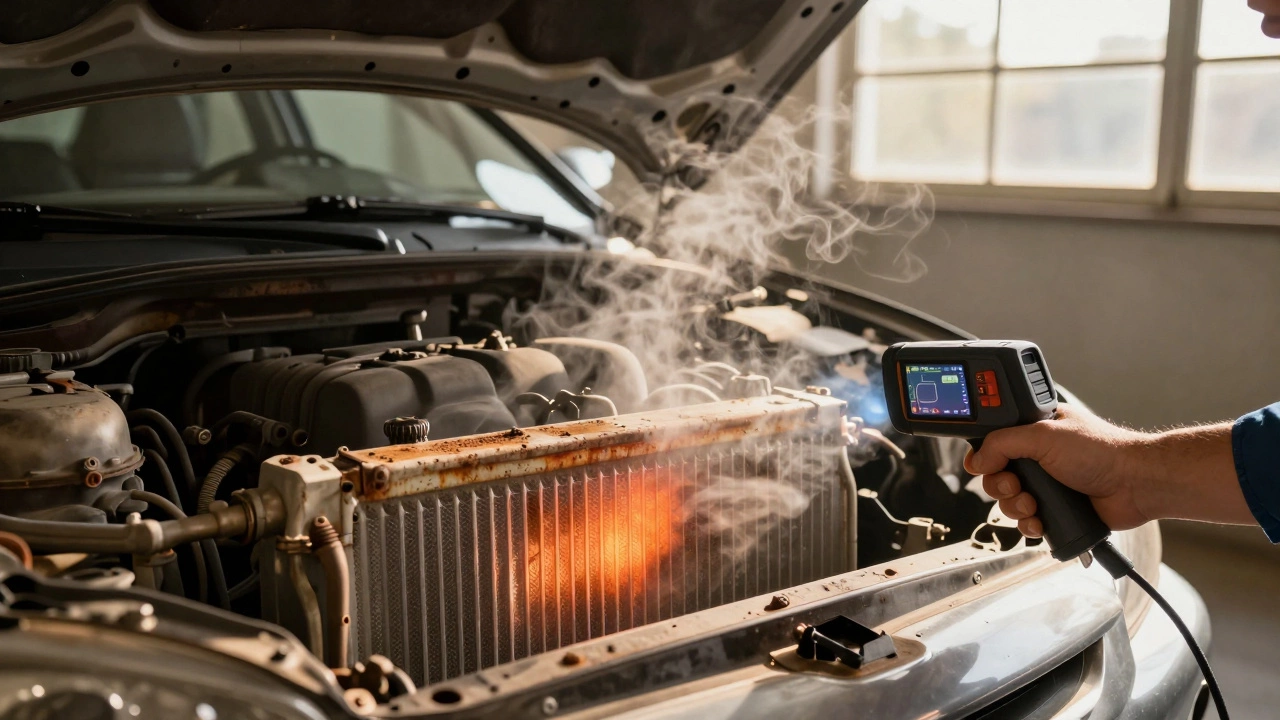
Is your car running hot? Do you hear that weird gurgling noise under the hood after a long drive? Maybe you’ve noticed the temperature needle creeping into the red zone on hot days. Before you blame the thermostat or toss in another bottle of coolant, ask yourself: is it worth upgrading your car radiator? The answer isn’t simple. It depends on how you use your car, what kind of radiator you have now, and whether your engine is even struggling in the first place.
Most cars don’t need a radiator upgrade
Let’s start with the truth most shops won’t tell you: 9 out of 10 stock radiators are perfectly fine for normal driving. Factory radiators are designed to handle the heat your engine produces under typical conditions-commuting, highway cruising, even towing a small trailer. If your car isn’t overheating, your radiator is doing its job. Upgrading it won’t make your car faster, more fuel-efficient, or more reliable.
But here’s where people get fooled. You see an aluminum racing radiator online, hear someone say it "keeps their Mustang cool on the track," and think, "That’s what I need." Chances are, you don’t. Stock radiators are built for balance: cost, size, weight, and cooling capacity. A bigger, more expensive unit might actually cause problems if your water pump or thermostat can’t move enough coolant through it. It’s like putting a firehose on a garden sprinkler system-it doesn’t help if the rest of the system can’t keep up.
When upgrading actually makes sense
There are real cases where a radiator upgrade isn’t just helpful-it’s necessary. These aren’t hypotheticals. They’re situations I’ve seen fix broken cars in Auckland’s summer heat:
- You’ve added a turbocharger or supercharger. Forced induction creates way more heat. A stock radiator can’t handle the extra thermal load, especially in stop-and-go traffic.
- You tow heavy loads regularly. A 2,000kg caravan in 30°C weather turns your engine into a furnace. Stock radiators were never meant for that kind of sustained stress.
- Your car has a history of overheating, even after replacing the thermostat, water pump, and hoses. If the radiator is old, clogged, or corroded, it’s not just inefficient-it’s failing.
- You drive in extreme climates. If you live in a place like Northland or the Bay of Plenty, where summer temps regularly hit 35°C and you’re stuck in traffic for hours, a high-efficiency radiator can be the difference between a smooth drive and a stranded car.
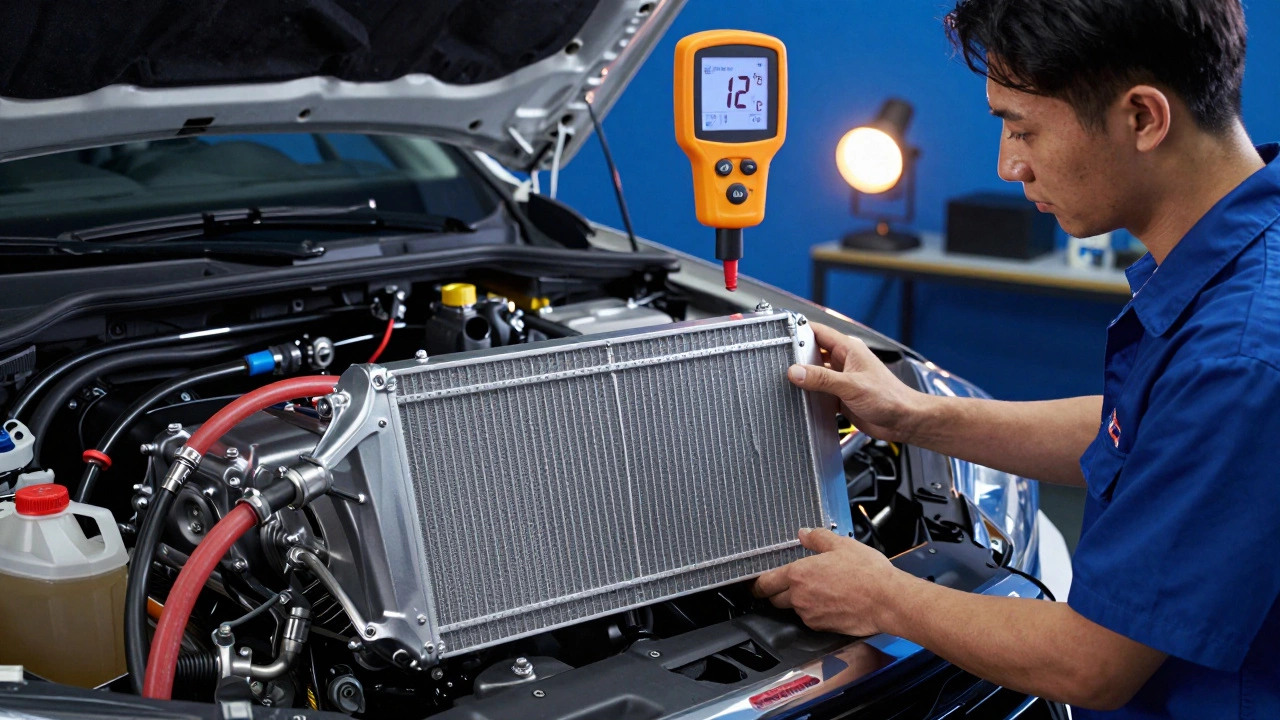
One client here in Auckland had a 2018 Toyota Hilux that kept boiling over on trips to the Coromandel. He’d replaced the thermostat twice. He flushed the system. Nothing worked. Turned out the factory radiator had internal corrosion blocking coolant flow. Swapping it for a dual-pass aluminum unit dropped his operating temp by 12°C. No more overheating. No more expensive repairs.
What makes a good upgraded radiator?
Not all "performance" radiators are created equal. Here’s what actually matters:
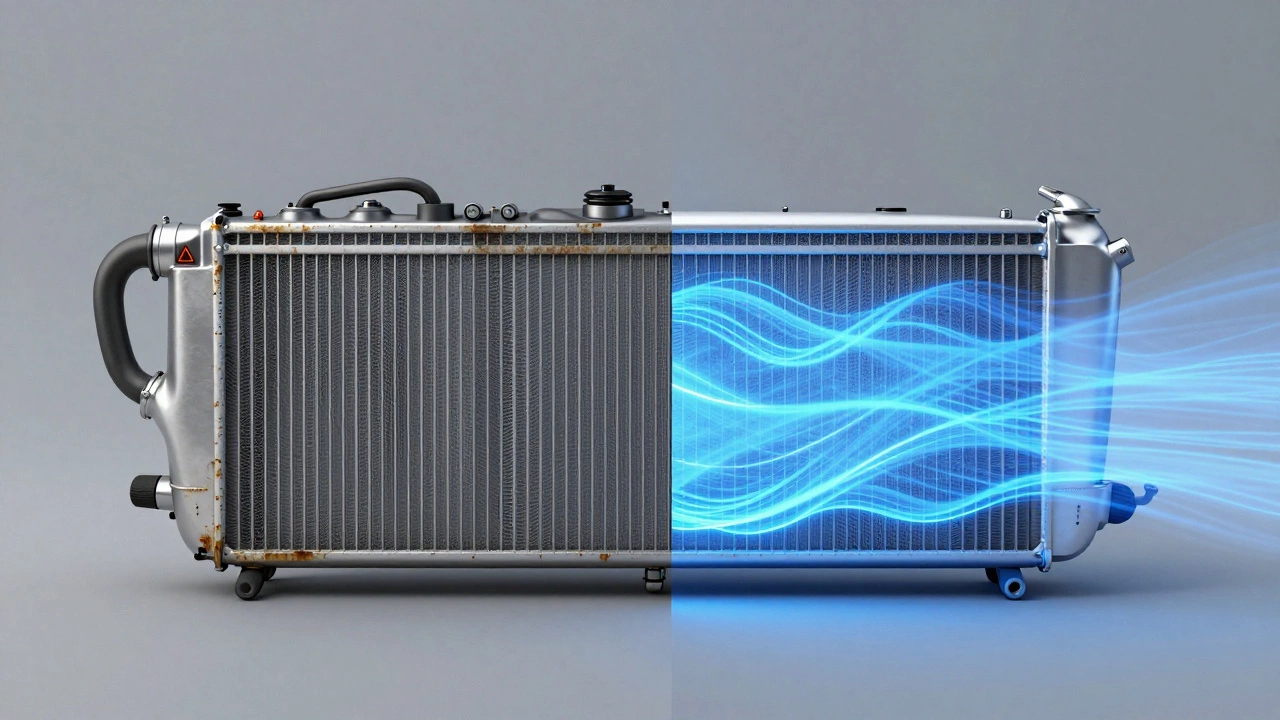
- Material: Aluminum is the standard upgrade. It’s lighter and transfers heat better than plastic and brass. Avoid "copper-brass" upgrades unless you’re restoring a classic-modern aluminum units are far more efficient.
- Core design: Look for dual or triple-pass cores. These force coolant through more cooling tubes, increasing surface contact. A single-pass core is just a bigger version of your stock radiator-no real improvement.
- Tube and fin count: More tubes and more fins per inch mean more heat dissipation. A radiator with 22 tubes and 18 fins per inch will outperform one with 14 tubes and 12 fins, even if they’re the same size.
- Fitment: Don’t buy a radiator that doesn’t match your car’s mounting points, hose locations, or fan clearance. A radiator that doesn’t fit properly is worse than a bad one.
Brands like BeCool, Koyorad, and Mishimoto are trusted by mechanics here because they design for specific models. Generic "universal" radiators are a gamble. I’ve seen them crack because the mounting brackets didn’t align, or the fan hit the fins. That’s not an upgrade-that’s a warranty void and a $1,200 repair.
Cost vs. benefit: Is it worth the money?
A stock radiator replacement costs between $250 and $500, including labor. A high-performance aluminum radiator? That’s $600 to $1,200. And if you need a new electric fan or upgraded hoses to match, add another $200-$400.
So is it worth it? Only if:
- You’re already spending money on repairs because of overheating.
- You’ve modified your engine for more power.
- You’re regularly pushing your car beyond factory limits.
If you’re just commuting to work, running errands, or taking weekend drives, spending $800 on a radiator is a waste. That money would be better spent on new tires, brake pads, or even a full coolant system flush-which fixes 70% of overheating issues without a single part upgrade.
What to do before you upgrade
Before you hand over your credit card, do this:
- Check your coolant level and condition. Old, rusty coolant kills radiators faster than anything else.
- Flush the entire cooling system. Debris and scale buildup can clog even a brand-new radiator.
- Test your thermostat. A stuck thermostat is the #1 cause of overheating-not radiator size.
- Inspect the fan and shroud. If the fan isn’t pulling air properly, no radiator will help.
- Use an infrared thermometer. Point it at the radiator inlet and outlet. If the difference is less than 15°C, your radiator isn’t transferring heat well.
If you’ve done all that and your car still runs hot, then yes-an upgrade might be your next step. But don’t skip the basics. Most people think they need a new radiator when they just need a $30 thermostat and a $70 coolant flush.
What happens if you ignore a failing radiator?
Overheating doesn’t just make your car stop. It destroys your engine. Here’s how:
- Head gaskets blow. That’s a $2,000-$4,000 repair.
- Engine blocks warp or crack. That’s a $5,000+ engine replacement.
- Oil breaks down from heat, losing lubrication. That’s bearing failure and seized pistons.
I’ve seen a 2012 Honda Civic turn into scrap metal because the owner kept driving it after it overheated. "It was just a little hot," they said. Two weeks later, the head gasket blew, and coolant mixed with oil. The engine seized on the motorway. Towing cost $180. The engine replacement cost $4,700.
A $700 radiator is cheap insurance against that kind of disaster-if you actually need it.
Final verdict
Upgrading your radiator isn’t a performance mod. It’s a repair for a system that’s under too much stress. If your car runs cool and you drive normally, leave it alone. Your factory radiator is good enough.
If you’re towing, modifying, or overheating repeatedly-then yes, upgrading is worth it. But don’t just buy the biggest, shiniest radiator on Amazon. Get one designed for your exact model. Have it installed by someone who knows cooling systems. And always fix the root cause first.
Because in the end, it’s not about having a better radiator. It’s about having a cooling system that works.






Write a comment