
Engine Oil Damage Estimator
How much oil do you have?
Driving with low engine oil isn’t just a minor oversight-it’s like running a marathon with no water. You might make it a few miles, but eventually, something breaks. And when it does, the damage isn’t cheap to fix.
What low oil actually does to your engine
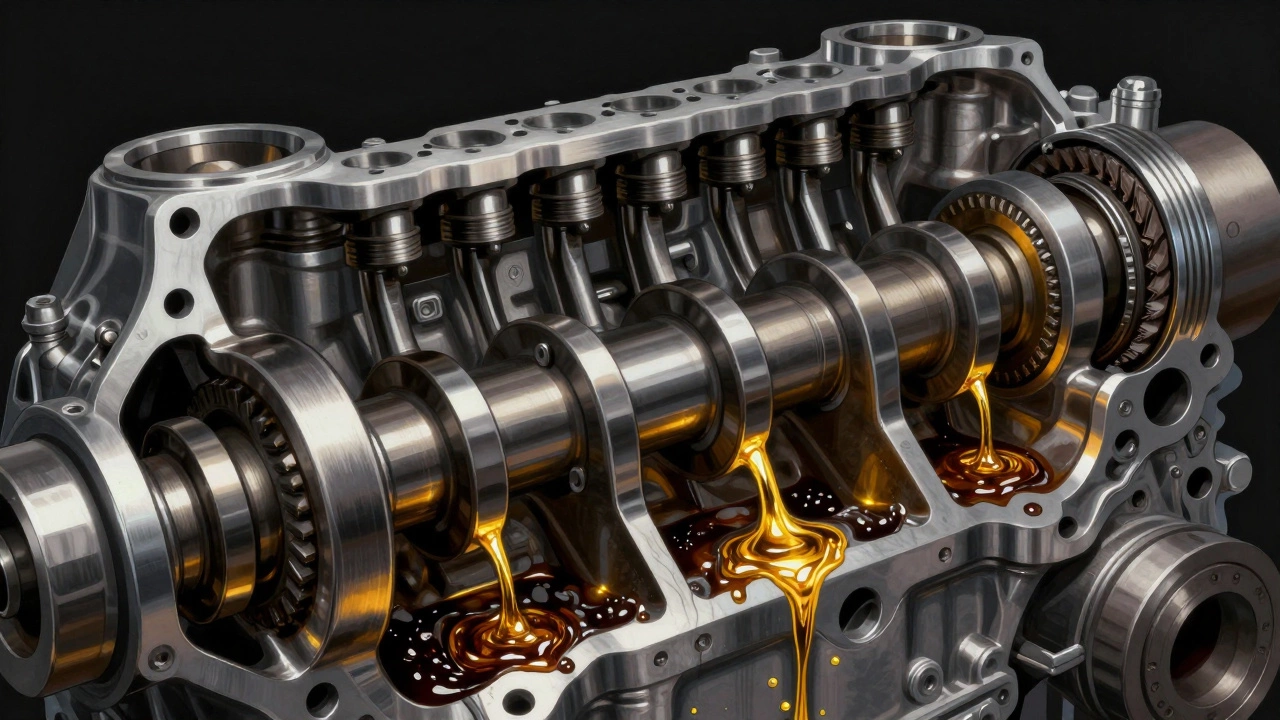
Engine oil isn’t just a lubricant. It cools, cleans, and protects dozens of moving parts inside your engine. When the oil level drops too low, those parts start grinding against each other. The crankshaft, connecting rods, camshafts, and valves all rely on a constant film of oil to glide smoothly. Without it, metal meets metal-and fast.
Modern engines run tight tolerances. That means even a tiny gap between parts is filled with oil. When oil levels drop, the oil pump can’t pull enough fluid to keep up. That’s when you hear the ticking or knocking sound-especially at startup. That’s not normal. That’s your engine screaming for help.
In New Zealand, where roads range from city streets to rough rural tracks, engine stress is common. A car with low oil on a long highway run or steep hill climb can overheat faster than you think. Oil helps absorb heat from the pistons and bearings. Less oil means less cooling. Temperatures can spike past 200°C in under 10 minutes, warping valves or seizing pistons.
The warning signs you can’t ignore
You don’t need a mechanic to tell you something’s wrong. Your car gives you clear signals:
- Oil pressure warning light-This red light isn’t a suggestion. It means oil pressure has dropped below safe levels. Stop immediately.
- Engine knocking or ticking-A rhythmic tapping noise, especially when cold, often means lifters or valves aren’t getting enough oil.
- Overheating-Even if your coolant looks fine, low oil can cause the engine to run hot. Oil helps transfer heat away from critical parts.
- Burning smell-If you smell hot oil or burning metal, it’s not your exhaust. It’s oil leaking onto hot surfaces or breaking down from extreme heat.
- Reduced performance-Your car feels sluggish, struggles to accelerate, or stalls under load. That’s the engine fighting to stay alive.
These signs don’t appear out of nowhere. They build up slowly. Many drivers ignore them because the car still “runs.” But running isn’t the same as running safely.
How quickly can damage happen?
There’s no magic number-like “50 km and it’s done.” But here’s what happens in real time:
- Within 5-10 minutes of driving with oil below the minimum mark, metal components start experiencing increased friction. Bearings begin to wear.
- At 15-20 minutes, temperatures rise sharply. Oil breaks down faster, losing its ability to protect. Sludge starts forming.
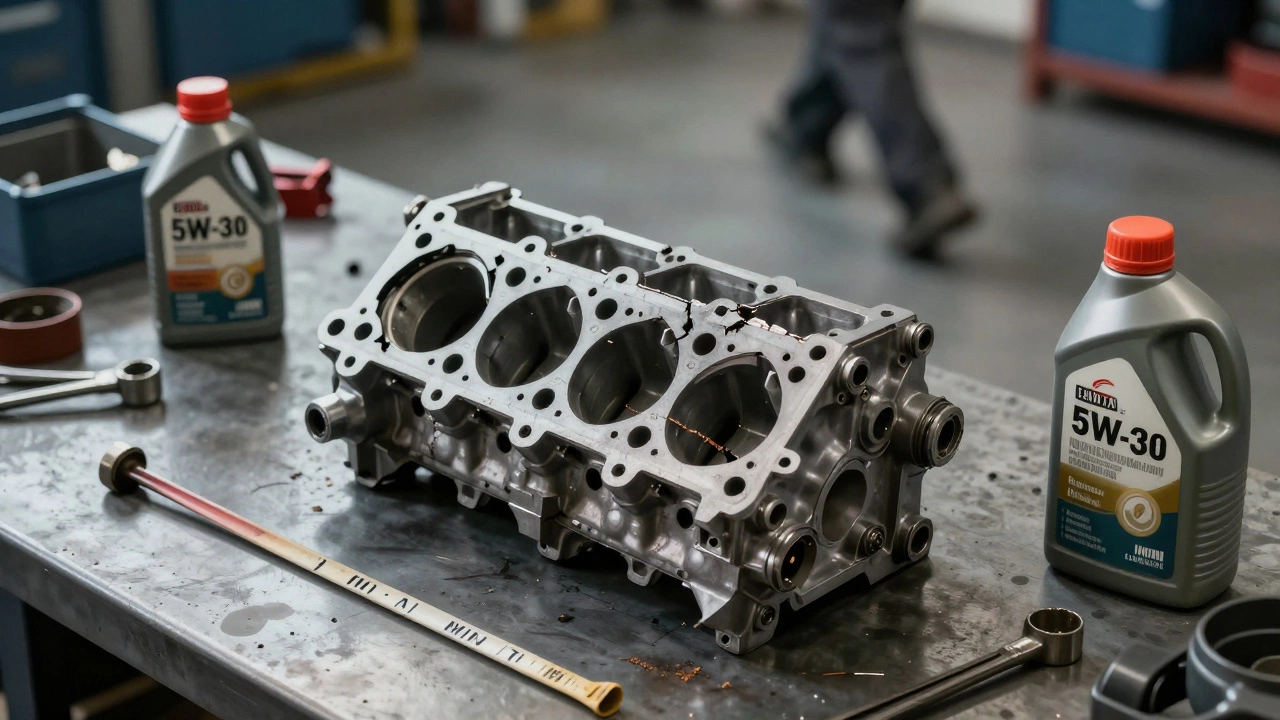
- By 30 minutes, irreversible damage is likely. A rod bearing can fail, causing the connecting rod to punch through the engine block. That’s a total engine replacement.
One mechanic in Christchurch told me about a driver who ignored the oil light for 45 minutes. The engine seized on the motorway. The tow truck cost $300. The new engine? $5,200. That’s not a repair. That’s a financial wreck.
Why oil levels drop in the first place
Low oil isn’t always about forgetting to check it. Here are the real reasons:
- Oil leaks-Worn gaskets, damaged seals, or loose drain plugs. A small drip under your car? Don’t ignore it. A leak that loses 0.5L every 1,000 km can drop you below safe levels in a month.
- Oil consumption-Older engines (over 100,000 km) naturally burn a bit of oil. If your car uses more than 1L every 2,000 km, it’s time for a check-up.
- Not changing oil often enough-Old oil turns to sludge. Sludge blocks oil passages. Even if the dipstick shows oil, it’s not flowing properly.
- Overfilling-Too much oil can cause foaming, which reduces lubrication. It’s rare, but it happens.
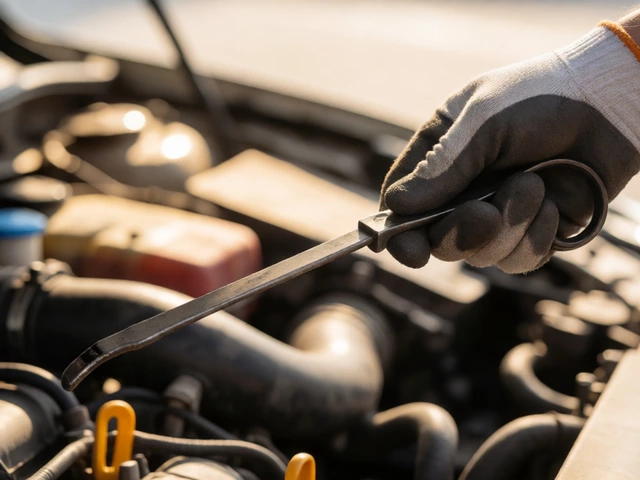
Check your oil every 1,000 km or before any long trip. It takes two minutes. Do it when the engine is cold and the car is on level ground. Pull the dipstick, wipe it clean, reinsert it, then pull it out again. The oil should be between the min and max marks. If it’s below min, top it up with the same type and grade your manual recommends.
What to do if you realize you’re low on oil
Don’t panic. But don’t delay either.
- Stop driving-If the oil light is on, pull over safely. Turn off the engine. Let it cool for 10 minutes.
- Check the level-Use the dipstick. If it’s below the minimum mark, you need oil.
- Add oil-Use the exact type your manual says. Most New Zealand cars use 5W-30 or 5W-40. Pour in half a litre at a time. Recheck. Don’t overfill.
- Find the cause-Is there a leak? Is the engine burning oil? Get it checked within the next 48 hours.
- Don’t drive far-Even after topping up, drive gently to the nearest garage. Avoid highways, hills, or heavy loads.
Never run on empty. Even adding oil after a long drive with low levels doesn’t undo the damage already done. But it stops it from getting worse.
How to prevent this from ever happening
Prevention is cheaper than repair. Here’s how:
- Check oil weekly-Make it part of your routine, like checking your tyres. Keep a bottle of the right oil in your boot.
- Follow oil change intervals-Most modern cars need an oil change every 10,000-15,000 km. But if you drive in dusty areas or short trips (under 10 km), change it every 8,000 km.
- Watch for leaks-Park on clean concrete after a drive. Look for dark spots. A small puddle means a big problem.
- Use quality oil-Cheap oil breaks down faster. Stick to reputable brands like Castrol, Shell, or Mobil 1. Synthetic oil lasts longer and protects better under stress.
- Know your car’s habits-If your 2015 Toyota Corolla uses 0.3L every 3,000 km, that’s normal. If your 2020 Honda Civic suddenly starts using 1L every 1,500 km, something’s wrong.
Most engine failures from low oil are preventable. It’s not complicated. It’s just consistent.
What happens if you ignore it long-term
Ignoring low oil doesn’t just risk a breakdown. It risks:
- Engine seizure-The pistons lock up. The engine stops dead. No restart. Total loss.
- Head gasket failure-Overheating from poor lubrication cracks the head gasket. Coolant mixes with oil. Expensive repair.
- Worn bearings-Crankshaft and connecting rod bearings wear down. The engine runs rough, vibrates, and loses power.
- Valve damage-Lifters and camshafts wear out. Timing gets off. Power drops. Emissions rise.
- Complete engine replacement-At this point, you’re looking at $4,000-$8,000 for a new or rebuilt engine. That’s more than the value of many older cars.
Some people think, “My car’s old, why spend money?” But a $10 oil top-up today saves you $5,000 tomorrow. That’s not a choice. It’s common sense.
Can I just add any oil to my engine?
No. Always use the oil type and viscosity your owner’s manual specifies. Mixing different types-like synthetic with conventional, or 5W-30 with 10W-40-can cause poor lubrication or sludge buildup. If you’re unsure, check the cap on your oil filler or look up your car’s specs online using your VIN.
How often should I check my engine oil?
Check it at least once a week, especially if your car is over 8 years old or has over 100,000 km. If you’re planning a long trip, check it the night before. Newer cars with oil life monitors are helpful, but they don’t replace physical checks. Sensors can fail. Your dipstick won’t.
If the oil light comes on, should I keep driving?
No. Stop as soon as it’s safe. Driving with the oil light on can destroy your engine in minutes. Even if the car still runs, internal damage is already happening. Call a tow truck. It’s better than paying for a new engine.
Can low oil cause the check engine light to come on?
Yes. Low oil pressure triggers multiple sensors. The engine control unit may log codes like P0521 (oil pressure sensor range/performance) or P0522 (low oil pressure). The check engine light can come on even if the oil light hasn’t yet. Don’t wait for the red light-yellow means trouble too.
Is it safe to drive after adding oil?
Yes, but only if you’ve topped up correctly and the oil light went off. Drive gently for the next 20-30 km-avoid hard acceleration or high speeds. Then get the car checked. Low oil is a symptom, not the problem. You need to find out why it was low in the first place.
Final thought: It’s not about being perfect. It’s about being consistent.
You don’t need to be a mechanic to save your engine. You just need to check the oil once a week. Keep a bottle in your glovebox. Know where the dipstick is. Learn what normal looks like for your car.
Most engine failures happen because someone thought, “I’ll check it tomorrow.” Tomorrow never comes. But the damage does.



Write a comment