Wiper Visibility Risk Calculator
Enter your current speed and weather conditions to see how much visibility is reduced and what your accident risk is when a windshield wiper isn't working.
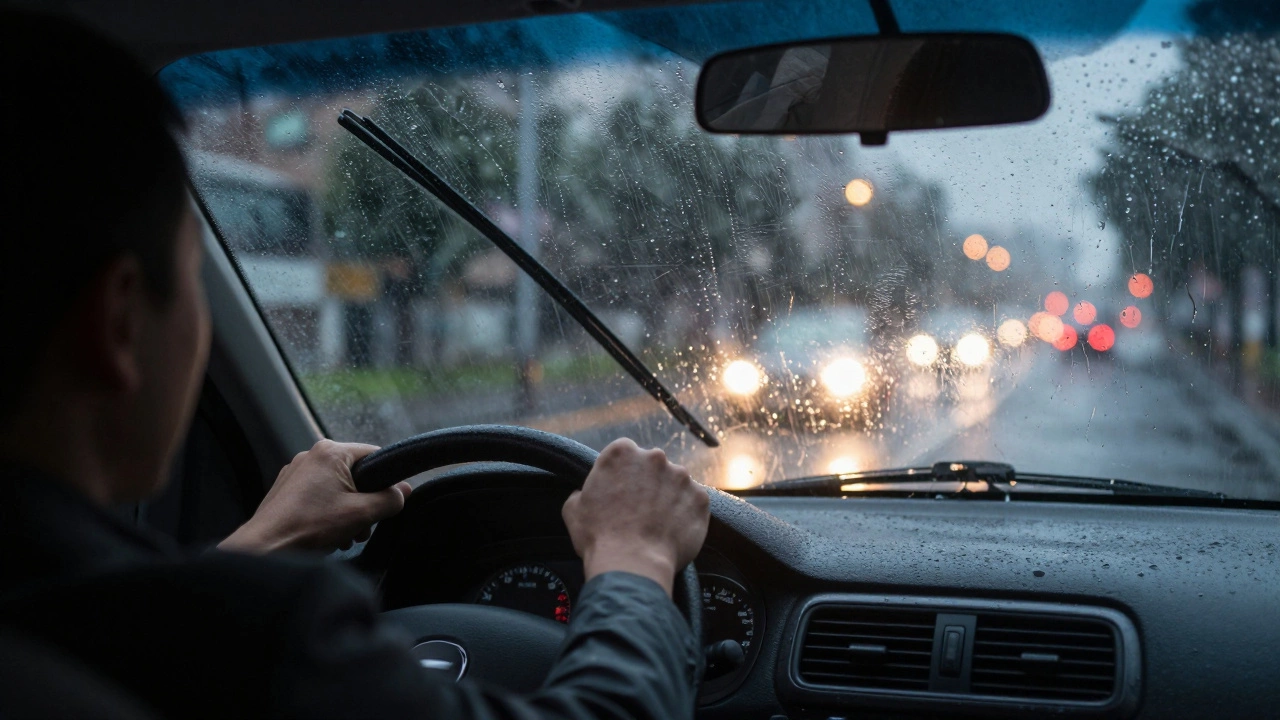
You’re driving home in the rain. The wiper on your driver’s side suddenly stops. It’s not clicking. It’s not moving. Just a dead arm stuck halfway across the glass. You glance at the passenger side-it’s still working. But your view? Gone. You’re flying blind through a blur of water, streetlights, and headlights. Can you keep going? Should you? And what happens if you get pulled over?
Driving without a working wiper is illegal in most places
In New Zealand, under the Land Transport (Road User) Rule 2004, your vehicle must have at least one functional windscreen wiper on the driver’s side. That’s not a suggestion. It’s a legal requirement. The same rule applies in Australia, the UK, Canada, and across the EU. In the U.S., every state requires at least one working wiper for the driver’s view. Failure to comply can get you fined-often between $100 and $300 depending on the region.
It’s not just about getting a ticket. If you’re involved in an accident and the police find your wiper was broken, insurance companies can deny your claim. They’ll argue you failed to maintain your vehicle in a safe condition. That’s negligence. And negligence doesn’t look good in court-or on your record.
What happens when you can’t see?
At 60 km/h in light rain, your visibility drops by 60%. In heavy rain? You’re seeing less than 15 meters ahead. That’s about the length of two parked cars. At night, with wet roads reflecting headlights, it’s worse. Your brain tries to fill in the gaps, but it can’t. Your reaction time slows. You miss road signs. You misjudge the distance to the car in front. You don’t see a cyclist until it’s too late.
A 2023 study by the Transport Research Laboratory in the UK found that drivers with a single non-functional wiper were 3.2 times more likely to make a critical error in low-visibility conditions than those with fully working wipers. Those errors? Lane drift, late braking, misjudging turns. Not theoretical. Real crashes. Real injuries.
It’s not just the driver’s side that matters
You might think, “I can manage with just the passenger-side wiper.” But that’s a dangerous myth. Windscreen wipers are designed to work together. One wiper clears the driver’s view. The other clears the rest of the glass-but it also helps reduce water buildup on the driver’s side by directing flow away. Without the driver’s wiper, water pools right where you need to see. Even if you’re using the passenger-side wiper, you’re still staring through a smeared, streaked mess.
And don’t count on rain repellents. Products like Rain-X help in light drizzle, but they don’t replace wipers. In steady rain, they make streaks worse. In heavy downpours, they’re useless. They’re a convenience, not a solution.
What if both wipers fail?
If both wipers stop working, you’re not just at risk-you’re in immediate danger. The windshield is your primary visual input. Without it, you’re driving blind. No amount of caution, slow speed, or “just getting to the next light” makes this safe.
Some people try to crack the window open to let air clear the glass. That works for mist. Not for rain. Water rushes in. You’re soaked. Your electronics short. Your seat gets moldy. And you still can’t see.
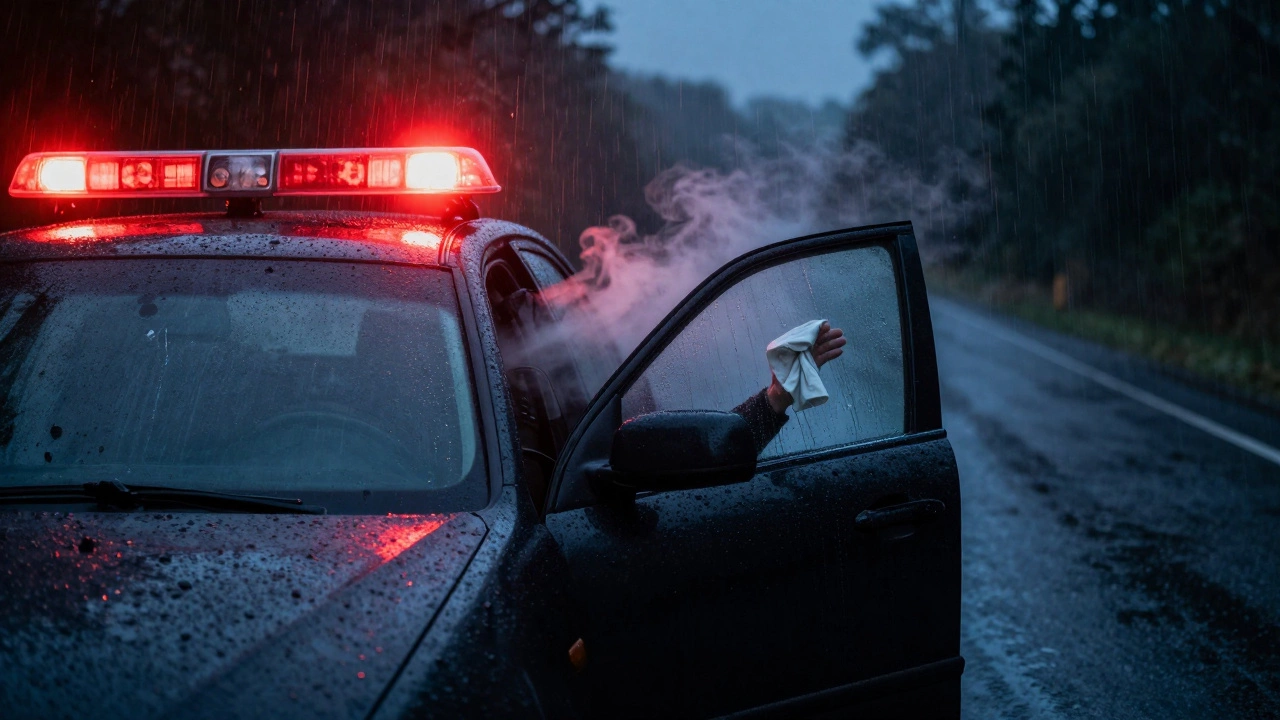
Others try wiping the glass with a rag. That’s worse. You’re taking your eyes off the road. You’re smearing grime. You’re creating blind spots. And you’re doing it at 80 km/h. That’s not bravery. That’s a death wish.
Why do wipers fail?
Wipers don’t just break out of nowhere. They wear out. The rubber blade hardens after 6-12 months of sun, cold, and dirt. The metal arms get bent from ice or snow. The motor burns out from overuse. The fuse blows. The linkage snaps.
Most people ignore the signs: streaking, chattering, skipping, or one side moving slower than the other. They wait until it stops completely. By then, it’s too late. You’re already on the road, in bad weather, with no backup.
What to do when your wiper dies
Here’s what actually works:
- Stop driving as soon as it’s safe. Pull into a parking lot, gas station, or side road. Don’t wait for the next exit.
- Turn on your hazard lights. Even if it’s not raining, other drivers need to know you’re compromised.
- Call for roadside assistance. Most insurance plans include this. If you don’t have it, a tow truck will cost less than a fine or a hospital bill.
- If you’re in a hurry and have a spare blade, replace it yourself. It takes 5 minutes. No tools needed. Just pop off the old one, snap in the new one.
- Never drive with a broken wiper unless it’s an absolute emergency-and even then, you’re gambling with lives.
How to prevent this from happening
Check your wipers every 6 months. Do it in spring and fall. Look for:
- Cracks or splits in the rubber
- Stiffness or curling at the edges
- Streaks when you spray washer fluid
- Noisy operation
Replace them before winter. Ice and snow are brutal on blades. And don’t wait for the first rainstorm to realize they’re gone.
Keep your washer fluid full. Dirty fluid grinds grit into the glass and accelerates blade wear. Use a quality fluid with anti-freeze in colder months.
Wipe your windshield with a microfiber cloth once a month. Remove bugs, tree sap, and road grime before they bake into the glass. That reduces the strain on your blades.
Is it ever okay to drive without a wiper?
No.
There’s no scenario where driving without a working wiper is safe or legal. Not in light rain. Not in fog. Not even if you’re going 10 km/h. The law doesn’t make exceptions for “just a quick trip.” The science doesn’t allow for “I’m a good driver.”
Wipers aren’t a luxury. They’re a lifeline. Just like brakes or tires. You wouldn’t drive with bald tires or broken brakes. Don’t drive with broken wipers.
What if you’re in a remote area with no help?
If you’re in the countryside, far from help, and your wiper fails in heavy rain, your best option is to stop and wait. Pull off the road. Turn on your hazards. Stay inside. Call for help if you have signal. Use your phone’s flashlight to clean the glass if you must-but don’t drive.
It’s better to be late than dead. And it’s better to wait an hour than spend a week in the hospital.
Most breakdowns happen because people think they can push through. They can’t. Not when their vision is gone.
Final thought: It’s not about the wiper. It’s about your eyes.
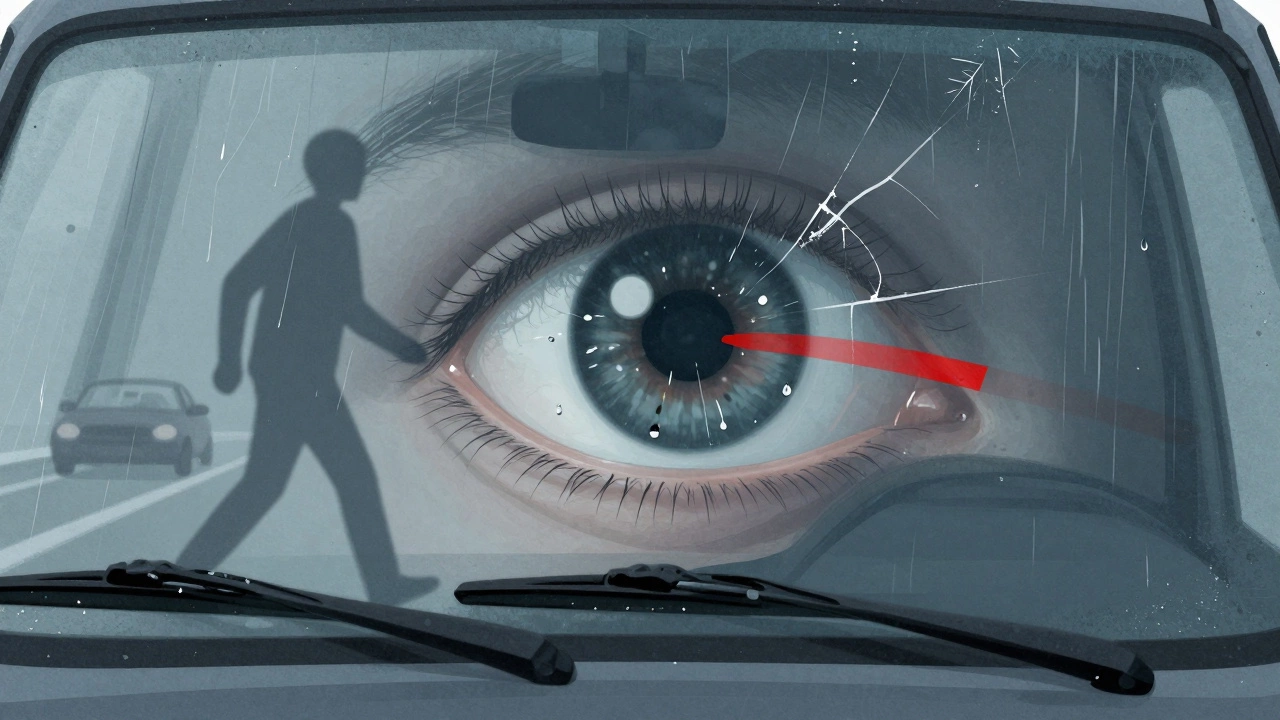
Your eyes are your most important tool behind the wheel. The wiper protects them. Without it, you’re driving with your eyes taped shut. No skill, no experience, no reflexes can compensate for that.
Replace the blade. Fix the motor. Get it checked. Don’t wait. Don’t hope. Don’t risk it.
Because when the rain comes-and it always does-you’ll wish you had.
Can I drive with one broken wiper?
No. In most countries, including New Zealand, Australia, the UK, and the U.S., you’re required by law to have at least one fully functional windscreen wiper on the driver’s side. Driving with a broken wiper is illegal and can result in fines, insurance denial, or liability in an accident-even if the other driver was at fault.
How often should I replace my windshield wipers?
Replace them every 6 to 12 months, depending on climate and usage. If you live in a place with harsh sun, heavy rain, or snow, replace them sooner. Signs they need replacing include streaking, chattering, smearing, or visible cracks in the rubber blade.
Can I use a rag or paper towel to clean the windshield instead?
No. Wiping the windshield manually while driving is extremely dangerous. It takes your eyes off the road, smears dirt and grime, and creates blind spots. Rain repellents like Rain-X help in light conditions but are not a substitute for functional wipers in steady or heavy rain.
What causes wipers to stop working?
Wipers fail due to worn rubber blades, bent arms, motor burnout, blown fuses, or broken linkages. Most often, it’s the rubber blade-exposed to UV rays, dirt, and temperature extremes-that degrades over time. Ignoring early signs like squeaking or streaking leads to sudden failure.
Is it safe to drive in light rain without wipers?
No. Even light rain reduces visibility by up to 60%. Water builds up on the glass, and without wipers, you’re seeing through a smeared, distorted view. Your reaction time slows, and you’re more likely to miss hazards like pedestrians, signs, or vehicles changing lanes.
Will my insurance cover an accident if my wiper was broken?
Probably not. Insurance companies can deny claims if they determine you failed to maintain your vehicle properly. A broken wiper is considered a preventable maintenance issue. Even if you weren’t at fault, your claim may be reduced or rejected entirely.
Can I drive without wipers in dry weather?
Technically, you might not be breaking the law if there’s no rain or debris on the windshield. But it’s still risky. Dust, bugs, pollen, or sudden weather changes can obscure your view instantly. Most laws require wipers to be functional at all times, regardless of current conditions. It’s not worth the risk.




Write a comment