
Brake Pad Cost Estimator 2025
Calculate Your Brake Pad Costs
Replacing brake pads isn’t just a routine maintenance task-it’s a safety decision. If your brakes are squealing, vibrating, or taking longer to stop, those worn pads could be the reason. But before you head to the shop, you’re probably wondering: how much should 4 brake pads cost? The answer isn’t simple. It depends on your car, where you live, and whether you’re buying cheap or quality parts. In New Zealand, especially in cities like Auckland, brake pad prices vary widely. Let’s cut through the noise and give you real numbers you can use today.
What You’re Actually Paying For
When you buy a set of four brake pads, you’re not just paying for the friction material. You’re paying for the backing plate, the hardware kit (if included), the coating that reduces noise, and the engineering behind how it performs under heat and pressure. A $30 set of brake pads might look tempting, but they often wear out in 15,000 km. A $120 set might last 60,000 km and stop your car 20% faster in wet conditions.
Brake pads come in three main types: organic, semi-metallic, and ceramic. Organic pads are the cheapest but wear fast and create a lot of dust. Semi-metallic are tougher, handle heat better, and are common on SUVs and heavier vehicles. Ceramic pads are the premium choice-they’re quiet, last longer, and produce almost no dust. Most modern cars from 2015 onward come with ceramic pads from the factory.
Price Range for 4 Brake Pads in New Zealand (2025)
Here’s what you’ll realistically pay for a full set of four brake pads, installed or not, depending on your car type and part quality:
- Entry-level (organic or basic semi-metallic): $60-$100 for parts only. These are often sold as generic or no-name brands. Suitable for older, low-mileage city cars like a 2008 Toyota Corolla.
- Mid-range (quality semi-metallic or ceramic): $120-$200 for parts only. Brands like Bendix, Akebono, or Textar. These are the sweet spot for most drivers-good performance, decent lifespan, and reliable stopping power.
- Premium (OEM-equivalent ceramic): $220-$350 for parts only. These are made to match factory specs. Brands like Brembo, Pagid, or genuine parts from Toyota, Ford, or Hyundai. Ideal for performance cars, heavy SUVs, or if you drive frequently on highways or mountain roads.
Remember: these are parts-only prices. If you’re getting them installed, add $80-$180 for labor, depending on the shop and your vehicle. Some places bundle the hardware and rotor inspection into the price. Others charge extra for caliper service or brake fluid flush.
How Your Car Affects the Price
Not all cars need the same brake pads. A small hatchback like a Suzuki Swift uses smaller, lighter pads. A large 4WD like a Toyota Land Cruiser or Ford Ranger uses heavier-duty components. Here’s a quick breakdown by vehicle type:
| Vehicle Type | Parts Only (Entry) | Parts Only (Mid) | Parts Only (Premium) |
|---|---|---|---|
| Compact Car (e.g., Honda Jazz, Hyundai i20) | $50-$80 | $100-$140 | $180-$250 |
| Sedan (e.g., Toyota Camry, Ford Falcon) | $70-$110 | $130-$180 | $200-$300 |
| SUV / 4WD (e.g., Toyota RAV4, Ford Everest) | $90-$140 | $160-$230 | $250-$380 |
| Performance / Luxury (e.g., BMW 3 Series, Audi A4) | $120-$180 | $200-$300 | $300-$450 |
European and luxury vehicles often require specific brake pad shapes, sensors, or electronic calibration. That’s why genuine OEM parts for a BMW can cost nearly double what a Honda part costs-even if they look similar.
Where to Buy and Why It Matters
You can buy brake pads from auto parts stores (Repco, Supercheap Auto), online retailers (Amazon, eBay), or directly from a mechanic. Each has trade-offs.
Auto parts stores offer decent brands with warranties. You’ll usually get a 12-month guarantee on Bendix or EBC pads. The staff can help match your vehicle model, and you can pick them up same day.
Online retailers are cheaper, but risky. A $45 set on eBay might be counterfeit or recycled. I’ve seen brake pads with mismatched friction material thickness that caused uneven braking. Always check reviews and seller ratings. Look for sellers who list the part number and brand clearly.
Independent mechanics often source their own parts. Some use quality brands at fair prices. Others push expensive OEM parts because they make more profit. Ask: “What brand are you using? Can I see the box?” A good mechanic will show you the packaging and explain why they chose that pad.
What’s Included in a Full Brake Job?
Don’t assume that replacing pads is all you need. A full brake service should include:
- Inspection of brake rotors (are they warped or worn below minimum thickness?)
- Replacement of brake hardware (caliper pins, springs, shims)
- Caliper lubrication (old grease causes sticking)
- Brake fluid check (fluid absorbs moisture over time-should be flushed every 2 years)
- Test drive to confirm smooth, quiet operation
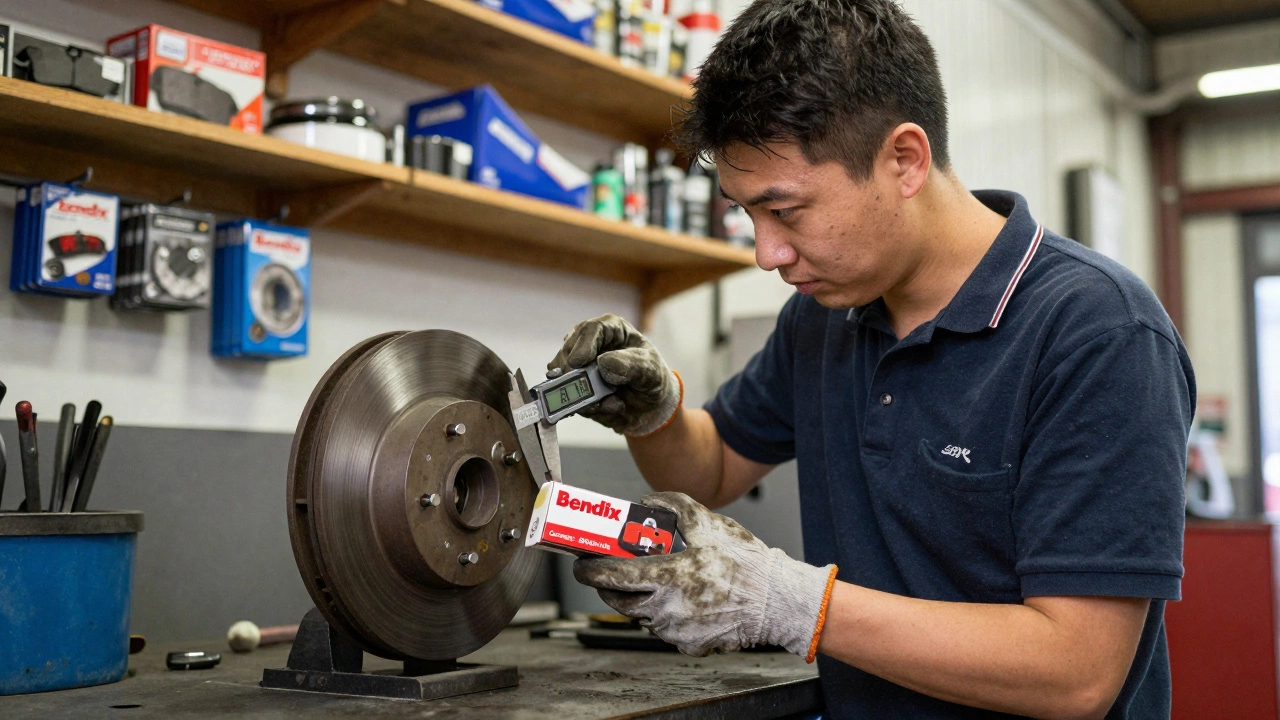
Some shops will try to upsell you on new rotors. If your rotors are still above the minimum thickness and not scored or warped, you don’t need them. A good mechanic will measure them with a micrometer and show you the numbers.
Signs You’re Being Overcharged
Here are red flags that tell you you’re being taken for a ride:
- They say “your rotors are worn” but won’t show you the measurement.
- They quote $500+ for brake pads and labor on a 2015 Hyundai i30.
- They use “OEM-quality” as a buzzword without naming the brand.
- They don’t offer a warranty on parts or labor.
- You’re told the job will take 4 hours on a simple sedan.
On average, replacing brake pads on a standard car takes 1.5 to 2.5 hours. Labor rates in Auckland range from $85-$120/hour. So $180-$300 for labor and parts combined is fair for mid-range parts. Anything over $450 for a regular car? Get a second opinion.
When to Replace Brake Pads
Don’t wait until you hear metal grinding. That’s not just expensive-it’s dangerous. Signs your pads need replacing:
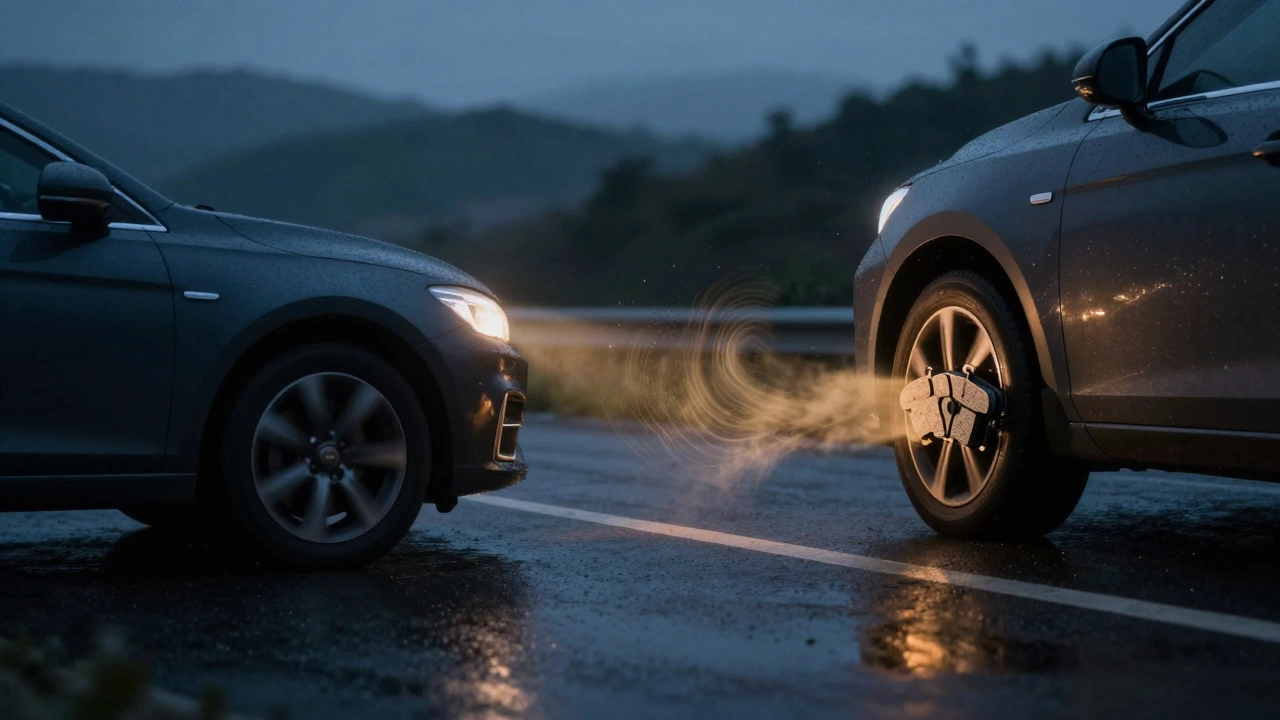
- Squealing or screeching when braking (many pads have built-in wear indicators)
- Brake pedal feels softer or goes further to the floor
- Car pulls to one side when braking
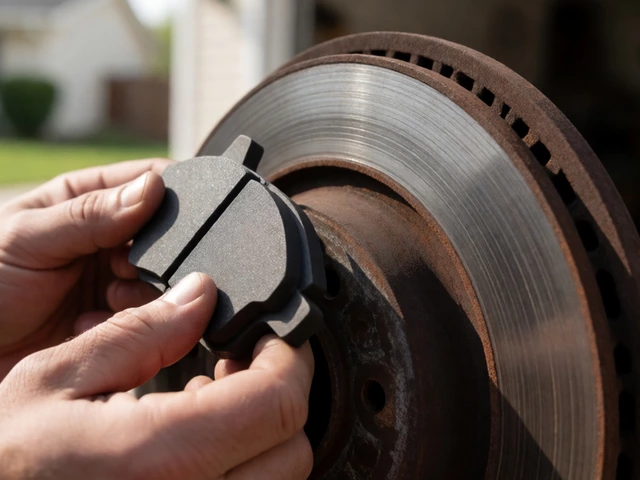
- Visible pad thickness under the wheel-less than 3mm means replace now
- Brake warning light on dashboard (if your car has one)
Most brake pads last between 30,000 and 70,000 km. But if you drive in stop-and-go traffic, carry heavy loads, or live in hilly areas like Auckland’s North Shore, you’ll wear them faster.
Pro Tip: Save Money Without Sacrificing Safety
You don’t need to buy the most expensive pads. But you also shouldn’t go for the cheapest. Here’s a simple rule:
Buy mid-range ceramic pads from a known brand (Bendix, Akebono, EBC), and get them installed by a reputable local shop.
Why? Ceramic pads last longer, stop better in wet weather, and don’t damage your rotors. You’ll save money over time by not replacing them every 20,000 km. And you’ll sleep better knowing your brakes won’t fail.
Also, check for local deals. Some shops offer brake service packages that include fluid flush or rotor resurfacing at a discount. Ask about it.
What Happens If You Delay
Worn brake pads don’t just reduce stopping power-they destroy your rotors. Once the metal backing plate grinds into the rotor, you’re looking at a $400-$800 rotor replacement bill. That’s 3-4 times the cost of just replacing the pads.
And if your brakes fail while you’re driving? No insurance policy covers damage from neglected maintenance. The cost isn’t just financial-it’s life.
How much should 4 brake pads cost for a Toyota Corolla in 2025?
For a Toyota Corolla, expect to pay $100-$140 for mid-range ceramic brake pads (like Bendix or Akebono) and $80-$120 for labor. Total installed cost: $180-$260. Premium OEM pads may cost up to $300 for parts alone.
Can I replace brake pads myself?
Yes, if you have basic tools and experience. You’ll need a jack, torque wrench, C-clamp, and brake cleaner. The process takes 1-2 hours per axle. But if your car has electronic brake sensors or ABS issues, it’s better left to a professional. Incorrect installation can cause uneven wear or brake failure.
Are cheaper brake pads safe?
Some low-cost pads are fine for light city driving. But many cheap pads are made with inconsistent materials that fade under heat, produce excessive dust, or wear unevenly. In New Zealand’s wet and hilly conditions, reliable braking is non-negotiable. Don’t risk your safety for $30 savings.
Do brake pads come in sets of 4?
Yes. Brake pads are sold in sets of four-two for the front axle, two for the rear. Always replace them in pairs (front or rear) to ensure even braking. Never replace only one pad on an axle.
How often should brake pads be replaced?
Most brake pads last between 30,000 and 70,000 km. But if you drive in heavy traffic, carry loads, or live in hilly areas, they may need replacing closer to 30,000 km. Check thickness visually every 10,000 km or during tire rotations.
Should I replace rotors when replacing brake pads?
Only if they’re worn, warped, or scored. Most rotors can be resurfaced or reused if they’re above the minimum thickness (usually 2mm-3mm). Ask your mechanic to measure them and show you the numbers. Replacing rotors unnecessarily adds $200-$500 to the cost.
Final Thought: Your Brakes Are Your Lifeline
Brake pads are one of the most important safety parts on your car. They’re not a place to cut corners. A $150 investment in good pads and professional installation can save you thousands in repairs-and more importantly, your life. Don’t wait for the squeal. Check your pads now. If they’re under 4mm thick, don’t delay.


Write a comment