Exhaust Legality Checker
Check Your Exhaust Legality
Select your location, vehicle, and exhaust type to determine legal compliance.
Please select your details to check legality
Many car owners think swapping out their stock exhaust for a slip-on is just a simple upgrade-better sound, lighter weight, maybe a little more power. But here’s the thing: slip-on exhaust legality isn’t decided by how loud it sounds or how cool it looks. It’s decided by local laws, emissions standards, and whether your modification passes inspection. And if you’re in New Zealand, Australia, the EU, or even most U.S. states, you’re walking a fine line.
What Exactly Is a Slip-On Exhaust?
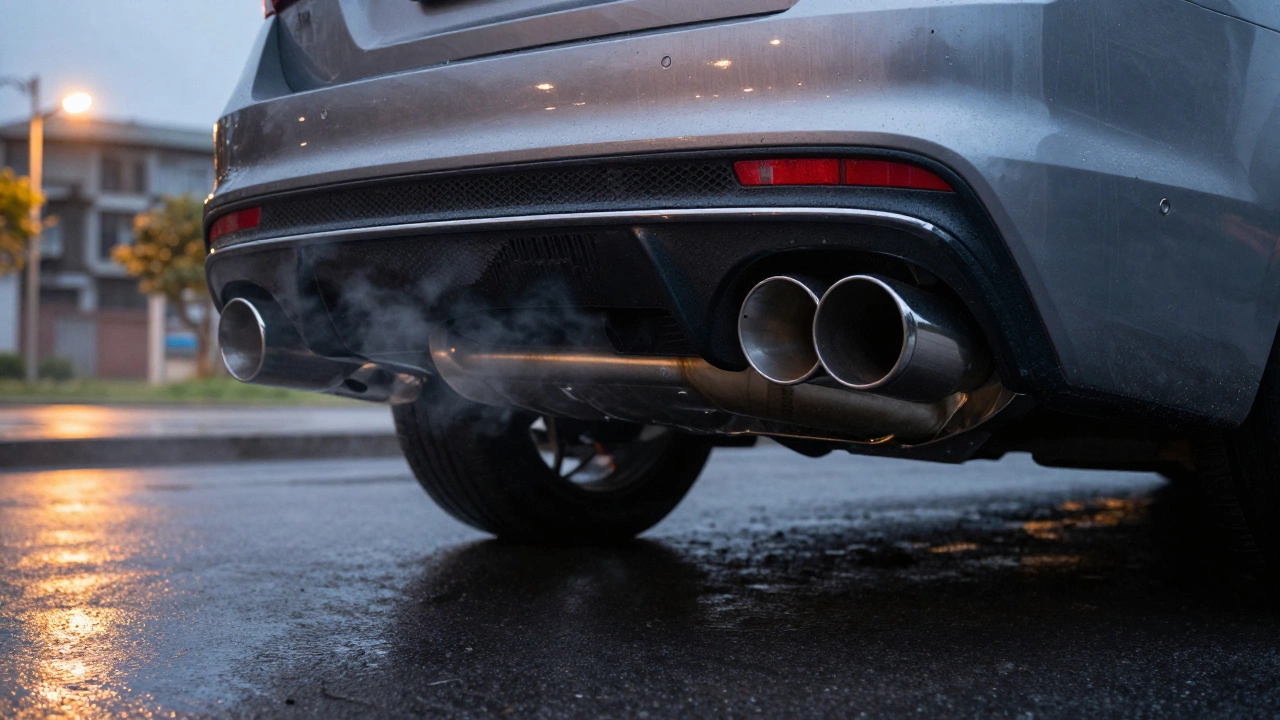
A slip-on exhaust is a replacement for just the rear section of your factory exhaust system. It bolts onto the existing mid-pipe or catalytic converter and usually replaces the muffler and tailpipe. Unlike a full cat-back system, it doesn’t touch the headers or catalytic converters. That’s why it’s popular: it’s cheaper, easier to install, and doesn’t require tuning the engine’s ECU.
But here’s what most people miss: even though it doesn’t alter the catalytic converter, the muffler section is where noise and emissions control happen. Remove or replace that with a less restrictive design, and you’re changing how the system performs legally.
Why Legality Depends on Where You Live
There’s no global exhaust law. Every country-and often every state or region-has its own rules.
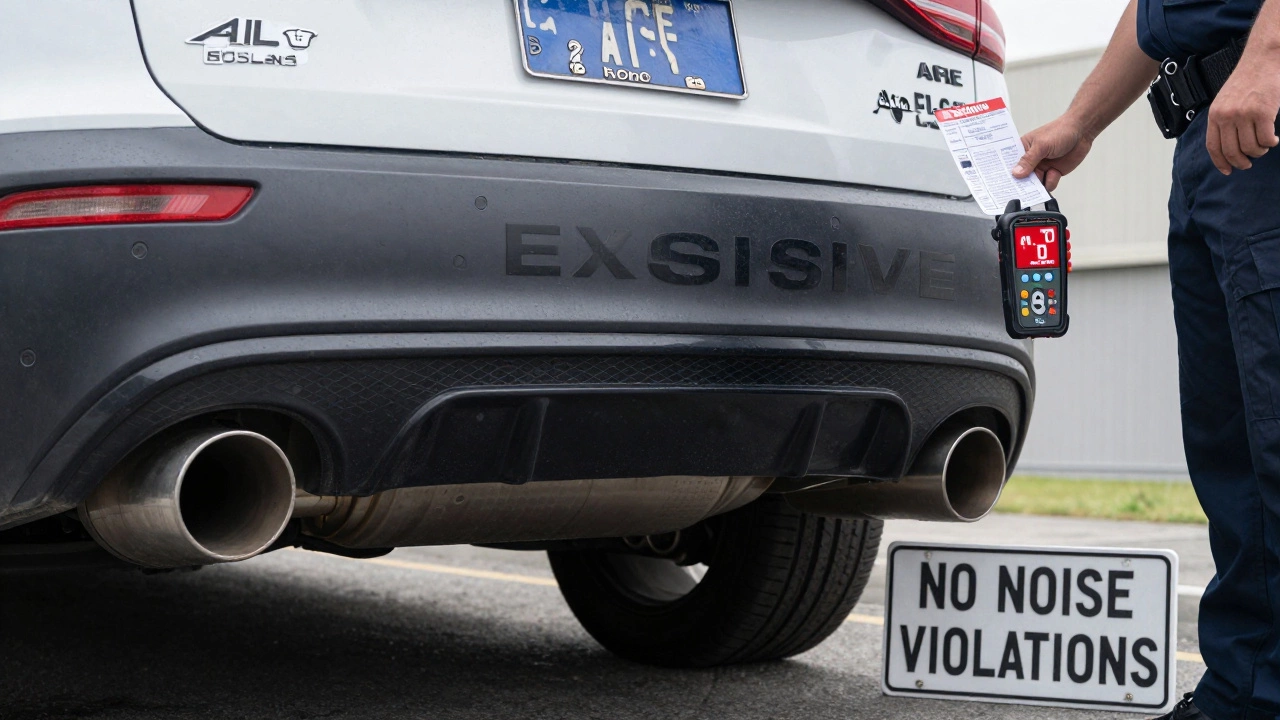
In New Zealand, the Land Transport Rule: Mufflers 2004 says your exhaust system must not produce noise that’s louder than the original factory system. That means if your slip-on makes your car sound like a drag racer, you’re breaking the law-even if the car passes emissions testing. Police can pull you over on the spot for excessive noise, and you’ll be fined or forced to revert to stock.
In the U.S., it’s even messier. California’s CARB regulations are the strictest: any aftermarket exhaust must have a CARB Executive Order (EO) number to be legal. Without it, you can’t pass smog checks. Other states follow federal EPA rules, which only require that the catalytic converter remains intact. But many states still have noise ordinances. In New York, for example, you can’t have an exhaust that emits a sharp or popping sound. That rules out many popular slip-ons.
European Union rules are similar to New Zealand’s: exhaust modifications must not increase noise beyond the original type approval. Many slip-ons sold online claim to be “ECE R41-03 compliant,” but that doesn’t mean they’re automatically legal. The burden of proof is on you to show the system matches your vehicle’s original noise level.
How Do Authorities Check If an Exhaust Is Legal?
It’s not just about smog tests. Most enforcement happens on the road.
- Police officers can use handheld decibel meters to measure noise levels. If your exhaust exceeds 95 dB at 20 cm from the tailpipe (NZ standard), you’re over the limit.
- During WOF (Warrant of Fitness) inspections in New Zealand, inspectors check for visible modifications, missing baffles, or obvious noise increases. They don’t need to measure-it’s often based on judgment.
- Some states in the U.S. require a visual inspection of the exhaust system during registration renewal. If your slip-on looks like a straight pipe with no muffler, you’ll be flagged.
And here’s the kicker: if you’re pulled over for another reason-speeding, a broken light-and the officer hears your exhaust, they can cite you for noise violations even if your car is otherwise clean.
What Makes a Slip-On Exhaust Illegal?
Not all slip-ons are illegal. But most cheap ones sold on eBay or Amazon are. Here’s what turns a legal upgrade into a violation:
- Removal or bypassing of the factory muffler’s internal baffles
- Use of a straight-through design without any sound-dampening material
- Lack of a catalytic converter (even if it’s not part of the slip-on, the system must still have one)
- Excessive drone or popping sounds at idle or cruise
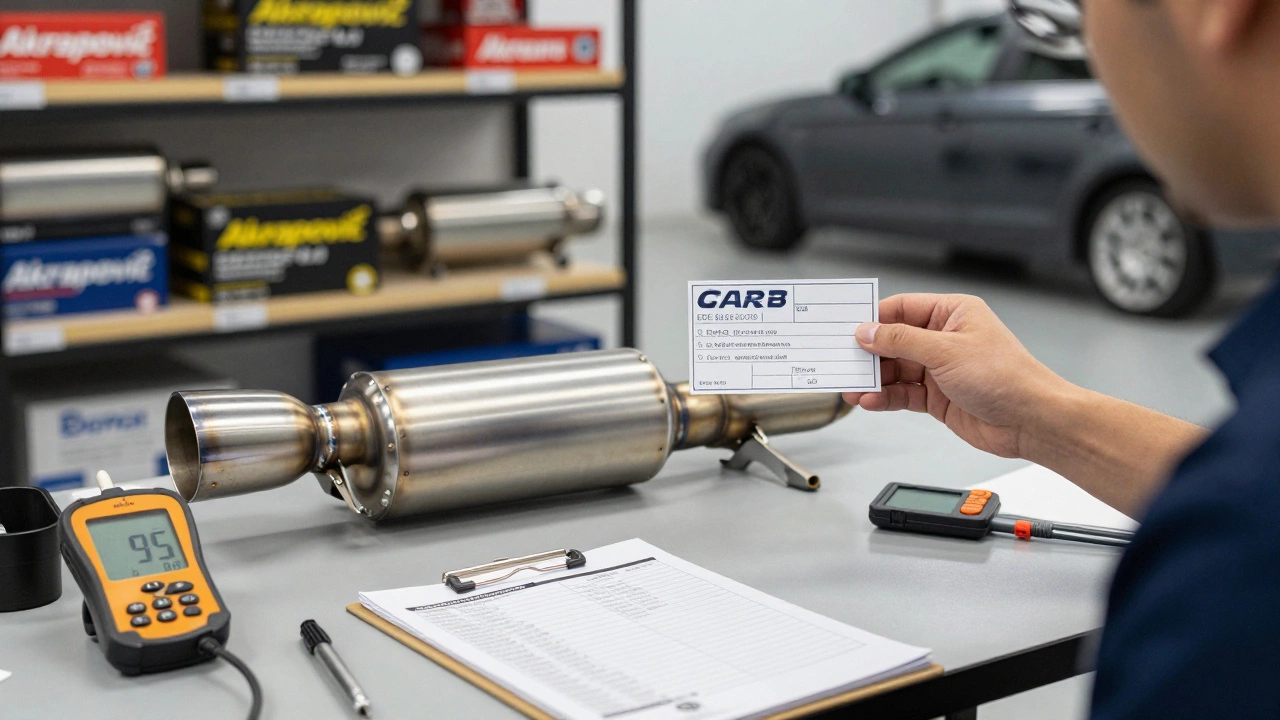
- No manufacturer certification (CARB, ECE, or equivalent)
Some brands, like Akrapovič, Yoshimura, and Remus, make slip-ons that are certified for specific models. These come with paperwork proving they meet noise and emissions standards. But even those can be illegal if installed on the wrong vehicle or if the manufacturer didn’t certify that exact model year.
How to Know If Your Slip-On Is Legal
Don’t guess. Check these three things:
- Check the product packaging or website. Look for certifications: CARB EO number, ECE R41-03, or NZ Transport Agency approval.
- Compare it to your stock exhaust. If it’s visibly thinner, has no internal chambers, or sounds like a jet engine at idle, it’s likely illegal.
- Call your local transport authority. In New Zealand, contact the NZTA. In California, check the CARB website. Ask if your exact make, model, and exhaust model is approved.
Many people buy slip-ons online because they’re cheap. Then they get fined $300+ for a noise violation. That’s not worth the savings.
What Happens If You Get Caught?
Consequences vary by location, but here’s what you might face:
- New Zealand: A $200-$400 fine, and you’ll be required to remove the exhaust before your next WOF. Repeat offenses can lead to vehicle impoundment.
- California: You won’t pass smog check. You’ll need to replace the exhaust with a CARB-approved one before registration renewal.
- UK/EU: You could be fined up to £500, and your insurance may be invalidated if the modification is deemed unsafe.
- U.S. states: Fines range from $100 to $1,000 depending on the city. Some states issue a “fix-it” ticket-you have 30 days to fix it and get signed off.
And if you’re in an accident? Insurance companies can deny claims if they prove your vehicle was illegally modified.
What Are Your Legal Alternatives?
You don’t have to stick with the boring stock exhaust. There are legal ways to get a better sound and performance.
- Buy a certified slip-on from a brand that lists your exact vehicle model on their compliance list. Brands like Akrapovič, Milltek, and Borla often publish these.
- Choose a system with removable baffles. You can install them for inspections and remove them for weekend drives.
- Go for a quiet performance exhaust. Some systems are tuned for a deep, throaty tone without drone or excessive noise. They’re still legal and still sound great.
- Consider a full cat-back system with catalytic converter retention. These are often more expensive but designed to meet emissions standards while improving flow.
There’s no shortcut. If it sounds too good to be true-cheap, loud, and legal-it probably isn’t.
Final Verdict: Is a Slip-On Exhaust Legal?
It depends. A slip-on exhaust can be legal-if it’s designed for your car, certified by your region’s transport authority, and installed correctly. But the vast majority of aftermarket slip-ons sold online are not. They’re built for sound, not compliance.
If you want to upgrade your exhaust legally, don’t buy the cheapest one on Amazon. Don’t assume “it’s just the muffler” so it doesn’t matter. The law doesn’t care about your intentions. It cares about noise levels, emissions, and safety.
Do your homework. Check certifications. Test the sound. Ask the experts. A legal slip-on can sound amazing and pass inspection. An illegal one? It’ll cost you more in fines and headaches than the upgrade was worth.





Write a comment