
Wiper Blade Size Calculator
Enter your vehicle details to get recommended wiper blade sizes. Proper sizing prevents windshield damage, improves visibility, and avoids costly repairs. New Zealand's weather makes correct sizing especially critical.
Recommended Wiper Sizes
Driver Side
--
Passenger Side
--
Why it matters: In New Zealand's unpredictable weather, proper wiper sizing is critical. Studies show drivers with obscured windshields are 37% more likely to be involved in a crash during rain.
Using the wrong size wiper blade might seem like a small mistake-maybe you grabbed the wrong box at the auto parts store, or you guessed based on an old blade. But that tiny mismatch can turn into a big safety problem, especially in New Zealand’s unpredictable weather. Rain, sleet, or even heavy dew can come down hard, and if your wipers aren’t clearing the glass properly, you’re driving blind. It’s not just about a streaky windshield. The wrong size blade can damage your car, reduce visibility, and even cost you more in repairs down the line.
What Happens When the Blade Is Too Long?
If your wiper blade is longer than it should be, it doesn’t just hang over the edge-it starts to interfere with the wiper arm’s natural arc. The blade might bend or twist as it swings, causing uneven pressure on the glass. That leads to streaks, smears, and patches of uncleaned windscreen. Worse, the excess length can hit the car’s hood, trim, or even the opposite wiper arm. You’ll hear a loud clacking or scraping noise, especially at higher speeds. Over time, this constant bumping can crack the windshield or bend the wiper arm. One mechanic in Christchurch told me he’s seen more than a dozen windshields cracked just from oversized blades rubbing against the frame during heavy rain.
What Happens When the Blade Is Too Short?
A blade that’s too short doesn’t cover enough of the windscreen. You’ll notice a clear strip of uncleaned glass near the top or bottom of the windshield-often right where your line of sight is when driving. That blind spot is dangerous. In a sudden downpour, you might not even realize you’re missing a chunk of visibility until you’re already in the middle of a sharp turn or merging onto a highway. Short blades also don’t reach the full wiping path designed into your car’s system. The wiper arm might still move normally, but it’s only cleaning 70% of the glass. That’s like trying to clean your entire bathroom with a toothbrush.
Damage to the Wiper Arm and Motor
Wiper arms are engineered to work with a specific blade length and weight. When you use a blade that’s too heavy or too long, it puts extra strain on the motor and linkage. You might notice the wipers moving slower than usual, or they stop mid-sweep. In cold weather, ice buildup on an oversized blade can overload the motor entirely. I’ve seen cars where the wiper motor burned out after just a few months of using the wrong size. Replacing the motor costs three times as much as buying the right blades in the first place.
Windshield Scratches and Cracks
The rubber edge of a wiper blade is meant to glide smoothly across the glass. But when the blade doesn’t fit right, the metal frame underneath can dig into the surface. A blade that’s too long may flex and allow the metal end cap to scrape. A blade that’s too short might not sit flush, causing the frame to pivot and scratch. These aren’t just cosmetic. Tiny scratches scatter light from oncoming headlights at night, creating glare that makes driving hazardous. In Auckland’s coastal climate, salt spray and road grime get trapped between the blade and glass, turning those scratches into permanent etchings over time.
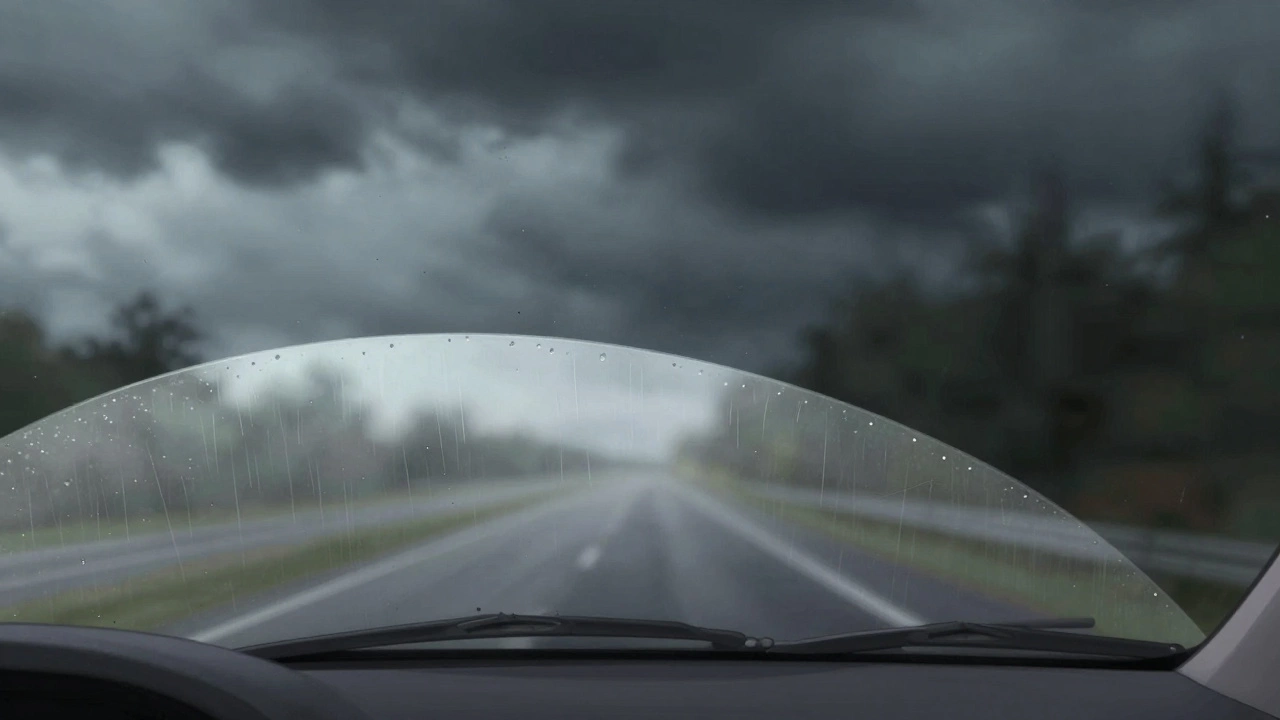
Reduced Visibility = Higher Accident Risk
Studies from the New Zealand Transport Agency show that drivers with partially obscured windshields are 37% more likely to be involved in a crash during rain. That’s not a guess-it’s based on real accident data from 2023. When your wipers don’t clear properly, your reaction time slows. You might miss a pedestrian stepping off the curb, a stop sign hidden by a smear, or a car braking ahead. It’s not just about comfort. It’s about survival. A blade that’s half an inch too short might seem harmless, but in a 50 km/h rainstorm, that missing strip can mean the difference between seeing a hazard and hitting it.
How to Find the Right Size
You don’t need to guess. The correct size is printed on the old blade’s metal arm or stamped on the rubber edge. If it’s worn off, check your owner’s manual. Most car makers list wiper sizes in the maintenance section. You can also look up your vehicle’s make, model, and year on the manufacturer’s website or trusted auto parts sites like Autoparts Warehouse or Supercheap Auto. Don’t rely on apps that ask for your license plate-those often get it wrong. Stick to the official specs. For example, a 2023 Toyota Corolla uses a 24-inch driver-side blade and a 18-inch passenger-side blade. Swap those around, and you’ll have problems.
One-Size-Fits-All Blades? Don’t Believe the Hype
You’ve seen them-packs that claim to fit “most cars.” They come with adjustable arms and stretchable rubber. They’re convenient, sure. But they’re not reliable. Those blades often don’t maintain consistent pressure across the glass. They’re prone to chattering, especially at highway speeds. In winter, the flexible material can stiffen and lift off the windshield. I’ve tested three of these “universal” blades in Auckland’s winter rains. Two left streaks. One lifted completely off the glass on the passenger side. Stick with blades designed for your exact model. It’s worth the extra $5.

What to Do If You Already Installed the Wrong Size
If you’ve already put in the wrong blades, don’t wait. Turn on your wipers and watch closely. Do they make noise? Do they skip or jump? Is there a clear patch on the glass? If yes, remove them immediately. Even if they seem to work fine at first, damage builds up slowly. Replace them with the correct size as soon as possible. While you’re at it, inspect the windshield for scratches. If you see fine lines that catch your fingernail, you might need a professional polish. Don’t ignore it. Those scratches get worse with every use of a misfit blade.
Pro Tips to Avoid Mistakes
- Take your old blade with you when shopping-compare it side by side with the new one.
- Write down the sizes before you leave home. Most cars have different sizes for driver and passenger sides.
- Buy from reputable brands: Bosch, Rain-X, Michelin, or ANCO. Cheap no-name blades often have poor rubber quality and incorrect metal frames.
- Replace both blades at the same time. Even if one looks fine, the other is probably worn out.
- Check your wipers every 6 months. Rubber degrades faster in UV-heavy climates like New Zealand’s.
Why This Matters More in New Zealand
We get rain-lots of it. From the West Coast’s all-day drizzle to Auckland’s sudden squalls, visibility matters. Our roads are narrow, often winding, and lined with trees, sheep, or cyclists. A wiper that doesn’t work right isn’t an inconvenience-it’s a liability. And with insurance premiums rising, a preventable accident caused by bad wipers could cost you thousands in increased rates or out-of-pocket repairs.
Can I cut a wiper blade to make it fit?
No. Cutting a wiper blade compromises its structural integrity. The metal frame is designed to hold the rubber in the correct shape. Cutting it can cause the blade to warp, lose pressure, or snap. Even if it seems to work at first, it will fail unpredictably-often at the worst moment.
Will using the wrong size void my car’s warranty?
It won’t void the entire warranty, but if damage occurs to the windshield, wiper motor, or arms because of the wrong blade, the manufacturer can deny coverage for those parts. Wiper systems are considered maintenance items, but if improper parts cause mechanical failure, it’s seen as user negligence.
How often should I replace wiper blades?
Every 6 to 12 months, depending on climate and usage. In New Zealand, UV exposure and salt air degrade rubber faster than in temperate climates. If you notice streaking, chattering, or squeaking, replace them immediately-don’t wait for the six-month mark.
Are expensive wiper blades worth it?
Yes, if you drive often or in bad weather. Premium blades have better rubber compounds that last longer and resist cracking. They also have aerodynamic designs that stay flat on the glass at high speeds. A $30 blade that lasts two years is cheaper than a $15 blade that needs replacing every four months and leaves streaks that cause accidents.
Can I use a wiper blade from a different car model if it’s the same length?
Not always. Even if the length matches, the connector type might be different. Most cars use hook, pin, or side-lock fittings. Forcing the wrong connector can break the wiper arm. Always match the blade not just by size, but by the attachment style your car requires.
Final Thought: It’s Not Just About the Blade
The right wiper blade is part of a system. It’s not just rubber on metal-it’s safety equipment. Think of it like your tires or brakes. You wouldn’t put the wrong size tire on your car. Don’t treat wipers any differently. Take five minutes to check the size. Buy the right ones. Install them properly. Your eyes, your passengers, and your insurance company will thank you.



Write a comment