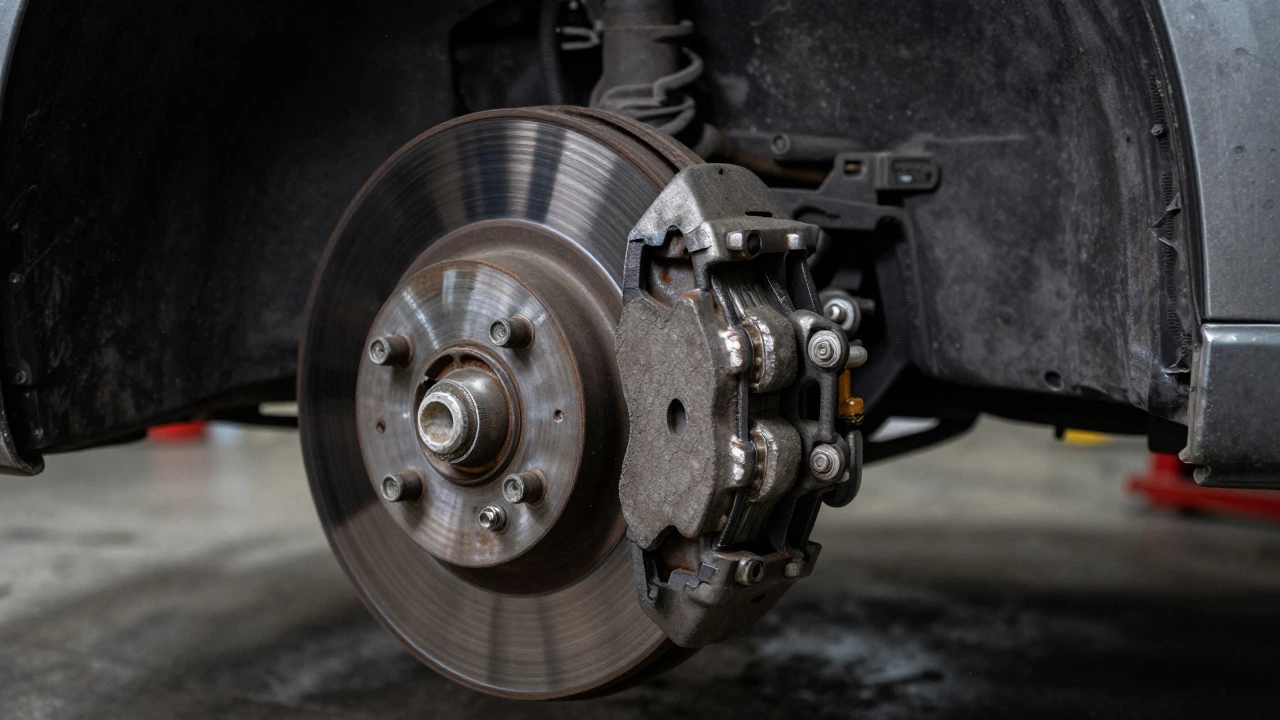
Brake Pad Replacement Decision Tool
Recommendation
Imagine pulling over to the shoulder because your car is making a high-pitched squeal. You check the tire and realize one side of the front axle has worn down to the metal backing plate, while the other side still has plenty of friction material left. The immediate question hits you: do I just fix the bad side, or should I replace all four brake pads is a critical safety component in disc braking systems that converts kinetic energy into heat through friction.?
The short answer is usually yes for the front axle, but it gets complicated when you look at the rear wheels. Many drivers assume that if one pad wears out, all four must be swapped simultaneously. This belief stems from a mix of shop policies and genuine mechanical concerns about uneven wear. However, the reality depends on your vehicle's design, driving habits, and how far apart the wear levels are.
Understanding How Brake Wear Works
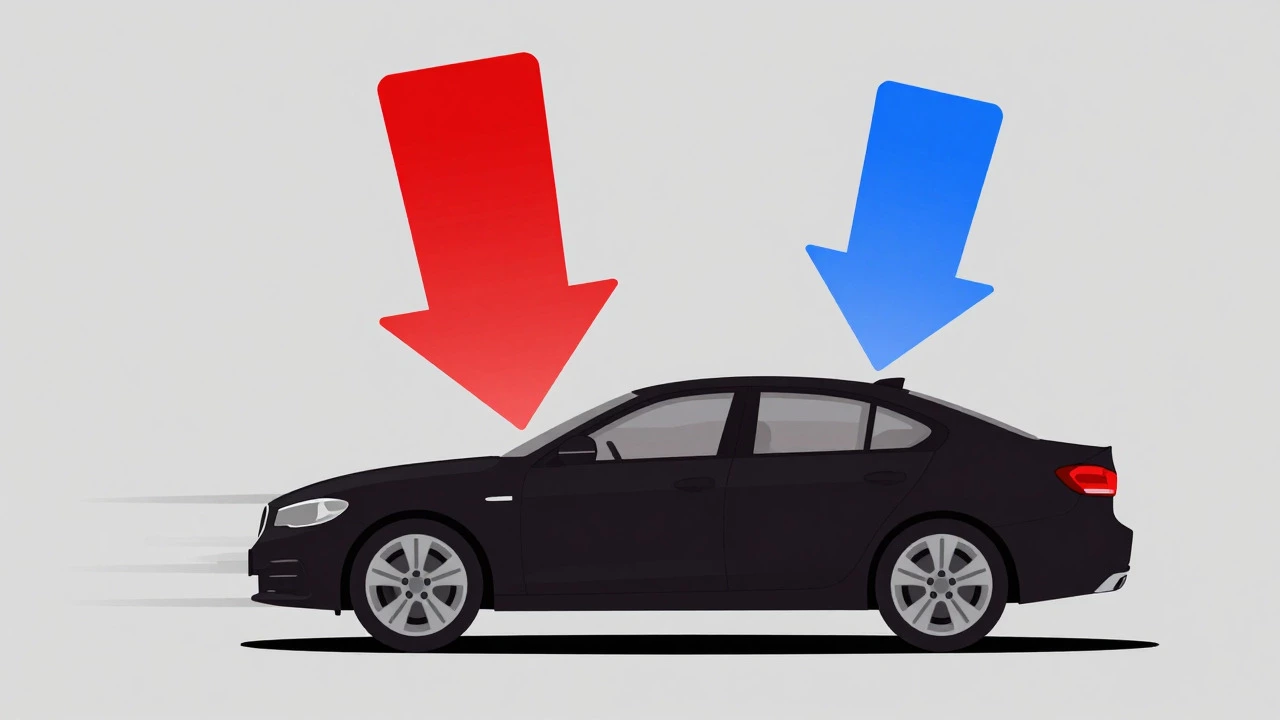
To decide whether to replace everything, you first need to understand why pads wear unevenly. In most passenger cars, the front brakes handle roughly 70% to 80% of the stopping power. This happens because weight shifts forward during deceleration. As a result, front brake pads typically last between 30,000 and 50,000 miles, whereas rear brake pads can often last twice as long, ranging from 60,000 to 100,000 miles.
If your front pads are due for replacement, your rear pads might still have significant life left. Replacing them all at once forces you to buy new parts for the rear axle that don't strictly need replacing yet. This adds unnecessary cost to a routine maintenance job. However, if you drive in stop-and-go city traffic or tow heavy loads, the wear rate accelerates significantly, potentially bringing the rear pads closer to their end-of-life window.
The Case for Replacing All Four
There are specific scenarios where swapping all four pads makes sense, even if the rears aren't completely worn out. The primary reason is consistency in braking feel. When you install new front pads, they require a break-in period to bed in properly against the rotors. If the rear pads are old and glazed, the balance between front and rear braking force can shift, leading to a less predictable stopping distance.
Another factor is labor efficiency. Most mechanics charge by the hour or per axle. If you are already paying for the labor to lift the car and remove the wheels, adding the rear work often costs less than scheduling a separate visit later. Additionally, if you plan to keep the vehicle for more than three years, getting all four sets fresh ensures you won't be back in the shop for another six months or so. For peace of mind, this approach eliminates the worry of mixed-age components interacting with each other.
When You Can Save Money by Doing Axles Separately
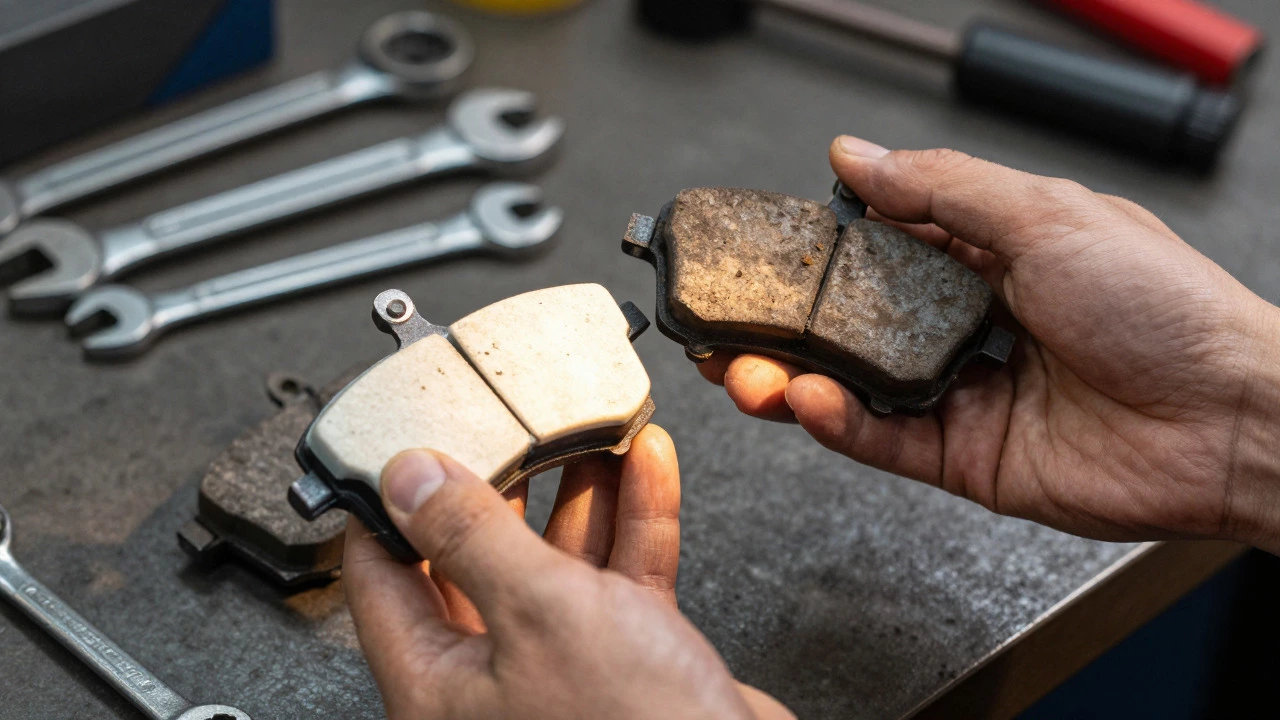
On the flip side, replacing only the worn axle is a perfectly valid strategy for many drivers. If your rear pads have more than 4mm of friction material remaining, there is no immediate safety risk in leaving them alone. Modern vehicles have independent braking circuits, meaning a failure on one axle doesn't instantly disable the other. While you want balanced performance, slight variations in pad age rarely cause catastrophic issues unless the wear is extreme.
This approach saves you the cost of four new pads and the associated hardware like clips and shims for the rear. It also allows you to monitor the rear wear closely. If you find that your rear pads wear much slower than expected, you might extend the interval for the next service, saving money in the long run. Just make sure to tell your mechanic exactly what you want done to avoid surprise charges for "recommended" replacements.
Front vs. Rear: What the Data Says
Let's look at the practical differences between the two axles. The table below highlights the key attributes that influence your decision.
| Attribute | Front Axle | Rear Axle |
|---|---|---|
| Average Lifespan | 30,000 - 50,000 miles | 60,000 - 100,000 miles |
| Stopping Power Contribution | 70% - 80% | 20% - 30% |
| Wear Pattern | Faster, more consistent | Slower, varies by driver |
| Replacement Frequency | Every 2-3 years | Every 4-6 years |
| Cost Impact | Higher due to larger pads | Lower due to smaller pads |
Notice the lifespan gap. If your car is at 45,000 miles and the front pads are wearing out, the rear pads likely have at least 30,000 miles of life left. Replacing them now means throwing away half their potential value. Unless you are selling the car soon or planning a major overhaul, waiting for the rears to catch up is often the smarter financial move.
Signs That You Need Immediate Attention
Regardless of your mileage, certain signs indicate that you cannot wait for the next scheduled service. If you hear grinding noises, it means the metal backing plate is touching the rotor, which can damage the expensive rotor surface. If the steering wheel pulls to one side when braking, it suggests uneven wear on one side of the axle, requiring immediate inspection. Also, if the brake pedal feels spongy or goes to the floor, you might have a fluid leak or air in the lines, which is a separate issue from pad wear but requires urgent attention.
Always pair pad replacement with a visual inspection of the rotors. If the rotors are warped or scored beyond the manufacturer's minimum thickness, you will need to resurface or replace them. Installing new pads on bad rotors leads to premature wear and poor braking performance. This is where the cost of doing all four at once might actually save you money if the rear rotors are also nearing their limit.
Pro Tips for Maximizing Brake Life
You can extend the life of your current pads by adjusting your driving habits. Avoid riding the brakes on long downhill grades; instead, use engine braking by shifting to a lower gear. This reduces the thermal stress on the friction material. Also, try to anticipate stops rather than reacting abruptly. Smooth deceleration generates less heat, which preserves the integrity of the pad compound. Regularly cleaning brake dust off your wheels can also help you visually inspect the pad thickness without removing the tires.
When you do replace pads, consider the type of material. Standard organic pads are quiet and gentle on rotors but wear faster. Ceramic pads offer better heat resistance and less dust, making them a popular choice for daily drivers. Semi-metallic pads are durable and perform well in wet conditions but tend to be noisier and produce more dust. Choose based on your climate and driving style rather than just price.
FAQ
Is it dangerous to have mismatched brake pads on the same axle?
Yes, it is generally recommended to replace both pads on the same axle together. If one pad is new and the other is old, the caliper piston may not retract evenly, causing the car to pull to one side when braking. This creates an imbalance in stopping power and can lead to uneven rotor wear. Always replace the left and right pads on the same axle as a pair.
How often should I replace my brake pads?
There is no fixed schedule, but most front pads last between 30,000 and 50,000 miles. Rear pads can last up to 100,000 miles. Your driving style, terrain, and vehicle weight play a huge role. City driving with frequent stops wears pads faster than highway cruising. Listen for squealing sounds and check the visual thickness regularly.
Do I need to replace rotors when changing pads?
Not always. Rotors have a minimum thickness specified by the manufacturer. If they are above this limit and free of deep grooves or warping, they can be reused. However, if you are replacing pads frequently, it might be time to upgrade to thicker rotors or replace them entirely to ensure optimal braking performance and reduce vibration.
What is the difference between ceramic and semi-metallic brake pads?
Ceramic pads are made from ceramic fibers and are quieter, produce less dust, and last longer, but they are more expensive. Semi-metallic pads contain steel and other metals, making them very durable and good for heavy loads or towing, but they are noisier and generate more brake dust. For average daily driving, ceramic is often the preferred choice for comfort and cleanliness.
Can I replace brake pads myself?
Yes, it is a common DIY project for intermediate mechanics. You will need a jack, jack stands, a socket set, and a C-clamp or screwdriver to compress the caliper piston. Be careful not to drop the piston spring or let the piston fall fully, as this can rupture the brake hose. Bleeding the brakes is usually not required for a simple pad swap, but bleeding is necessary if you open the brake fluid reservoir cap.



Write a comment