Spark Plug Performance Estimator
Calculate whether new spark plugs will restore lost power or provide marginal improvements for your specific vehicle setup.
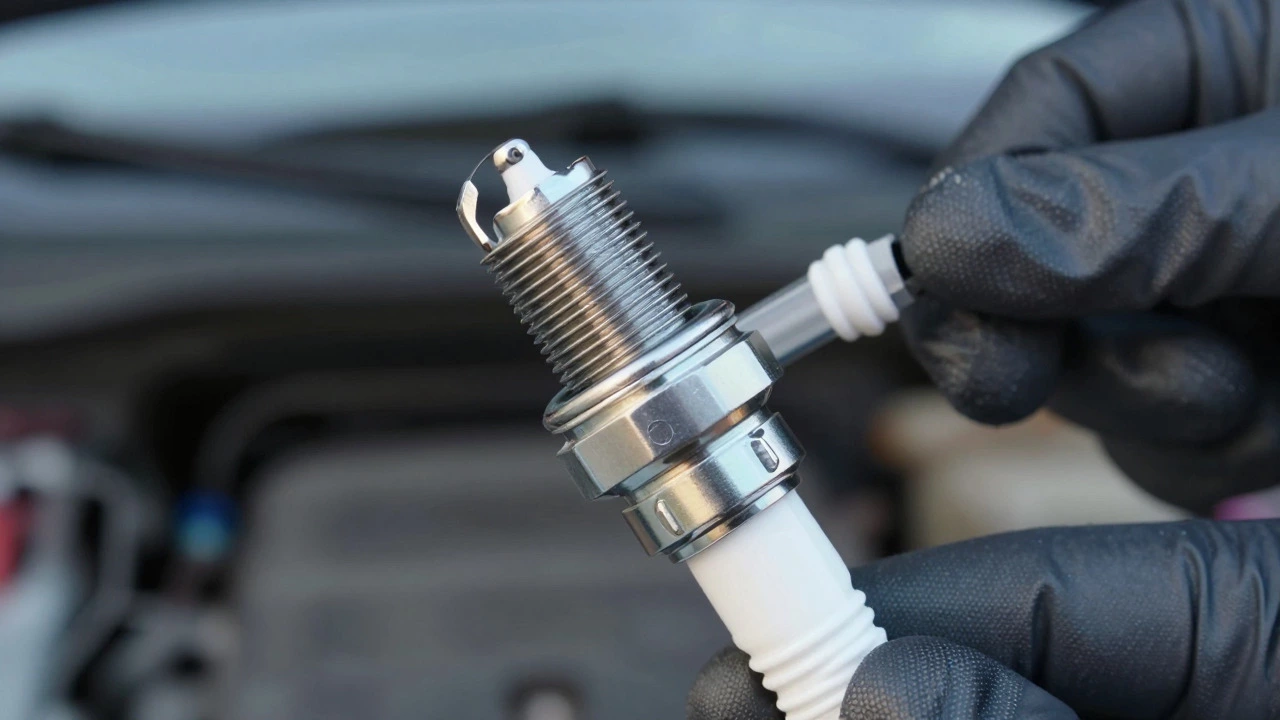
Ever wondered if swapping your old spark plugs for a new set will make your car feel faster? It’s a common question in garage chats and online forums. The short answer is: usually no, but sometimes yes. Spark plugs are small metal components that ignite the air-fuel mixture in an engine's combustion chamber. They don't create power on their own, but they ensure the existing fuel burns efficiently. If your current plugs are worn out, replacing them can restore lost performance. If they're already good, upgrading to high-performance types might squeeze out a tiny bit more efficiency.
The Core Function of Spark Plugs
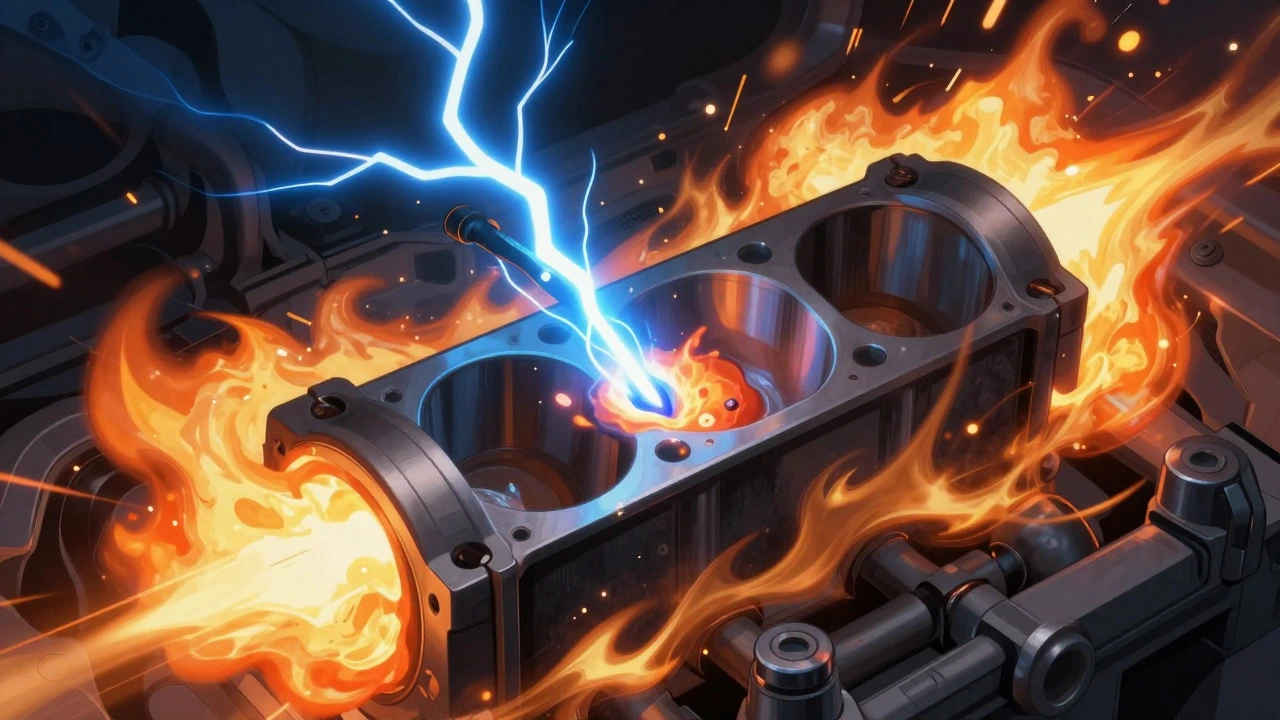
To understand why they might or might not add horsepower, you need to know what they actually do. A spark plug generates a high-voltage electrical arc across its electrode gap. This arc ignites the compressed air and fuel mixture inside the cylinder. Think of it like striking a match in a fireplace. The match doesn't create the heat; it just starts the wood burning. Similarly, the spark plug triggers the combustion event that releases energy from the fuel.
If the spark is weak, inconsistent, or mis-timed, the fuel doesn't burn completely. This leads to wasted energy, lower torque, and increased emissions. In this scenario, fixing the ignition system restores the horsepower you originally paid for when you bought the car. It feels like a gain because you've removed a restriction, not because you've added raw power.
When Replacing Plugs Restores Lost Power
Most drivers notice a difference only when their current spark plugs are failing. Signs include rough idling, hesitation during acceleration, poor fuel economy, or check engine lights related to misfires. When you replace these degraded parts with fresh ones, the engine runs smoother and more consistently.
- Misfire elimination: A single misfiring cylinder can cost you 5-10% of total engine output. Fixing it feels like a significant jump in responsiveness.
- Combustion stability: New plugs provide a stronger, more consistent spark, ensuring every drop of fuel contributes to thrust rather than unburned exhaust.
- Fuel efficiency: Better combustion means less fuel wasted, which often translates to better throttle response even if peak horsepower remains unchanged.
In these cases, you aren't adding horsepower; you're recovering the full potential of your engine. For a typical four-cylinder engine losing power due to bad plugs, you might see a recovery of 5-15 hp at the crankshaft. That’s enough to make the car feel noticeably livelier off the line.
High-Performance Plugs and Marginal Gains
What if your plugs are already in good shape? Can you still gain horsepower by upgrading to iridium or platinum-tipped plugs? The answer is nuanced. High-performance plugs often have finer electrodes and tighter tolerances. This allows for a smaller spark gap, which requires less voltage to fire. A smaller gap also creates a more concentrated plasma channel, leading to slightly faster flame propagation in the combustion chamber.
For naturally aspirated engines running at stock settings, the gains are minimal-often less than 1-2%. However, in high-revving engines or those with forced induction (turbochargers or superchargers), the improved combustion consistency can help prevent detonation. This allows tuners to push higher boost pressures or advance timing, indirectly increasing horsepower. But the plug itself isn't doing the heavy lifting; it's enabling other modifications to work safely.
| Attribute | Standard Copper Plugs | Iridium/Platinum Plugs |
|---|---|---|
| Electrode Material | Copper/Nickel | Iridium or Platinum |
| Typical Lifespan | 30,000 - 40,000 miles | 60,000 - 100,000+ miles |
| Spark Gap Size | Larger (e.g., 0.8mm) | Smaller (e.g., 0.5mm) |
| Heat Range Flexibility | Fixed per model | Often available in multiple ranges |
| Impact on Stock HP | Restores baseline if worn | Negligible gain if original was healthy |
| Best Use Case | Economy vehicles, low mileage | High-performance, long-interval service |
Factors That Actually Determine Horsepower
It’s easy to blame or credit spark plugs for performance changes, but they are just one part of a complex system. Several other factors have a much larger impact on how much horsepower your engine produces.
- Airflow: Restrictive air filters or intake systems limit the amount of oxygen available for combustion. Upgrading these can yield significant gains.
- Fuel Delivery: Injectors must deliver the correct amount of fuel at the right pressure. Clogged injectors starve the engine, reducing power.
- Exhaust Flow: A restrictive exhaust system traps hot gases in the cylinders, reducing the volume of fresh air-fuel mixture that can enter. Cat-back exhausts or header upgrades improve this.
- Compression Ratio: Higher compression ratios allow for more efficient expansion of gases, directly increasing thermal efficiency and power.
- Engine Tuning: Modern cars use ECU maps to control ignition timing and fuel trim. A professional tune can optimize these parameters far beyond what plug selection alone can achieve.
Spark plugs fit into the ignition category. While essential, they rarely offer the same magnitude of improvement as airflow or tuning upgrades. If you’re chasing serious horsepower, look at the big picture first.
Common Myths About Spark Plugs and Power
The internet is full of myths about aftermarket parts. Let’s clear up a few misconceptions regarding ignition systems and performance.
Myth 1: "Glowing" plugs mean more power. Some people believe that seeing a blue-white glow around the plug indicates superior performance. In reality, color depends on fuel composition, altitude, and camera exposure. A healthy spark is invisible to the naked eye under normal conditions.
Myth 2: "Colder plugs always run cooler and produce more power." Heat range refers to how quickly the plug dissipates heat, not the temperature of the spark. Using a plug that is too cold can lead to fouling, while one that is too hot can cause pre-ignition. Matching the heat range to your specific driving conditions is crucial.
Myth 3: "Expensive plugs automatically equal better performance." Price often reflects material durability and brand reputation, not necessarily a direct horsepower increase. A well-maintained standard copper plug can outperform a neglected iridium plug in terms of reliability and consistency.
How to Choose the Right Plug for Your Needs
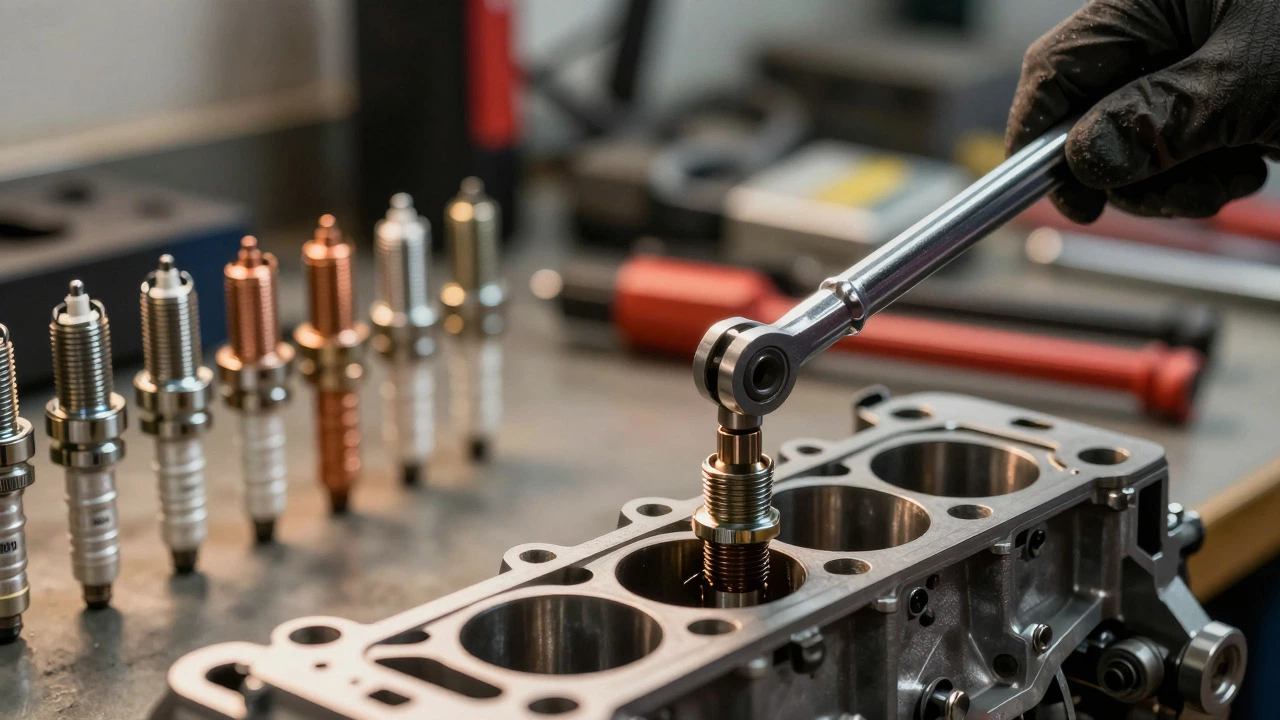
Selecting the right spark plug involves balancing longevity, performance, and cost. Here’s a practical guide to help you decide.
- Check Your Owner’s Manual: Always start with the manufacturer’s recommended heat range and gap size. Deviating without a reason can cause engine damage.
- Consider Your Driving Style: If you drive mostly in stop-and-go city traffic, a colder heat range might help prevent fouling. For highway cruising, a hotter range can burn off carbon deposits more effectively.
- Evaluate Your Engine Type: Turbocharged engines often benefit from iridium plugs due to their ability to handle higher cylinder pressures and temperatures without eroding quickly.
- Look at Service Intervals: If you prefer longer oil change intervals, investing in long-life iridium plugs makes financial sense, even if the performance gain is negligible.
Remember, the goal is reliable combustion, not just maximum spark intensity. Consistency beats peak voltage every time when it comes to daily drivability.
Installation Tips for Optimal Performance
Even the best spark plugs won’t perform well if installed incorrectly. Proper installation ensures correct seating and gap alignment.
- Set the Gap Correctly: Use a feeler gauge to adjust the electrode gap to the specification listed in your manual. An incorrect gap can cause weak sparks or misfires.
- Apply Anti-Seize Compound Carefully: Use a small amount of anti-seize compound on the threads to prevent galling. Avoid getting any on the ceramic insulator, as it can conduct electricity and cause shorts.
- Torque to Specification: Over-tightening can crack the ceramic insulator, while under-tightening can allow gas leaks. Use a torque wrench set to the manufacturer’s specified value, typically between 15-20 ft-lbs for most passenger cars.
- Inspect the Boot: Ensure the rubber boot is clean and free of cracks. A damaged boot can let moisture in, causing intermittent misfires.
Taking five extra minutes during installation can save you hours of troubleshooting down the road.
FAQ
Do spark plugs affect fuel economy?
Yes, significantly. Worn spark plugs cause incomplete combustion, forcing the engine computer to enrich the fuel mixture to compensate. This wastes fuel. Fresh plugs restore optimal air-fuel ratios, often improving miles per gallon by 2-5%.
Can I mix different brands of spark plugs?
It is generally not recommended. Different brands may have slight variations in heat range, thread length, or gap calibration. Mixing them can lead to uneven combustion across cylinders, causing vibration and reduced efficiency. Stick to one brand and model for all cylinders.
How often should I replace spark plugs?
Standard copper plugs last 30,000-40,000 miles. Platinum plugs last 60,000-90,000 miles. Iridium plugs can last 100,000 miles or more. Always check your vehicle’s maintenance schedule, as severe driving conditions (towing, racing) may require earlier replacement.
Will changing spark plugs fix a rough idle?
Often, yes. Rough idling is a classic symptom of misfires caused by weak or inconsistent sparks. If the idle smooths out after replacement, the plugs were likely the culprit. If the problem persists, check the ignition coils, wires, or vacuum leaks.
Are ionized spark plugs worth it?
Ionized spark plugs claim to create a plasma field that improves combustion. While some users report smoother operation, independent testing shows minimal measurable horsepower gains compared to standard iridium plugs. They are a niche product, best suited for enthusiasts who want to experiment rather than for those seeking proven performance boosts.

Write a comment