Brake Pad Shopping & Replacement Guide
Select the issues you are experiencing with your brakes.
Diagnosis & Purchase Plan
-
Select symptoms above to see what you need to buy.
You pull into the shop, and the mechanic tells you your brakes are worn. You head online to buy replacements, but the listings are confusing. Some say "set of 4," others say "front axle." Then comes the big question: do I need to buy 2 sets of brake pads? It sounds like a trick question designed to empty your wallet, but it’s actually about how your car stops.
The short answer is no, you usually don’t need two separate boxes labeled "sets" unless you are replacing all four wheels at once. However, you almost always need to replace the pads on both wheels of the same axle-either both fronts or both rears. Buying just one side is a recipe for disaster. Let’s break down exactly what you need to buy, why axles matter more than individual wheels, and when you might actually need more than one package.
Understanding Axle-Based Replacement
Cars don't stop evenly if you only change one side. When you press the brake pedal, hydraulic pressure pushes pistons against the pads on all four wheels simultaneously. If the left front pad is brand new and the right front pad is old, they will grab differently. This causes the car to pull sharply to one side, which can be dangerous, especially in wet conditions or during emergency stops.
Because of this physics constraint, mechanics follow a golden rule: always replace brakes in pairs by axle. This means if your front brakes are worn, you replace the driver's side and passenger's side front pads together. You do not mix old and new pads on the same axle.
Can I replace just one brake pad?
Technically yes, but it is highly discouraged. Replacing a single pad creates uneven friction, causing the vehicle to pull to one side and leading to premature wear on other components like rotors and calipers.
Decoding Packaging: What Does "Set" Mean?
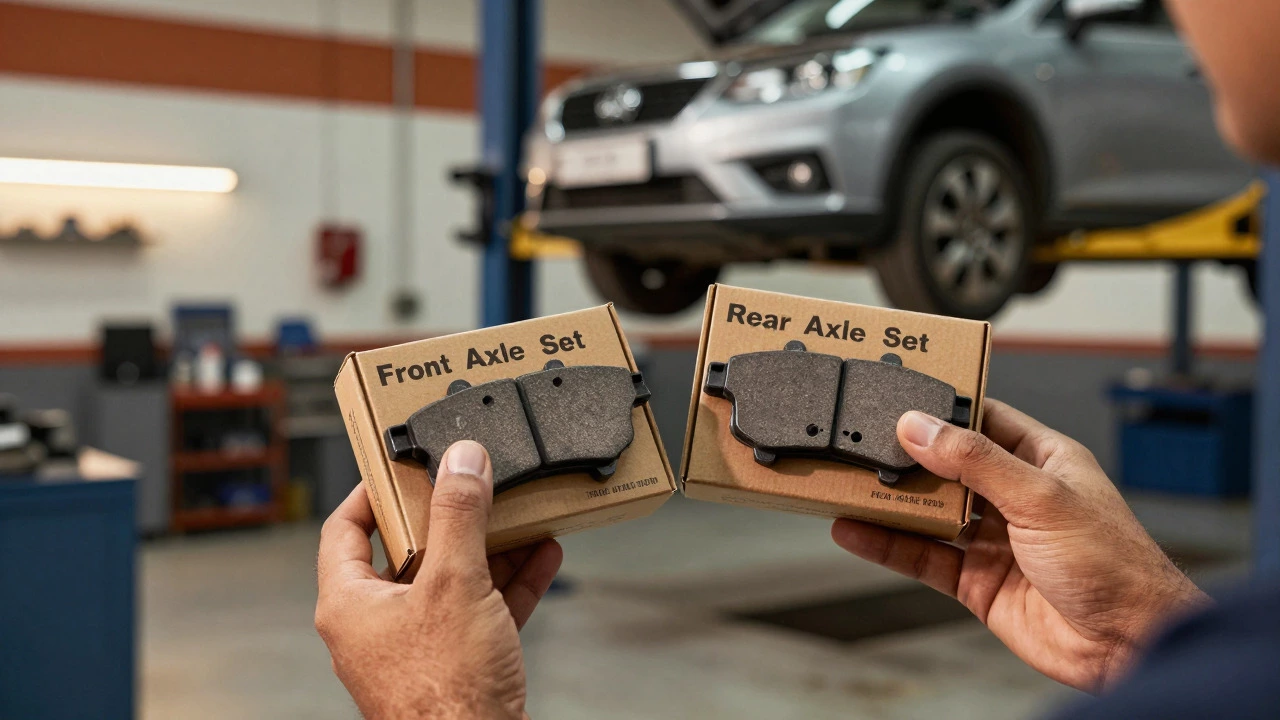
This is where most confusion happens. Manufacturers use the word "set" loosely. In the automotive world, a "set" of brake pads typically refers to enough pads for one axle (two wheels). So, a box labeled "Front Brake Pad Set" contains four pads total: two for the left wheel and two for the right wheel. Some cars have multiple pistons per caliper, requiring more than two pads per wheel, so that single "axle set" might contain six or eight physical pads.
If you see a listing for "2 Sets," check the description carefully. It usually means enough pads for all four wheels (both front and rear axles). If you only need the fronts, buying "2 sets" would give you extra rear pads you might not need right now, wasting money and storage space.
- 1 Set: Usually covers one axle (2 wheels).
- 2 Sets: Usually covers both axles (4 wheels).
- Single Pack: Rarely sold; usually just one caliper's worth (1 wheel).
Front vs. Rear: Which Ones Do You Actually Need?
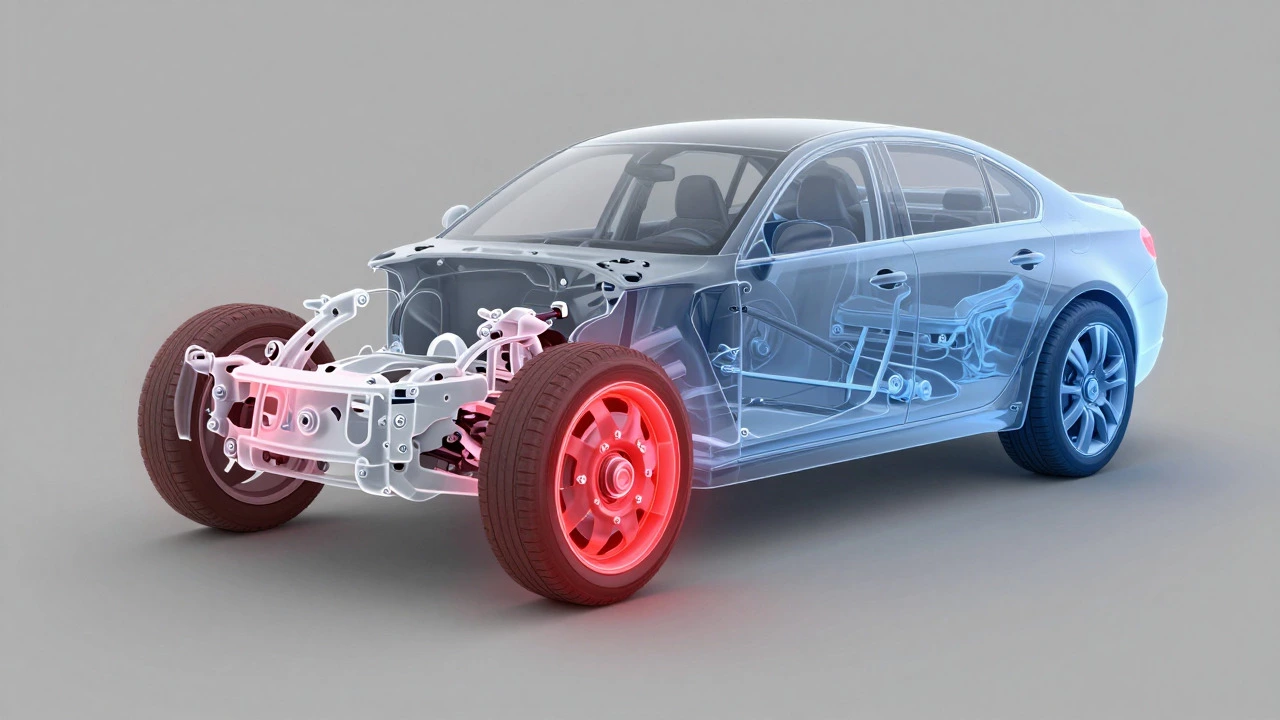
You rarely need to replace front and rear brake pads at the exact same time. Physics dictates that during braking, weight transfers forward. This puts significantly more stress on the front brakes. On average, front brake pads last about 30,000 to 40,000 miles, while rear pads can often go 50,000 to 70,000 miles before needing attention.
If your car is making squealing noises or vibrating when you brake, it’s likely the front pads. If you feel a pulsation in the brake pedal that isn't coming from the steering wheel, it might be the rear. Always check the manufacturer's recommendation or get an inspection, but statistically, you will buy front pads far more often than rear ones.
| Axle Position | Average Lifespan (Miles) | Wear Factor |
|---|---|---|
| Front | 30,000 - 40,000 | High (60-70% of braking force) |
| Rear | 50,000 - 70,000 | Low (30-40% of braking force) |
When Might You Need Both Front and Rear?
There are specific scenarios where buying pads for all four wheels makes sense. First, if you own a high-performance vehicle or drive aggressively, you may wear through front and rear pads closer together. Second, if you are doing a major service interval and the rear pads are showing signs of thinning (less than 3mm remaining), it’s cheaper to labor-wise to replace them all at once.
Another factor is driving style. City drivers who stop and start frequently wear out front pads much faster than highway commuters. If you live in Auckland with its hilly terrain and frequent traffic lights, your front brakes take a beating. However, if you tow heavy loads regularly, the rear brakes work harder to stabilize the vehicle, potentially balancing the wear rate between front and rear.
Hidden Costs: Rotors and Hardware
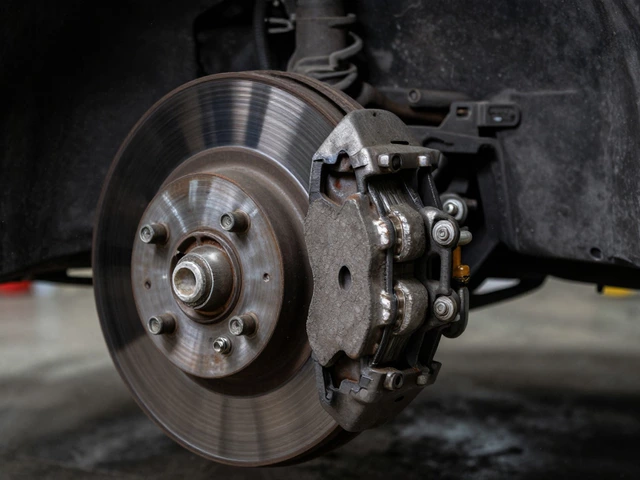
Buying the pads is only half the battle. Many people ask if they need two sets of pads, forgetting about the rotors (discs) behind them. Brake pads grind against rotors. If your rotors are warped, scored, or too thin, new pads won't fix the problem. In fact, putting new pads on bad rotors ruins the new pads quickly.
Mechanics generally recommend inspecting rotors every time you change pads. If the rotors are within tolerance, you can reuse them. If they are below minimum thickness or heavily grooved, you need to replace them as well. Like pads, rotors should be replaced in pairs by axle. So, if you need new front rotors, you need two of them, not four.
Don't forget hardware kits. These include clips, shims, and anti-rattle springs. They ensure the pads sit correctly in the caliper bracket. Reusing old, corroded clips can cause noise and uneven wear. Most quality pad kits come with these, but if yours don't, buy a separate hardware kit for the axle you're working on.
DIY vs. Professional Installation
If you are handy with tools, changing brake pads is a manageable DIY job. You’ll need a jack, jack stands, a lug wrench, a C-clamp or piston tool, and brake cleaner. The process involves removing the wheel, unbolting the caliper, swapping the pads, and reassembling. It takes about an hour per axle for a beginner.
However, if you are unsure about bleeding the brake lines (usually not needed for simple pad swaps) or torquing lug nuts to spec, professional installation is safer. Labor costs vary, but in New Zealand, expect to pay between $150 and $300 per axle for parts and labor. Doing it yourself saves the labor cost, but factor in the price of proper tools if you don’t already own them.
Choosing the Right Material
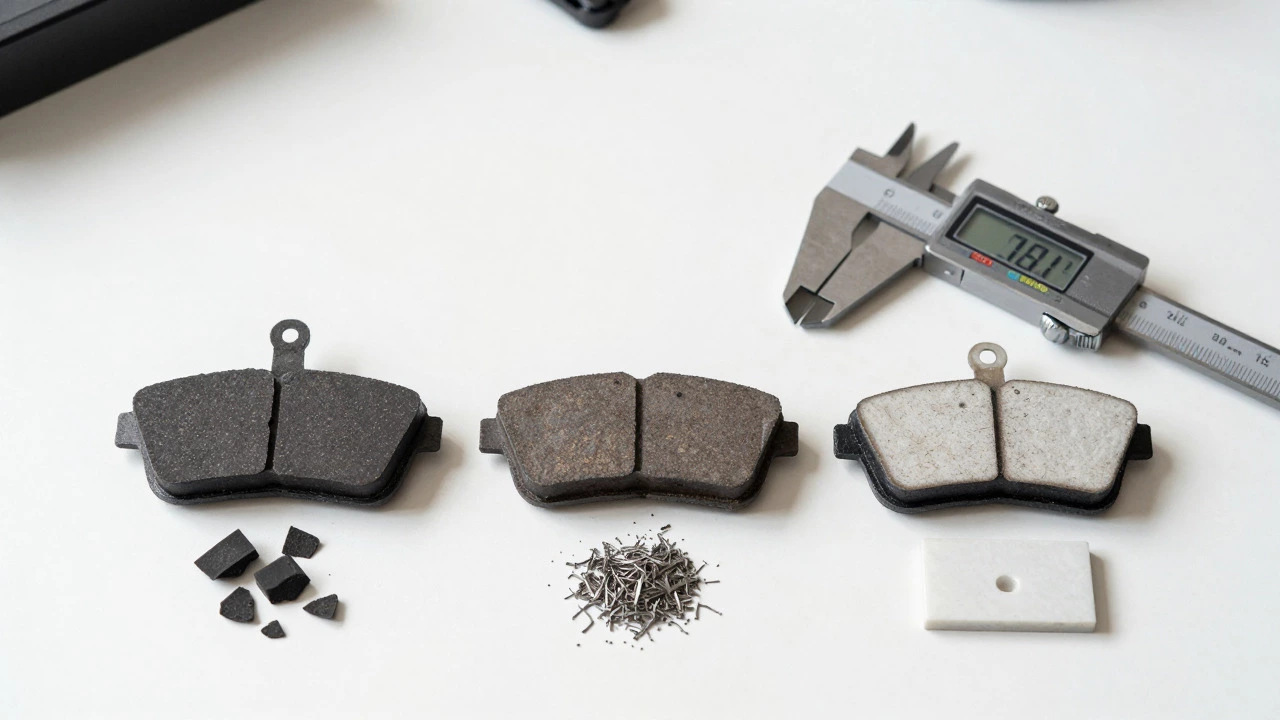
Not all brake pads are created equal. You’ll see three main types: organic, semi-metallic, and ceramic.
- Organic: Made from rubber, glass, and Kevlar. Quiet and gentle on rotors, but wear out faster. Good for light city driving.
- Semi-Metallic: Contain metal fibers. Better heat dissipation and longer life, but can be noisy and harsher on rotors. Common in trucks and SUVs.
- Ceramic: The premium choice. Very quiet, low dust, and consistent performance. More expensive upfront but ideal for daily passenger cars.
For most drivers in urban environments, ceramic pads offer the best balance of comfort and longevity. If you drive a heavier vehicle or tow, semi-metallic might be necessary for heat management.
Signs Your Brakes Need Attention
Don't wait until you hear grinding metal. That means the backing plate is scoring your rotors, which is a costly repair. Watch for these earlier warning signs:
- Squealing: A high-pitched noise when braking indicates wear indicators are touching the rotor. You have a few hundred miles left.
- Vibration: Pulsating pedal or steering wheel suggests warped rotors.
- Soft Pedal: If the brake pedal goes closer to the floor, you might have air in the lines or severely worn pads.
- Pull to One Side: Uneven wear or a stuck caliper.
Frequently Asked Questions
Do I need to replace brake pads on all 4 wheels?
No, you typically replace them by axle. Since front brakes wear faster, you will often only need to replace the front pair. Replace all four only if both front and rear pads are worn simultaneously.
How many brake pads are in a set?
A standard "set" usually contains enough pads for one axle (two wheels). This typically means 4 pads total (2 per wheel), though some multi-piston calipers require more.
Can I mix different brands of brake pads?
It is not recommended. Different brands have different friction coefficients and materials. Mixing them can lead to uneven braking, pulling, and reduced stopping power.
How long do brake pads last?
Front pads typically last 30,000-40,000 miles, while rear pads can last 50,000-70,000 miles. Driving habits, terrain, and pad material significantly affect lifespan.
Is it safe to drive with worn brake pads?
Only briefly. Worn pads reduce stopping distance and can damage rotors. If you hear grinding or see less than 3mm of material, replace them immediately to avoid safety risks and higher repair costs.


Write a comment