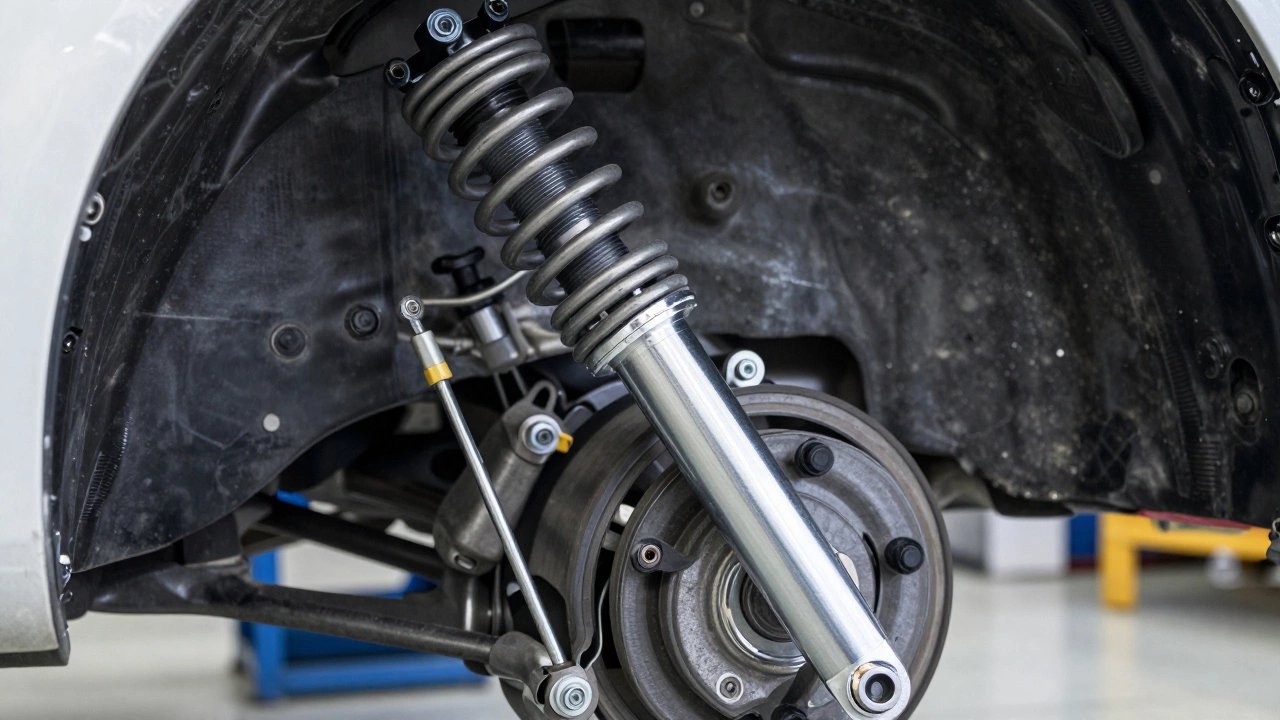
Suspension Diagnostic Tool
Shock Absorbers
Controls bounce & vibration
Coil Springs
Supports weight & ride height
Diagnostic Analysis
Note: This tool provides an estimation based on common symptoms. Always consult a professional mechanic for a definitive diagnosis and safe repair.
Your car feels different today. Maybe it dives too hard when you brake, or perhaps the ride feels jittery over potholes that used to be smooth. Before you rush to a mechanic and spend hundreds on parts you might not need, you need to know what’s actually failing. The suspension system is complex, but distinguishing between shock absorbers and dampers that control spring oscillation and coil springs and steel components that support vehicle weight is easier than most people think.
If your car bounces excessively after hitting a bump, your shocks are likely done. If your car sits lower on one side or looks saggy even when parked, your springs have probably collapsed. This guide breaks down exactly how to diagnose these failures yourself, saving you time and money.
The Quick Summary: Key Takeaways
- Bounce Test: Push down hard on each corner of the car. If it bounces more than once or twice, your shock absorbers are bad.
- Visual Sag: If the car sits unevenly or noticeably lower than factory height, the coil springs are likely broken or fatigued.
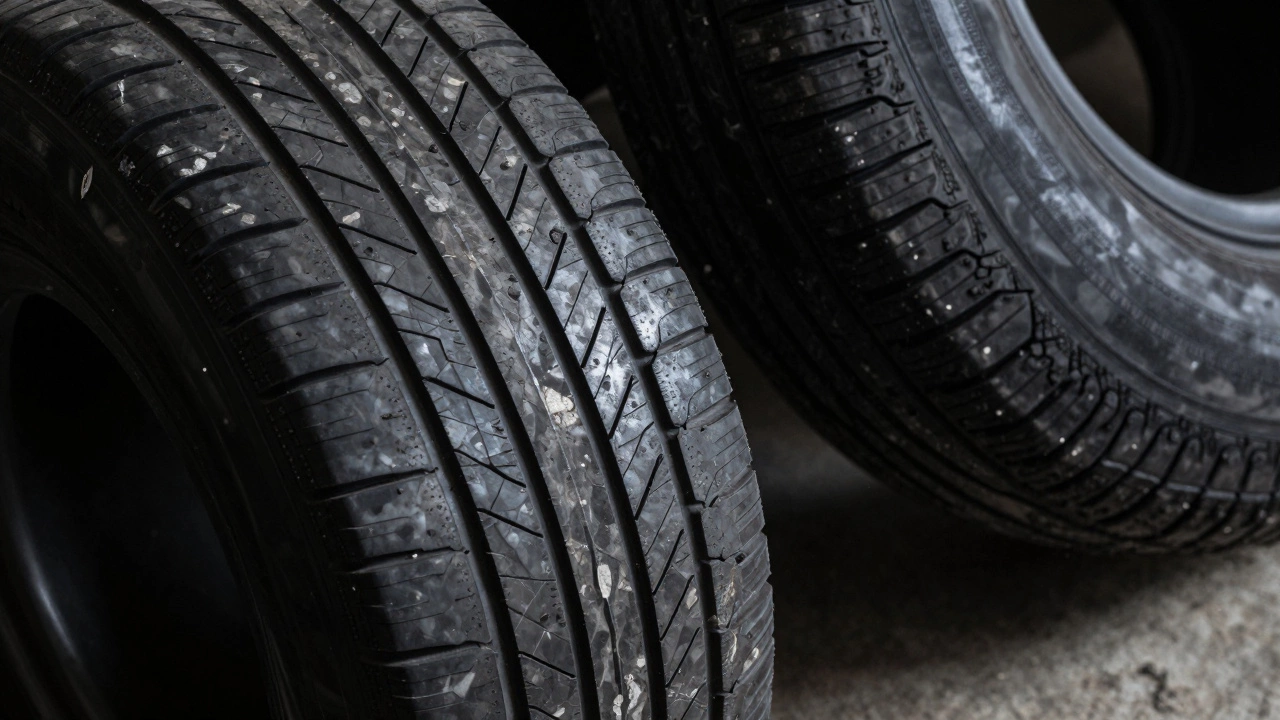
- Tire Wear Patterns: Cupping or scalloped edges on tires indicate worn shocks; uneven wear across the tread often points to alignment issues caused by broken springs.
- Noise Clues: Rattling noises from the wheels usually mean loose bushings or mounts, while clunking over bumps suggests failed shock mounts or struts.
- Leaking Fluid: Visible oil leaking from the shock body is a definitive sign of internal seal failure.
Understanding the Roles: Shocks vs. Springs
To diagnose the problem, you first need to understand what each part does. They work together, but they fail in very different ways.
Coil Springs are heavy-duty steel coils that bear the entire weight of your vehicle. Their job is simple: keep the car off the ground and maintain ride height. They compress under load and expand back out. Springs rarely "wear out" in the sense of gradual degradation; instead, they break, crack, or lose their tension due to corrosion or metal fatigue. When a spring fails, the physical geometry of the car changes immediately.
Shock Absorbers (or dampers) do not support weight. Their job is to control the rate at which the springs compress and rebound. Without shocks, your car would bounce like a pogo stick every time you hit a bump. Shocks contain hydraulic fluid and gas. Over time, the seals inside degrade, allowing fluid to leak out. This leads to a gradual loss of damping ability. Unlike springs, shocks wear out slowly over years of use.
| Feature | Shock Absorbers | Coil Springs |
|---|---|---|
| Primary Function | Controls bounce and vibration | Supports vehicle weight |
| Failure Mode | Gradual fluid leakage/seal wear | Sudden breakage or metal fatigue |
| Visual Sign | d>Oil leaks, no change in ride height initiallyCar sags, visible cracks or gaps in coil | |
| Ride Feel | Mushy, bouncy, unstable steering | Harsh, bottoming out, uneven stance |
How to Check for Bad Shock Absorbers
Shocks degrade silently. You won’t see a dramatic change overnight. Instead, you’ll notice a slow decline in handling quality. Here is how to confirm they are bad.
1. The Bounce Test
This is the most reliable DIY diagnostic tool. Find a flat, safe surface. Stand at one corner of the vehicle (front left, for example). Push down firmly on the bumper or fender with both hands, then release abruptly. Watch how the car reacts.
- Good Shocks: The car will bounce up once and settle immediately. It stops moving.
- Bad Shocks: The car will bounce up, then down, then up again. If it continues to oscillate three or more times, the damper has lost its ability to control the spring.
Repeat this test on all four corners. Often, rear shocks wear out faster because they carry the weight of the engine and passengers without the benefit of independent front suspension geometry.
2. Inspect for Leaks
Pop the hood or crawl under the car (safely, with jack stands). Look at the body of the shock absorber. A small amount of moisture or film on the shaft is normal. However, if you see dripping oil, wet streaks running down the chrome rod, or grease packed around the top mount, the internal seals have failed. Once fluid escapes, the shock cannot create hydraulic pressure. It is effectively dead.
3. Check Tire Tread for "Cupping"
Run your hand across the tread of your tires. Do you feel dips or scallops? This pattern, known as cupping or scalloping, happens when the tire loses contact with the road momentarily because the shock isn't holding it down. The tire slaps the pavement, creating a worn spot, then bounces back, leaving an unworn spot. This is a classic signature of worn-out shocks.
4. Steering Instability
Pay attention to how the car handles on highways. If the nose dives significantly when you brake, or if the car feels like it's floating during lane changes, your front shocks are likely compromised. Worn shocks also cause excessive body roll in corners, making the car feel sluggish and unsafe.

How to Check for Bad Springs
Spring failure is usually more obvious visually. Since springs hold the car up, when they go, the car goes down.
1. The Visual Sag Check
Park your car on level ground. Walk around it. Does one side look lower than the other? Is the rear end dragging closer to the pavement than usual? Compare the gap between the tire and the wheel well arch. If the gap is significantly smaller on one side, or if the car sits inches lower than it did six months ago, a spring has likely broken or lost its tension.
Look closely at the spring itself. Can you see a clean break in the steel coil? Sometimes a spring snaps completely, causing the car to drop onto its axle. Other times, the metal fatigues and stretches, losing its ability to push back against gravity.
2. Bottoming Out
If you hear a loud metallic thud when going over speed bumps or potholes, your springs may be too weak to absorb the impact. This is called "bottoming out." While worn shocks can contribute to this, severe sagging springs reduce the travel distance available, causing the suspension to hit its mechanical limits harshly.
3. Uneven Tire Wear Across the Tread
While cupping indicates bad shocks, uneven wear from one side of the tire to the other (camber wear) often indicates bad springs. If a spring collapses, it changes the angle of the wheel relative to the road. This misalignment causes the inner or outer edge of the tire to scrub against the asphalt prematurely.
Common Misconceptions: What Else Could It Be?
Not every rattle or rough ride means your shocks or springs are dead. Don't replace expensive parts if the issue is something simpler.
- Strut Mounts and Bushings: These rubber and plastic components isolate noise and allow movement. When they dry rot or crack, they cause clunking noises over bumps. The shock or spring might be fine, but the connection is loose.
- Ball Joints: Worn ball joints cause knocking sounds and vague steering. They are safety-critical and should be checked if you suspect suspension issues.
- Control Arm Bushings: These hold the control arms in place. If they tear, the wheel alignment shifts, causing poor handling and tire wear that mimics spring failure.
- Tire Pressure: Under-inflated tires make the ride feel soft and mushy, similar to worn shocks. Always check your PSI before diagnosing suspension problems.
When to Replace: Costs and Safety
If your diagnostics point to bad shocks or springs, do not ignore them. Suspension failures compromise braking distance, steering precision, and overall stability. In a panic stop, worn shocks can cause the car to dive so hard that traction is lost, increasing stopping distances.
Replacement Strategy: Always replace shocks and struts in pairs (both fronts or both rears). Mixing old and new dampers creates uneven handling, pulling the car to one side. For springs, if one has broken, the other is likely near the end of its life due to equal age and stress. Replacing both ensures balanced ride height and prevents immediate future repairs.
Cost Estimates (2026 Average): - Shocks/Struts: $150-$300 per unit for parts. Labor adds $100-$200 per corner. - Coil Springs: $100-$250 per unit. Spring compressor tools are required for installation, making professional labor highly recommended for safety. - Alignment: After replacing any suspension component, a wheel alignment ($100-$150) is mandatory to prevent rapid tire wear.
Step-by-Step Diagnostic Checklist
- Check Tire Pressure: Ensure all tires are inflated to the manufacturer's recommended PSI. Rule out soft tires first.
- Visual Inspection: Look for oil leaks on shocks and cracks/breaks in springs. Check for uneven ride height.
- Perform the Bounce Test: Push down on each corner. Count the bounces. More than two means bad shocks.
- Examine Tire Tread: Look for cupping (bad shocks) or one-sided wear (bad springs/alignment).
- Test Drive: Listen for clunks over bumps. Note if the car dives, rolls, or floats.
- Consult a Mechanic: If visual checks are inconclusive, a professional lift inspection can reveal worn bushings, ball joints, or strut mounts.
Can I drive with bad shocks?
You can drive short distances to a repair shop, but it is unsafe for daily commuting. Worn shocks increase stopping distances, reduce tire contact with the road, and accelerate tire wear. In wet conditions, the risk of hydroplaning increases significantly.
Do shocks and springs need to be replaced together?
Not necessarily. If only the shocks are leaking but the springs hold the correct ride height, you can replace just the shocks. However, if the springs are broken or sagging, you must replace them. Many mechanics recommend replacing both if the vehicle has high mileage, as labor costs are similar and it restores full suspension performance.
How long do shock absorbers last?
Most shock absorbers last between 50,000 and 100,000 miles. Driving habits play a huge role. Frequent driving on rough roads, carrying heavy loads, or towing will shorten their lifespan significantly. Regular inspections every 20,000 miles are recommended.
Why does my car shake at high speeds?
High-speed shaking is rarely caused by shocks or springs alone. It is more commonly related to unbalanced tires, bent wheels, or worn CV axles. However, severely worn suspension components can exacerbate vibrations. Start by checking tire balance and alignment.
Is it cheaper to fix shocks or springs myself?
Replacing shocks can be a DIY project if you have basic tools and knowledge. However, replacing coil springs requires specialized spring compressors. Attempting to remove a compressed spring without proper tools is extremely dangerous and can cause serious injury. Professional installation is strongly advised for springs.


Write a comment