Dry Dipstick Oil Refill Simulator
Step 1: Identify Your Engine
Step 2: Select Recommended Action
Based on typical capacities, here is the safe initial addition amount. Always check manual for specific vehicle data.
Dipstick Visualizer
Viscosity Guide
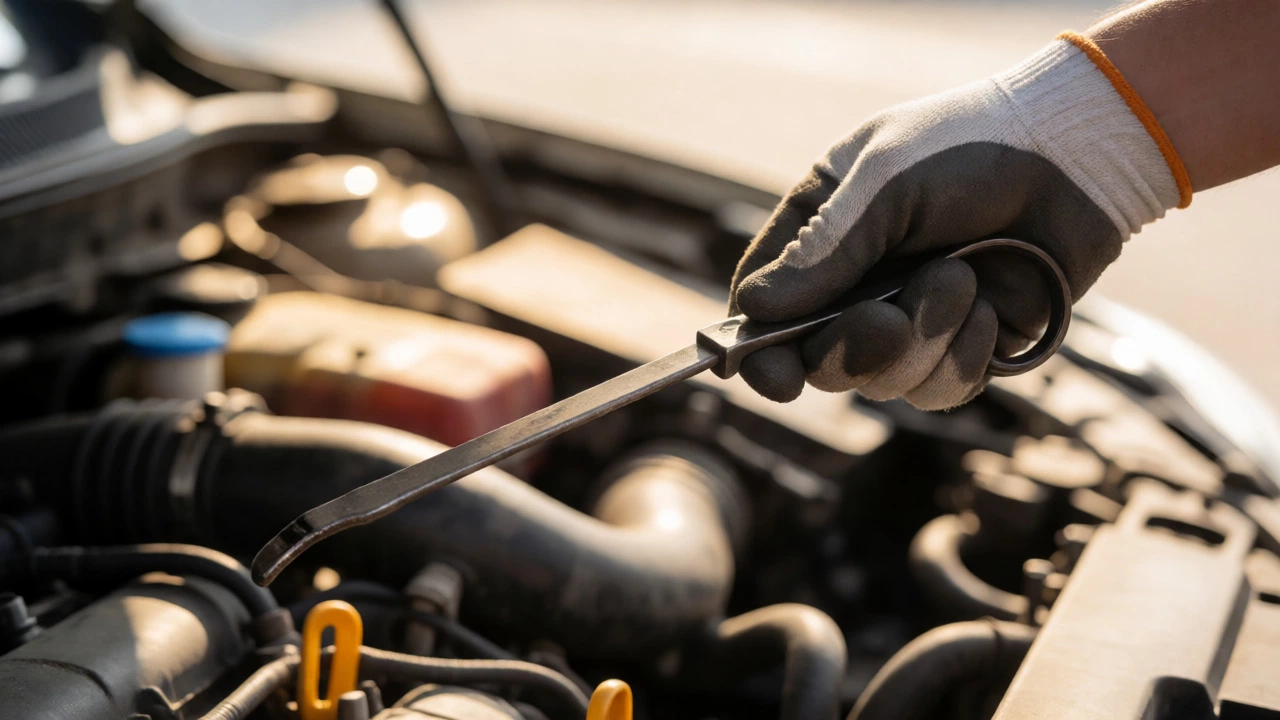
You pull the dipstick out, wipe it clean, reinsert it, and pull it again. It comes back bone dry. No oil film, no residue, just metal. Your heart skips a beat. Is your engine about to seize? Do you need to call a tow truck immediately? Before you panic, take a breath. A dry dipstick usually means the oil level has dropped below the minimum mark on the stick, but it doesn't necessarily mean the sump is empty. However, it does mean you need to act fast, but carefully. Adding too much oil can be just as damaging as adding too little.
Here is the quick fix for most modern passenger cars: add one quart (or one liter) of the correct viscosity oil, wait five minutes, and check again. Repeat only if necessary. Never dump in a full bottle at once unless you are certain of your engine's specific low-level warning behavior. Most engines hold between 4 and 6 quarts total, so the gap between "empty" and "full" is often less than a single standard container. Let’s break down exactly why this happens, how to measure it correctly, and what mistakes to avoid when your gauge reads zero.
Understanding What a Dry Dipstick Actually Means
The dipstick is a simple measurement tool that gauges the oil level in the engine's oil pan. It works by dipping into the reservoir where the oil collects when the car is parked. When the stick is dry, it indicates that the oil surface has fallen below the lowest point the stick can reach. This is different from seeing an oil spot near the bottom hole; dry means the level is critically low.
Most people assume "dry" equals "zero." In reality, there is still oil in the system lubricating the top end, camshafts, and valvetrain, because those components rely on oil being pumped up, not just sitting in the pan. But the oil pump pickup tube sits at the very bottom of the pan. If the level drops below that tube, the pump sucks air instead of oil. That causes immediate loss of pressure, leading to loud ticking noises, overheating, and potential engine failure within minutes of driving.
| Vehicle Type | Total Oil Capacity | Est. Amount Below Min Mark | Safe Initial Add |
|---|---|---|---|
| Small 4-Cylinder (e.g., Toyota Corolla) | 3.5 - 4.0 Quarts | ~1 Quart | 0.5 - 1 Quart |
| Standard V6 (e.g., Honda Accord) | 4.5 - 5.0 Quarts | ~1.5 Quarts | 1 Quart |
| V8 Truck/SUV (e.g., Ford F-150) | 6.0 - 7.7 Quarts | ~2 Quarts | 1 - 1.5 Quarts |
| Diesel Heavy Duty | 8+ Quarts | Variable | Check Manual First |
The Step-by-Step Process to Refill Safely
Don't just pour oil in while the engine is running or right after shutting it off hot. The process requires patience to get an accurate reading. Here is the exact method used by mechanics to ensure you don't overfill.
- Park on Level Ground: If your car is on a slope, the oil pools to one side of the pan. On a steep incline, the dipstick might read dry even if the tank is half full, or vice versa. Find flat asphalt.
- Let the Engine Cool Slightly: If you were just driving, wait 5-10 minutes. This allows oil to drain back into the pan. If you check immediately after turning off the key, many parts of the engine are still coated in oil, and the pan level will look lower than it actually is relative to the static state.
- Clean the Dipstick Thoroughly: Pull it out, wipe it with a lint-free cloth or paper towel. Ensure no old oil clings to it. Reinsert it fully until it clicks or stops. Pull it out again and lay it flat to see the true level.
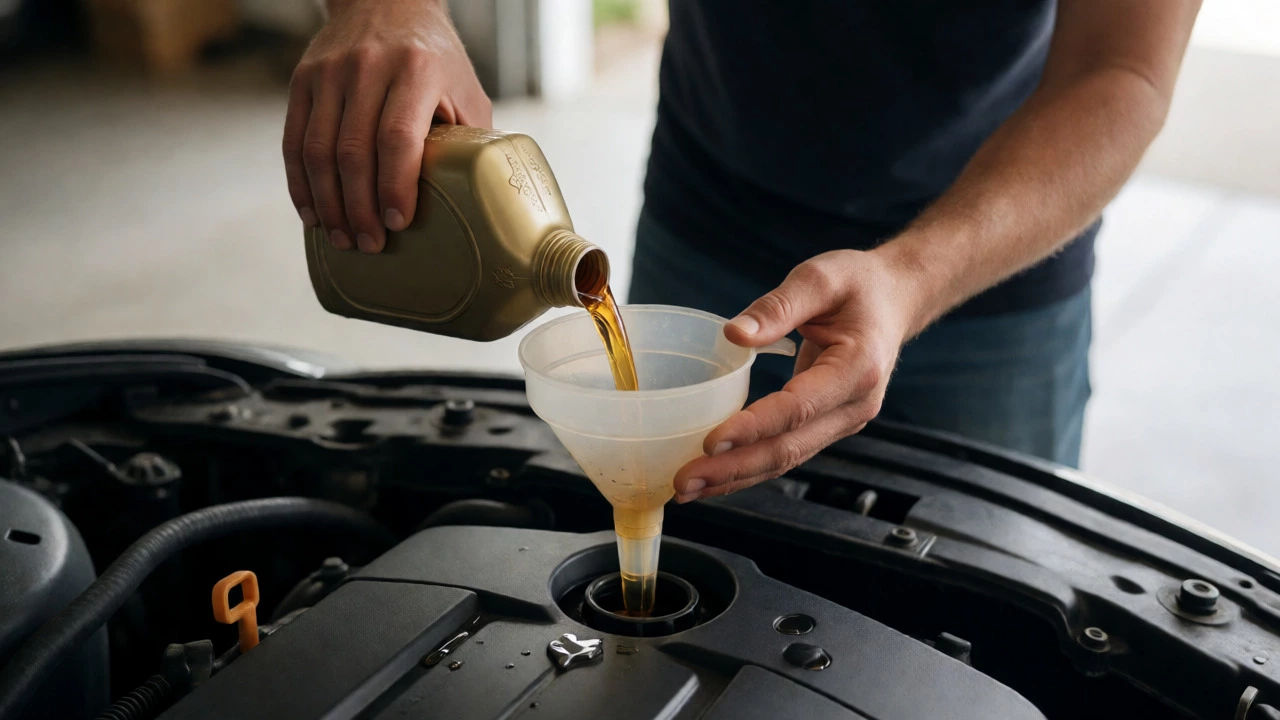
- Add Small Increments: Remove the oil filler cap (usually marked with an oil can symbol). Use a funnel to prevent spills. Pour in one quart (or 1 liter) slowly. Wait another 2-3 minutes for the new oil to settle.
- Recheck: Pull the dipstick again. Wipe and reinsert. Look for the wet line. If it now shows a mark between the two holes (Min and Max), you are good. If it is still dry, add another half-quart.
Why You Should Never Dump a Whole Bottle at Once
It is tempting to buy a 5-quart jug and pour it all in because you think, "More is better, right?" Wrong. Modern engines are tight tolerances. Overfilling causes aeration, which is when the crankshaft whips the excess oil into foam. Foam contains air bubbles. Air compresses; oil does not. When the oil pump tries to push foamy oil through the engine, the pressure drops significantly. This starves bearings of proper lubrication.
Furthermore, excessive pressure from overfilled oil can blow out seals. You might end up with a leaking rear main seal or front crankshaft seal, creating a mess that costs more to fix than the oil itself. Always err on the side of under-filling slightly rather than over-filling. It is easier to add a cup than to drain oil out.
Troubleshooting: Why Was It Dry?
If you found your dipstick dry, you have lost oil. Engines do not consume large amounts of oil without reason. While some older vehicles burn a little oil between changes, a sudden drop to "dry" suggests a leak or consumption issue. Check these common culprits before assuming the sensor is wrong.
- External Leaks: Look under the car. Puddles of dark brown or black fluid indicate a leak from the oil pan gasket, valve cover gaskets, or the oil filter housing. A loose oil filter can also drip significantly.
- Burning Oil: Does your exhaust smoke blue or gray when you accelerate? This points to worn piston rings or valve stem seals allowing oil into the combustion chamber.
- PCV Valve Failure: A stuck Positive Crankcase Ventilation valve can cause high internal pressure, forcing oil past seals and into the intake manifold. This is a cheap part ($10-$20) but causes messy symptoms.
- Sensor Error: Sometimes the electronic oil level sensor disagrees with the manual dipstick. Trust the dipstick. Sensors fail; physics rarely does.

Selecting the Right Oil for Top-Ups
You should match the viscosity grade listed in your owner's manual or on the oil filler cap. Common grades include 0W-20, 5W-30, and 5W-40. Mixing viscosities isn't fatal in an emergency, but it alters the protective properties of the oil. For example, mixing 0W-20 with 5W-30 results in something roughly equivalent to 2W-25. It will lubricate, but it might not flow as well in cold starts or protect as well at high heat.
Also, try to match the type: synthetic vs. conventional. Synthetic oils last longer and handle heat better. If your car uses full synthetic, adding a quart of conventional oil dilutes the performance benefits. It won't hurt the engine immediately, but it reduces the interval protection. If you are topping up between services, using the same brand and type you use for full changes is the smartest move.
When to Stop Driving and Call for Help
If you add oil and the dipstick remains dry after two quarts, stop. Do not drive further. This could indicate a catastrophic leak, such as a cracked oil pan or a blown head gasket letting coolant mix with oil (look for a milky, chocolate-milk substance on the dipstick). Driving with a truly empty sump will destroy the engine in seconds. If the oil light stays on even after refilling, the oil pump may have failed, or the pressure sensor is broken. Either way, tow the vehicle.
Remember, regular checks save money. Make it a habit to check your oil every time you fill up with gas. It takes ten seconds and prevents the panic of a dry dipstick on a highway.
How long should I wait after adding oil before checking the dipstick?
Wait at least 2 to 5 minutes after pouring new oil. This gives the liquid time to drain down through the engine block and into the oil pan. Checking immediately often yields a false low reading because the oil is still coating the upper engine components.
Can I drive my car if the dipstick is dry?
No. Driving with a dry dipstick risks severe engine damage. The oil pump pickup is likely sucking air, meaning critical bearings are unlubricated. Turn off the engine immediately and add oil before moving the vehicle.
What happens if I put too much oil in?
Overfilling causes the crankshaft to whip the oil into foam (aeration), reducing its ability to lubricate. It can also increase internal pressure, blowing out seals like the rear main seal or causing leaks around the oil filter. Drain the excess if the level is above the maximum mark.
Is it okay to mix different brands of engine oil?
Yes, generally speaking, all API-certified motor oils are compatible. Mixing brands will not harm your engine in the short term. However, mixing synthetic and conventional oils reduces the longevity benefits of the synthetic blend. Stick to the same viscosity grade if possible.
Why does my dipstick show no oil but the dashboard says the level is fine?
Electronic sensors can malfunction or give inaccurate readings due to wiring issues or calibration errors. Always trust the manual dipstick as the primary source of truth. If they disagree, verify the dipstick technique first, then investigate the sensor.



Write a comment