Find Your Perfect Suspension Match
Answer these three questions to discover which vehicle's suspension technology best fits your lifestyle.
Recommended Suspension Systems
There is no single answer to which car has the best suspension. If you are driving on smooth highways in Auckland, a Mercedes-Benz S-Class might feel like magic. But if you are tackling gravel roads or potholed streets, that same soft setup could leave you feeling seasick. The "best" system depends entirely on what you value more: isolation from road imperfections or sharp, responsive handling.
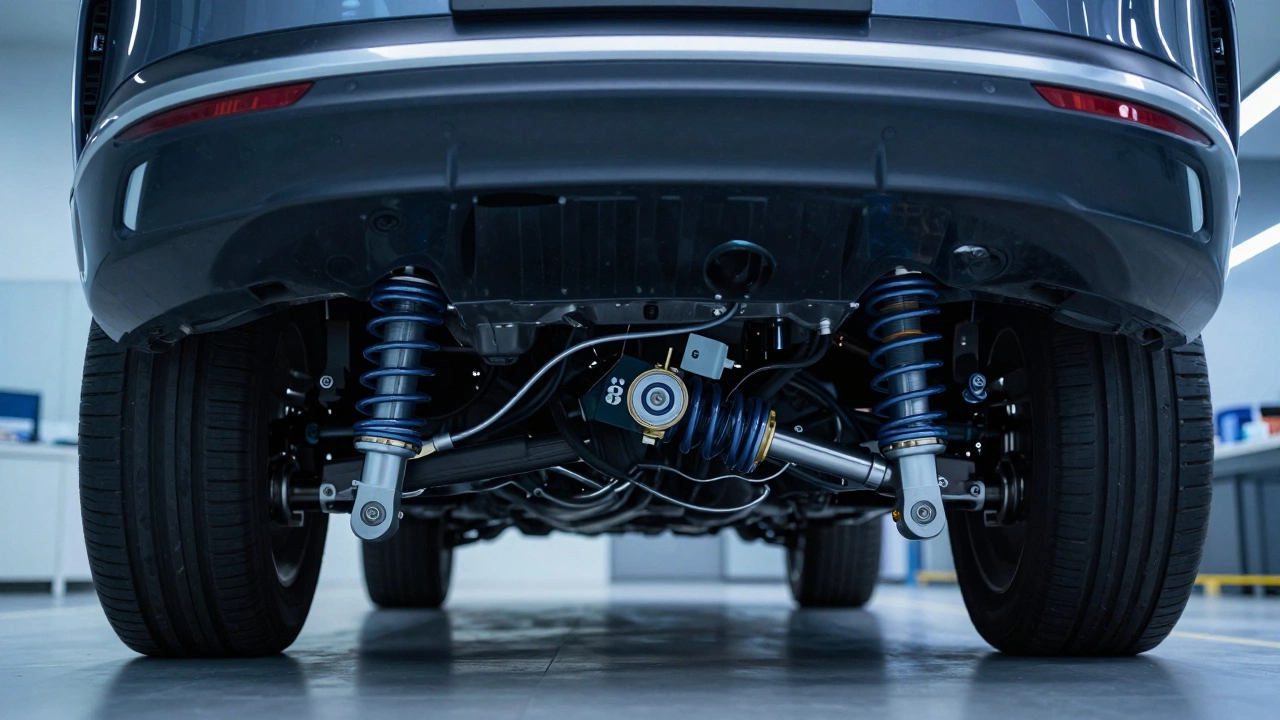
In 2026, the gap between luxury comfort and sporty control has narrowed significantly thanks to advanced electronics. We have moved past simple steel springs and basic shock absorbers. Today’s top-tier suspensions use cameras, radar, and real-time algorithms to adjust damping forces thousands of times per second. This article breaks down the leading technologies and specific vehicles that currently dominate the market, helping you decide which setup suits your daily drive.
The Evolution of Ride Quality
To understand why certain cars stand out, we need to look at how suspension technology has shifted over the last decade. Historically, you had to choose between two extremes. You could buy a heavy luxury sedan with leaf springs or thick hydraulic shocks for a cloud-like ride, or you could buy a sports car with stiff coilovers that communicated every pebble to your spine.
That compromise is largely gone now. Modern engineering allows manufacturers to decouple ride comfort from body control. By using adaptive dampers, engineers can keep the spring rates soft for comfort while using electronic valves in the shocks to stiffen instantly during cornering or braking. This means a family SUV can absorb bumps smoothly on the way to school but still handle confidently on a weekend canyon run.
The key innovation here is speed. Older adjustable systems took seconds to react. Newer systems, like BMW’s Integral Active Steering combined with their suspension tech, or Audi’s predictive active suspension, react in milliseconds. They don’t just react to the bump; they anticipate it.
Top Contenders for Best Luxury Comfort
If your priority is pure isolation-making the road disappear beneath you-these are the current leaders in the automotive world.
Mercedes-Benz E-Class and S-Class (E-Active Body Control)
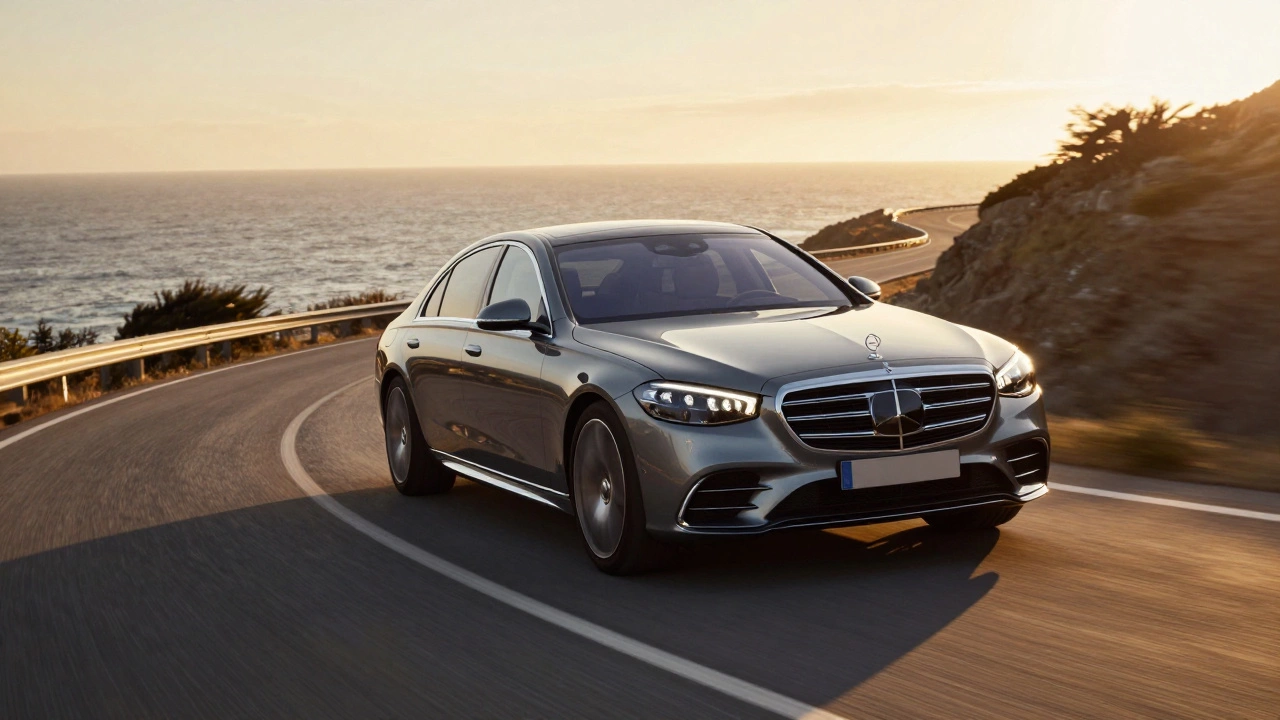
Mercedes-Benz remains the benchmark for ride comfort. Their flagship models utilize E-Active Body Control (in the S-Class) and AIRMATIC (in the E-Class). These are fully active air suspension systems. Unlike passive air bags that just hold pressure, these systems use electric actuators to physically push the wheels up or pull them down to counteract body roll.
The result is startling. When you take a sharp turn at speed, the car leans into the curve rather than away from it. On rough surfaces, the system pre-lifts the wheel before it hits a bump, effectively canceling out the impact. For drivers who spend hours in traffic or commute on degraded infrastructure, this is arguably the best suspension money can buy.
Bentley Flying Spur (Magic Carpet Ride)
Bentley markets its suspension as the "Magic Carpet Ride," and it lives up to the hype. It combines double-wishbone geometry with electromechanical anti-roll bars and rear-wheel steering. The rear axle can rotate up to 2.5 degrees, which shortens the turning circle for city driving and stabilizes high-speed lane changes.
The genius lies in the integration. The suspension talks to the engine management system. If you slam on the brakes, the front of the car lifts slightly to prevent nose-dive, keeping the headlights aimed true and the occupants stable. It feels less like a mechanical system and more like a force field.
Tesla Model S Plaid (Adaptive Air Suspension)
Tesla has disrupted the luxury segment with its approach to EV weight distribution. The Model S uses an adaptive air suspension that lowers the car by nearly two inches at highway speeds to reduce drag and improve stability. At low speeds, it raises the chassis for clearance.
Because electric motors provide instant torque vectoring, Tesla doesn’t need as much physical suspension adjustment to maintain grip. The software manages the balance between the front and rear motors so precisely that the suspension can remain relatively compliant without sacrificing handling. It’s a different philosophy: use electricity to do the work that metal usually does.
Best Suspensions for Sport and Handling
For some drivers, "best" means connected. You want to feel the road texture, know exactly where the tires are gripping, and change direction with razor-sharp precision. Here, comfort takes a back seat to communication.
Porsche 911 (PASM and PCCB)
Porsche’s PASM (Porsche Active Suspension Management) is legendary for a reason. Even in its standard form, it offers a remarkable blend of firmness and compliance. However, when paired with PDCC Sport (active roll stabilization), it becomes a track weapon.
The system uses hydraulic pumps to adjust the stiffness of the anti-roll bars independently for each corner. This allows the car to lean into turns for better tire contact patch usage while minimizing body roll. The feedback through the steering wheel is immediate and honest. You aren’t isolated from the road; you are partnered with it.
BMW M Series (M xDrive and Adaptive M Suspension)
BMW’s recent M cars, particularly the M3 and M4, feature a sophisticated adaptive suspension that works in tandem with their all-wheel-drive system. In "Comfort" mode, it’s plush enough for daily driving. Switch to "Track" mode, and the valving tightens dramatically, locking out almost all movement to maximize aerodynamic efficiency and grip.
The integration with the rear-axle steering is crucial here. At low speeds, the rear wheels turn opposite to the front, making the car agile. At high speeds, they turn in the same direction, enhancing stability. The suspension supports this dynamic shift seamlessly, preventing the unsettling feeling of the car changing character mid-corner.
Off-Road and Utility Champions
Not everyone drives on pavement. For those navigating uneven terrain, loose gravel, or steep inclines, the best suspension is one that maintains traction and protects the drivetrain.
Land Rover Defender (Terrain Response 2)
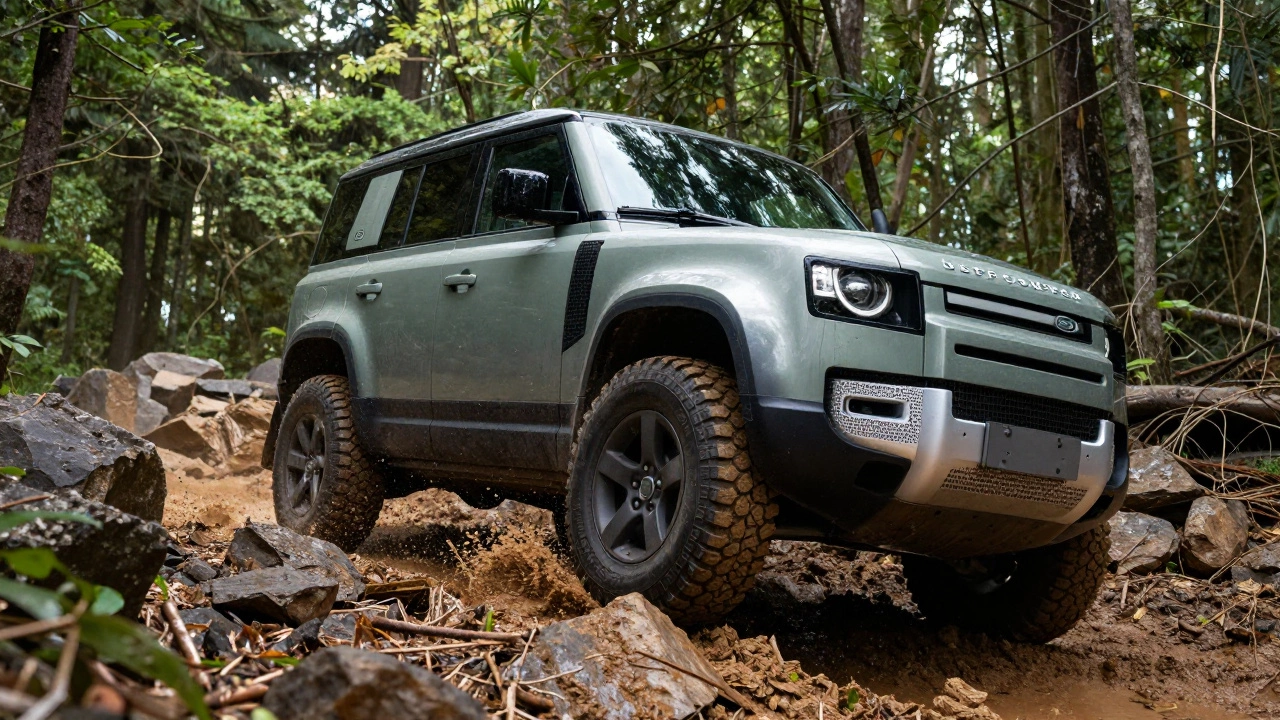
The modern Land Rover Defender features a sophisticated air suspension system that can raise the vehicle by up to 75mm above normal height. More importantly, it includes a "wading mode" that seals the cabin and adjusts the suspension to keep the undercarriage clear of deep water.
The real magic is in the differential lock integration. The suspension articulates freely, allowing one wheel to drop into a rut while the others maintain contact. Combined with electronic locking differentials, the power is sent only to the wheels with grip. It’s not about comfort; it’s about capability.
Toyota Land Cruiser (KDSS)
Toyota’s Kinetic Dynamic Suspension System (KDSS) is a masterpiece of mechanical simplicity. It uses hydraulic valves to disconnect the anti-roll bars when off-roading. This allows maximum wheel travel and articulation. On pavement, the bars reconnect automatically to provide stable, car-like handling.
Unlike complex electronic systems, KDSS is robust and less prone to failure in extreme environments. It’s the preferred choice for overlanders who prioritize reliability over digital gimmicks.
| Vehicle / Technology | Primary Benefit | Best Use Case | Complexity Level |
|---|---|---|---|
| Mercedes E-ABC | Active body leveling & bump cancellation | Luxury cruising, city potholes | High |
| Porsche PASM + PDCC | Sharp handling, minimal roll | Canyon carving, track days | Medium-High |
| Tesla Adaptive Air | Range optimization, quiet ride | Daily commuting, highway driving | Low-Medium |
| Land Rover Air + Terrain Response | Ground clearance, wading depth | Off-roading, adventure travel | High |
| Toyota KDSS | Articulation, reliability | Rugged off-road, overlanding | Medium |
How to Choose the Right System for You
Selecting a car based on suspension isn’t just about brand prestige. It requires understanding your daily environment. Ask yourself these three questions:
- What is your primary road surface? If you drive mostly on well-maintained highways, a stiff, sport-tuned suspension will feel engaging. If your route includes construction zones, tram tracks, or cracked asphalt, prioritize air suspension or adaptive dampers with a "Comfort" mode.
- Do you carry heavy loads? Traditional coil springs sag under weight. Air suspension systems often include load-leveling sensors that automatically inflate the bags to maintain ride height. This is critical for towing or carrying families and gear.
- What is your tolerance for maintenance? Advanced electronic suspensions are marvels of engineering, but they are also expensive to repair. A failed air compressor or leaking strut bag can cost thousands. Mechanical systems like Toyota’s KDSS or Porsche’s passive setups are generally more durable over the long term.
Test drives are essential, but most people make a mistake here. They test drive on perfect dealership lots. To truly evaluate a suspension, ask permission to drive on a rougher street nearby. Feel how the car handles expansion joints, speed bumps, and uneven patches. Does it bounce once and settle, or does it oscillate? Does the cabin feel secure, or does everything rattle?
The Future: Predictive and Wire-Controlled Chassis
As we move further into 2026, the trend is shifting toward "by-wire" suspensions. Companies like Lotus and Mercedes are developing systems where there is no physical connection between the wheel and the chassis. Instead, electric motors directly control the wheel position.
This eliminates unsprung weight entirely, allowing for unprecedented levels of both comfort and handling. While these systems are currently limited to hypercars and prototypes, trickle-down technology suggests that within five years, we may see active, motor-driven suspensions in mainstream luxury vehicles. For now, however, the hybrid approach of air springs plus electronic dampers remains the sweet spot for most buyers.
Frequently Asked Questions
Is air suspension better than coil springs?
It depends on your priorities. Air suspension offers superior ride comfort, adjustable ride height, and load-leveling capabilities. It is ideal for luxury sedans and off-road vehicles. However, coil springs are simpler, cheaper to maintain, and often more durable. For performance-focused drivers who prioritize handling precision over plushness, high-quality coil springs with adjustable dampers are often preferred.
What is the most reliable car suspension system?
Reliability often correlates with simplicity. Traditional MacPherson strut or double-wishbone setups with passive coil springs are generally the most reliable because they have fewer moving parts and no electronics to fail. Brands like Toyota and Subaru are known for robust, long-lasting suspension components. Complex air suspension systems, while offering better comfort, have higher failure rates due to aging rubber seals and electrical compressors.
How much does it cost to replace a bad suspension?
Costs vary widely. Replacing standard struts or shocks on a compact car might cost between $800 and $1,500 including labor. For luxury vehicles with air suspension, replacing a single air strut can cost $1,500 to $3,000 per corner. Additionally, if the air compressor or drying module fails, repairs can exceed $2,000. Always get a diagnostic check to identify the exact failing component before proceeding.
Can I upgrade my car's suspension for better handling?
Yes, but caution is advised. Aftermarket coilovers allow you to lower the center of gravity and stiffen the damping, improving cornering. However, overly stiff suspensions can make daily driving uncomfortable and may damage other components if not properly aligned. For most drivers, upgrading to high-quality OEM replacement shocks or adding sway bar end links provides a noticeable improvement without compromising ride quality.
What signs indicate my suspension needs repair?
Common signs include excessive bouncing after hitting a bump, uneven tire wear, pulling to one side while braking or steering, and a clunking noise when going over speed bumps. You might also notice the car sitting lower on one side, which indicates a leaking shock or broken spring. Ignoring these signs can lead to premature tire wear and reduced braking performance.


Write a comment