
Car Radiator Lifespan & Maintenance Calculator
Estimate your radiator's remaining life based on material and maintenance habits, and calculate the potential cost of replacement.
Your Radiator Report
Estimated Total Lifespan:
Remaining Life:
Risk Level:
Replacement Part Cost:
Estimated Labor Cost:
Total Replacement Cost:
Imagine you’re stuck in heavy traffic on a humid summer afternoon. The temperature gauge on your dashboard starts creeping up past the halfway mark. You turn on the AC, but instead of cool air, you get warm wind and that distinct sweet smell of burning syrup. Your heart sinks. That’s not just an inconvenience; it’s the sound of your engine crying for help because its radiator has failed.
The short answer to "how many years do radiators last?" is usually between five and ten years. But that number is misleading if you treat it like a warranty expiration date. A radiator doesn’t die from old age alone; it dies from neglect, corrosion, or physical damage. Some last fifteen years with proper care, while others fail in three due to cheap parts and ignored warning signs. Understanding what actually kills these components helps you avoid being stranded on the side of the road.
The Real Lifespan: It Depends on Material and Maintenance
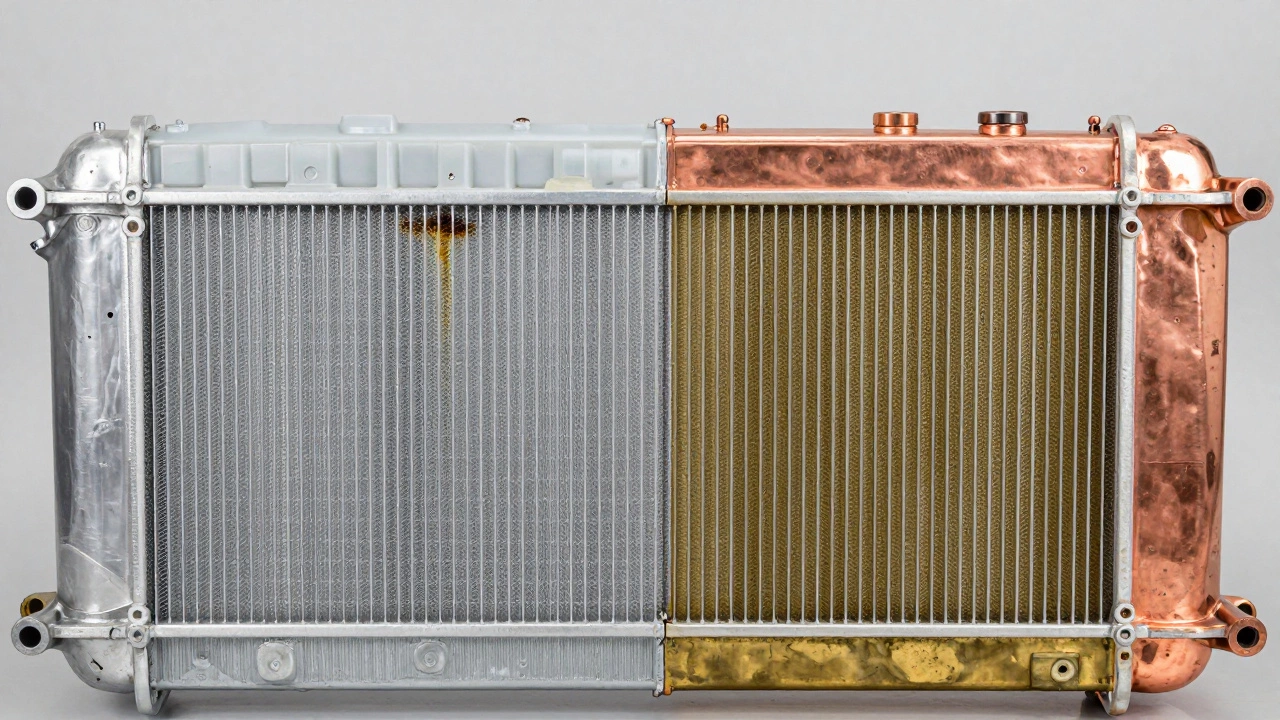
Not all radiators are created equal. The material they’re made from plays a huge role in how long they survive. Older cars often used brass and copper, which were incredibly durable but heavy and expensive. Modern vehicles almost exclusively use aluminum because it’s lighter and dissipates heat efficiently. However, aluminum is more prone to corrosion if the coolant chemistry isn't right.
| Material | Average Lifespan | Durability Factor | Common Issue |
|---|---|---|---|
| Aluminum | 5-10 years | Medium | Corrosion, pinhole leaks |
| Copper/Brass | 10-15+ years | High | Solder failure, weight |
| Plastic Tanks (Modern) | 3-7 years | Low | Cracking, warping |
The weak point in most modern radiators isn't the metal core itself, but the plastic tanks attached to the top and bottom. These plastic components degrade over time due to heat cycling. They become brittle and crack, leading to sudden coolant loss. If you have a car manufactured after 2000, check those plastic seams closely every two years.
Signs Your Radiator Is About to Quit
You rarely get a warning light that says "Radiator Dying." Instead, your car gives you subtle hints. Ignoring these is the fastest way to blow a head gasket or warp your engine block. Here is what to look for:
- Rising Temperature Gauge: This is the most obvious sign. If the needle sits higher than normal during idle or low-speed driving, airflow through the radiator is restricted, either by internal clogging or external debris.
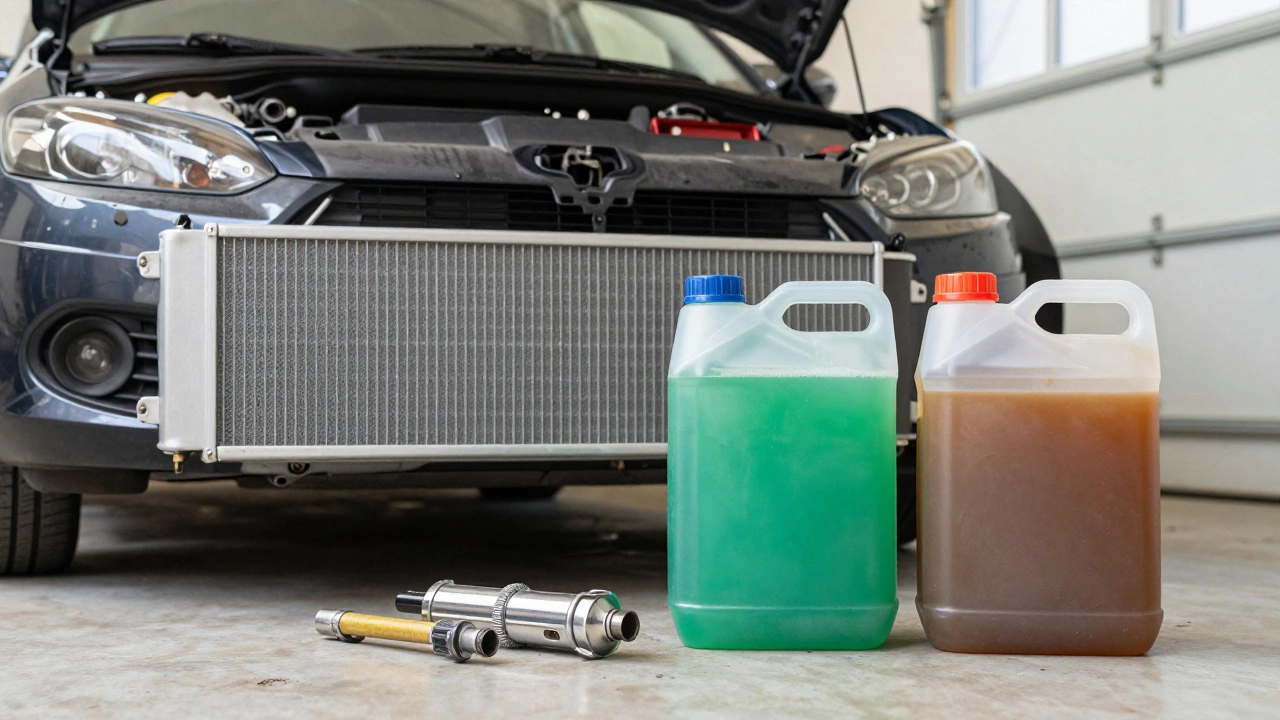
- Discolored Coolant: Pull the radiator cap (only when cold!) and look inside. Clean coolant should be bright green, orange, or pink depending on the type. If it looks rusty brown or muddy, rust and scale are building up inside the tubes, blocking heat transfer.
- Leaks Under the Car: Puddles of sticky, brightly colored fluid under the front of your car indicate a breach. Even small drips matter because cooling systems are pressurized; a tiny hole can lead to rapid overheating.
- Steam from the Hood: If you see steam escaping from under the hood, pull over immediately. This means coolant is boiling over, likely due to a major leak or a complete blockage.
Don't wait for the steam. By the time you see steam, you’ve already lost significant coolant pressure. Addressing discoloration early with a flush can add several years to your radiator's life.
What Shortens Radiator Life?
If you want your radiator to last closer to ten years rather than five, you need to manage the environment it operates in. Several factors accelerate wear:
Neglected Coolant Changes is the number one killer. Coolant contains anti-corrosion additives that break down over time. Once those additives are gone, the water in the mixture starts eating away at the aluminum and solder joints. Most manufacturers recommend changing coolant every 30,000 to 60,000 miles. If you skip this, you're essentially running salt water through your system.
Physical Debris also causes damage. Bugs, leaves, and road grime build up on the outside fins of the radiator. This acts as insulation, preventing air from cooling the hot tubes inside. In Auckland’s subtropical climate, where we get heavy rain and lush vegetation, keeping the front grille clean is vital. A quick spray with a garden hose (not high-pressure washer) every few months keeps airflow optimal.
Overheating Events cause thermal shock. Every time your engine overheats, the metal expands rapidly. Repeated expansion and contraction weaken the seals and welds. One severe overheating incident can reduce a radiator’s lifespan by half instantly.
Maintenance Tips to Extend Lifespan
You don’t need to be a mechanic to keep your radiator healthy. Simple habits make a massive difference.
- Check Levels Monthly: Look at the overflow reservoir. If it’s empty, top it up with the correct mix of coolant and distilled water. Never use tap water; minerals in tap water cause scaling.
- Flush Every 50,000 km: Drain the old fluid and refill with fresh coolant. This removes sludge and restores corrosion inhibitors.
- Inspect Hoses: Squeeze the rubber hoses connecting to the radiator. They should be firm but slightly flexible. Cracks or bulges mean they’ll burst soon, taking the radiator’s integrity with them.
- Clean the Fins: Use compressed air or a soft brush to remove bugs and dirt from the front of the radiator. Be gentle; aluminum fins bend easily.
Using a radiator protector, which is a mesh screen installed in front of the radiator, can also help deflect large rocks and debris without restricting airflow significantly.
Repair vs. Replace: When to Cut Losses
If your radiator develops a small leak, can you fix it? Temporary sealants exist, but they are just that-temporary. They often clog the narrow passages inside the radiator, causing overheating later. For a minor leak in a tank, epoxy might hold for a season, but it’s risky.
Generally, if the core is leaking or the plastic tanks are cracked, replacement is the only reliable option. Repair shops can braze aluminum cores, but the cost often approaches that of a new unit. Given that a new aftermarket radiator costs between $150 and $400 depending on the vehicle, and labor adds another $100-$200, replacing it is usually more economical than chasing repairs.
When replacing, opt for an OEM (Original Equipment Manufacturer) part if possible. Aftermarket units vary wildly in quality. Some use thinner aluminum or inferior plastic that fails within two years. Check reviews and warranties before buying.
Cost of Replacement in 2026
Labor rates have risen, and so have parts prices. In New Zealand, expect to pay between $300 and $600 for a complete radiator job on a common sedan. Luxury brands or SUVs with complex cooling systems can push this to $800+. Always ask for a quote that includes the thermostat and water pump, as mechanics often replace these simultaneously since they require similar labor access.
Can I drive my car if the radiator is leaking?
No, you should not drive a car with a leaking radiator. Even a slow leak will eventually drop coolant levels below the safe threshold, causing the engine to overheat. Overheating can warp cylinder heads and destroy pistons, leading to repair bills thousands of dollars higher than a simple radiator swap.
How often should I change my coolant?
Most manufacturers recommend changing coolant every 30,000 to 60,000 miles (approx. 50,000 to 100,000 km). However, if you notice the color fading or becoming murky, change it sooner. Old coolant loses its anti-corrosive properties, which accelerates radiator degradation.
Why does my car overheat in traffic but not on the highway?
This usually indicates a failing cooling fan or a clogged radiator. On the highway, airflow through the radiator is sufficient to cool the engine. In traffic, the car relies on electric fans to pull air through. If the fan motor is weak or the radiator fins are blocked by debris, the engine temperature rises quickly.
Is it worth repairing an old radiator?
Rarely. Aluminum radiators cannot be welded effectively once corroded. Plastic tanks crack irreparably. While emergency sealants exist, they risk clogging the system. Replacement is safer, more reliable, and often cheaper than repeated repair attempts.
What happens if I mix different types of coolant?
Mixing incompatible coolants (like green IAT with orange OAT) can cause chemical reactions that form gel-like sludge. This sludge blocks the radiator’s tiny tubes, leading to immediate overheating and potential engine failure. Always check your owner’s manual for the specified coolant type.

Write a comment