Clutch Replacement Cost Estimator (2026)
Click items to add them to your estimate:
Estimated Total Cost
There is nothing quite as frustrating as pressing down on the pedal and feeling nothing but a spongy void, or hearing that distinct grinding noise every time you try to shift gears. You know what it means: your clutch is gone. The immediate question isn't just about fixing it; it's about how much this repair will drain your bank account. In 2026, replacing a clutch is one of the most significant routine repairs a manual driver faces, and the price tag can swing wildly depending on where you live, what you drive, and who does the work.
If you are looking for a single number, here is the reality: expect to pay between $1,200 and $3,500 for a complete job at a professional shop in New Zealand. However, if you have the tools, the space, and the mechanical aptitude, you can slash that bill by more than half by doing it yourself. This guide breaks down exactly where that money goes, so you aren't blindsided by hidden fees when the mechanic hands you the invoice.
The Breakdown: Parts vs. Labor
To understand the total cost, you have to separate the hardware from the hourly rate. A clutch job is labor-intensive because it requires removing the transmission, which is heavy, awkward, and bolted into the tightest part of your engine bay. Mechanics don't charge by the minute; they charge by the hour, and this job usually takes four to eight hours depending on the vehicle's complexity.
| Component | DIY Cost (Parts Only) | Professional Shop (Parts + Labor) |
|---|---|---|
| Economy Sedan (e.g., Toyota Corolla) | $400 - $700 | $1,200 - $1,800 |
| Mainstream SUV/Utility (e.g., Mazda BT-50) | $600 - $900 | $1,800 - $2,500 |
| European/Luxury (e.g., BMW 3 Series) | $800 - $1,200 | $2,500 - $4,000+ |
| Performance/Sports Car | $900 - $1,500 | $3,000 - $5,000+ |
Labor rates in Auckland and other major centers typically range from $120 to $180 per hour. If a shop quotes you six hours of labor, that’s already $720 to $1,080 before they even buy the parts. Add in the markup on the parts-shops often add a 20% to 30% margin-and the final bill balloons quickly. When you DIY, you only pay retail price for the components, which is why the savings are so dramatic.
What’s Inside the Box? Understanding the Components
When people say "clutch kit," they are rarely talking about just one piece. It is an assembly of friction materials and springs designed to transfer power from the engine to the wheels. Understanding these parts helps you see why quality matters. Cheap kits fail faster, leading to repeat labor costs that destroy any initial savings.
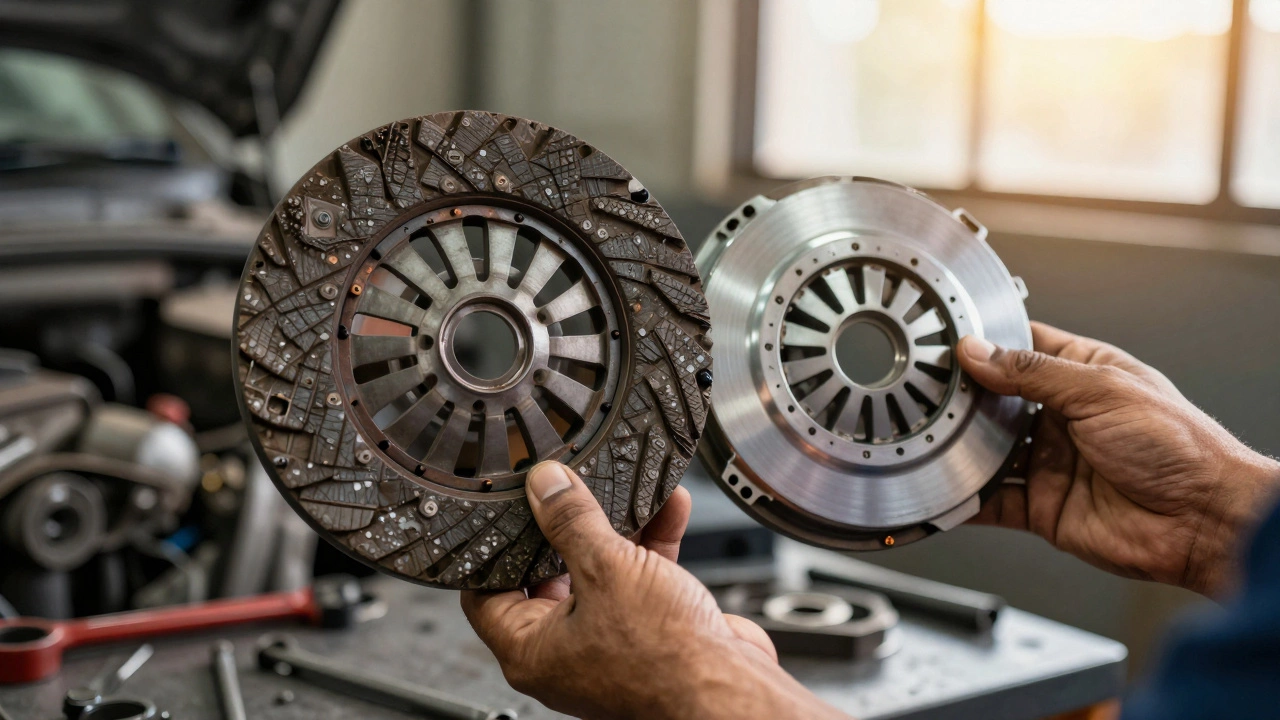
- Clutch Disc: The heart of the system. It sits between the flywheel and pressure plate, featuring friction material similar to brake pads. When worn, it slips, causing RPMs to rise without speed increase.
- Pressure Plate: A heavy steel component with springs that clamps the disc against the flywheel. It must be replaced whenever the disc is changed because its diaphragm spring loses tension over time.
- Flywheel: The large spinning mass attached to the crankshaft. Dual-mass flywheels (DMF) dampen vibration but are expensive. Single-mass flywheels are cheaper but may require balancing.
- Release Bearing (Throw-out Bearing): This bearing presses against the pressure plate fingers when you depress the pedal. It wears out due to heat and friction and should always be replaced during a clutch job.
- Pilot Bearing/Bush: Located in the center of the crankshaft, it supports the input shaft of the transmission. If it fails, the transmission wobbles, damaging the new clutch almost immediately.
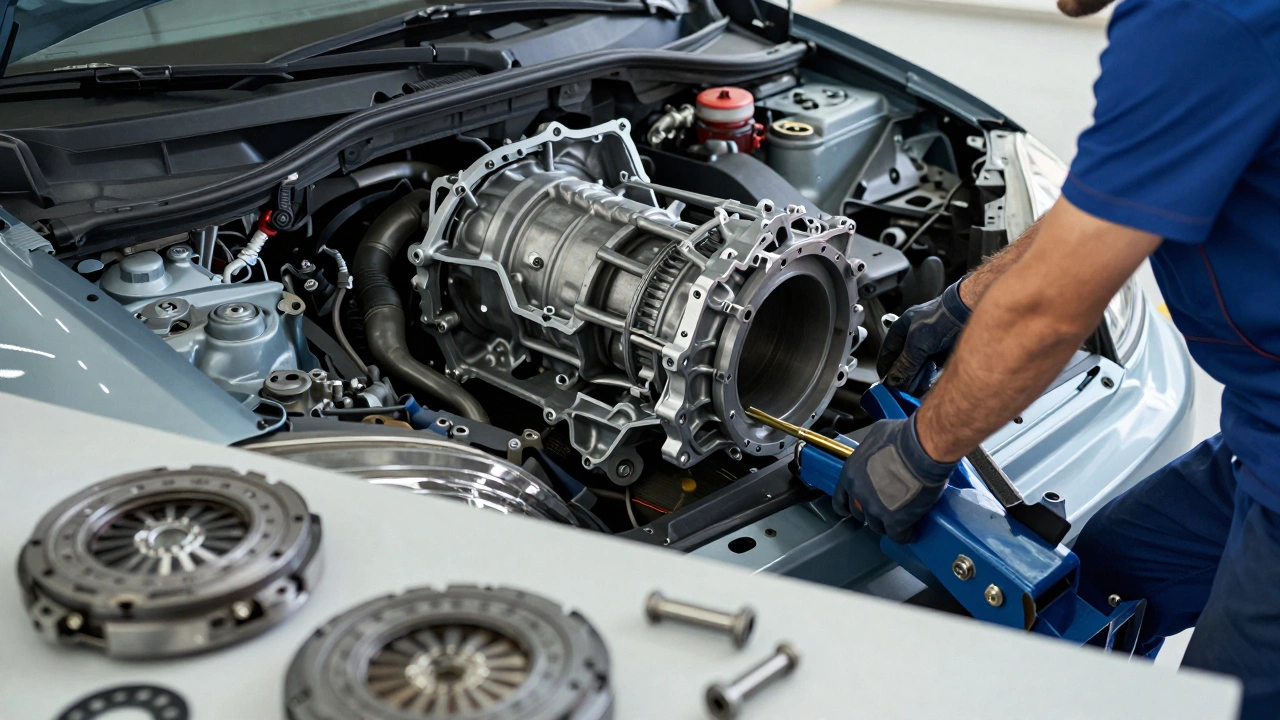
A standard "kit" usually includes the disc, pressure plate, and release bearing. The flywheel and pilot bearing are often sold separately. Mechanics will insist on replacing the pilot bearing and checking the flywheel condition. If the flywheel has hot spots or deep scoring, it needs resurfacing or replacement, adding $100 to $500 to the bill depending on whether it is single or dual mass.
Hidden Costs That Blow Up Your Budget
The biggest shock for car owners comes from the "while we're in there" recommendations. Removing the transmission exposes several other components that are hard to access otherwise. Smart mechanics suggest replacing these preventative items to save future headaches. While optional, skipping them can lead to costly repairs down the line.
- Rear Main Seal: This seal prevents oil from leaking out of the engine block where the transmission mounts. Since it's right under the transmission, it costs almost nothing extra in labor to replace. If it leaks later, you have to drop the transmission again.
- Input Shaft Seal: Located inside the bell housing, this seal keeps transmission fluid from leaking onto the clutch disc. A wet clutch disc will burn up within days. Replacing this seal is cheap insurance.
- Hydraulic System Flush: If your car uses a hydraulic clutch master and slave cylinder, old fluid can cause spongy pedals. Bleeding the system ensures smooth engagement. If the slave cylinder is leaking, it needs replacement ($150-$300).
- Gearbox Mounts: These rubber isolators take a beating when dropping and lifting the transmission. Worn mounts cause shuddering and excessive vibration. Replacing them now saves alignment issues later.
In Auckland, where stop-start traffic is common, these wear items degrade faster. Ignoring a leaking rear main seal might save you $50 today, but it could ruin your new clutch disc tomorrow if oil contaminates the friction surface. Always ask your mechanic for a detailed quote that separates mandatory repairs from recommended maintenance.
DIY vs. Professional: Is It Worth the Risk?
Doing it yourself is not just about saving money; it's about control. When you buy the parts, you know exactly what brand you're getting. Many shops use generic aftermarket kits unless specified otherwise. Brands like Sachs, LuK, and Exedy are industry standards known for durability. Generic brands might save $50 upfront but last 30,000 fewer kilometers.
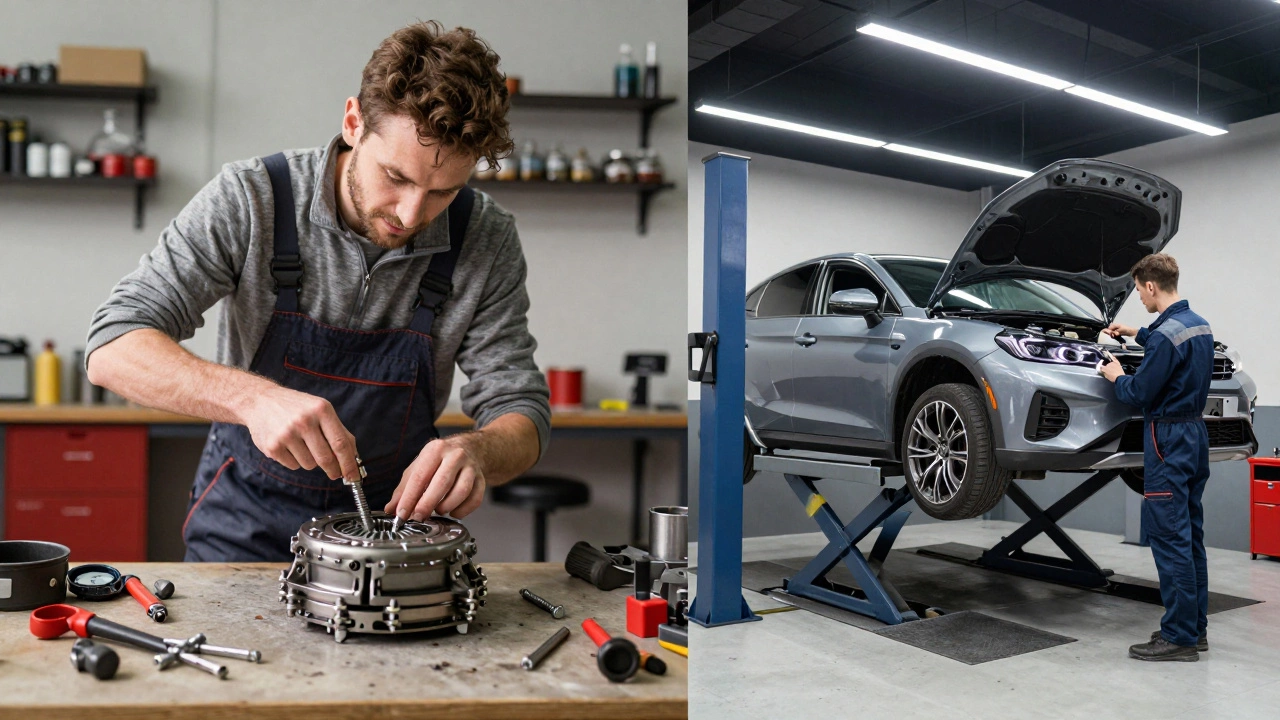
However, DIY has physical demands. You need a two-post lift or high-quality jack stands, a transmission jack, and strong helpers. Dropping a 50kg gearbox on your foot is a real risk. Furthermore, torque specifications are critical. Overtightening the bell housing bolts can crack the aluminum casing, while undertightening leads to misalignment and premature wear. If you lack experience with precision mechanical work, the professional route offers peace of mind and often a warranty on labor.
Signs You Need a Clutch Replacement Soon
Catching the problem early can sometimes save you from collateral damage. A failing clutch doesn't always die instantly; it gives warnings. Recognizing these signs allows you to plan the repair rather than being stranded on the side of the road.
- Slipping: The most obvious sign. You press the gas, the engine revs higher, but the car doesn't accelerate proportionally. This happens when the disc is worn too thin to grip the flywheel.
- High Bite Point: The clutch engages very close to the top of the pedal travel. This indicates the disc is thinner than factory specification.
- Noise When Pedal Depressed: A whining or grinding noise when you press the clutch pedal usually points to a failing release bearing.
- Spongy or Sticking Pedal: If the pedal feels mushy or doesn't return fully, the issue might be hydraulic (master/slave cylinder) rather than the clutch itself, but it still requires attention.
- Vibration: Shuddering when pulling away from a stop suggests a warped flywheel or contaminated disc.
If you notice slipping, do not ignore it. Continuing to drive with a slipping clutch generates immense heat, which can warp the flywheel and damage the transmission input shaft. What was a $1,500 job can turn into a $4,000 transmission rebuild.
Extending the Life of Your New Clutch
Once you've paid for the installation, the goal is to make it last. Clutches are wear items, but bad habits kill them prematurely. In cities like Auckland, with frequent hill starts and traffic lights, proper technique is essential.
First, avoid "riding the clutch." This means keeping your foot resting on the pedal while driving. Even slight pressure causes the release bearing to spin and the disc to slip slightly, generating heat. Keep your foot on the dead pedal when not shifting. Second, minimize "half-clutching" when moving off. Find the bite point quickly and let go smoothly. Dragging the clutch for long distances, such as crawling through traffic, is the fastest way to burn out a new kit. Third, ensure your suspension is in good shape. Bouncing on rough roads puts uneven stress on the drivetrain. Finally, consider the type of kit you install. For daily drivers, a standard organic or ceramic composite disc offers comfort and longevity. Reserve twin-disc or carbon-ceramic kits for track use or heavy towing, as they are harsh on street transmissions and harder to engage smoothly.
How long does a new clutch last?
On average, a clutch lasts between 80,000 and 150,000 kilometers. However, this varies heavily based on driving style. City drivers who frequently stop and start may see failure around 60,000 km, while highway drivers might exceed 200,000 km. Aggressive driving, towing, and riding the clutch significantly reduce lifespan.
Can I replace just the clutch disc?
Technically yes, but it is highly discouraged. The pressure plate's spring tension weakens over time, and the flywheel surface degrades. Installing a new disc on old components leads to poor performance and rapid failure of the new part. Always replace the full kit: disc, pressure plate, and release bearing.
Is a dual-mass flywheel worth the extra cost?
If your car came with one, yes. Dual-mass flywheels dampen engine vibrations, providing a smoother ride and protecting the transmission. Replacing it with a single-mass flywheel reduces cost but increases cabin noise and vibration. Single-mass units are better for racing applications where weight reduction is prioritized over comfort.
Why is my clutch pedal soft after replacement?
A soft or spongy pedal usually indicates air in the hydraulic system. This requires bleeding the clutch lines to remove air bubbles. If the pedal remains soft after bleeding, check for leaks in the master or slave cylinders, or inspect the hydraulic hose for internal swelling.
Do automatic cars have clutches?
Traditional torque-converter automatics do not have a friction clutch like manual cars. However, Dual-Clutch Transmissions (DCT) and some CVTs do use clutch packs. These are sealed units and generally require specialized diagnostic tools and equipment for repair, making them more complex and expensive to service than traditional manual clutches.

Write a comment