Car Suspension Diagnosis & Cost Estimator
What's Wrong With Your Ride?
Select the symptoms you are experiencing to identify potential issues and get a cost estimate.
Diagnosis Results
Imagine driving over a speed bump that usually feels like a gentle nudge. Instead, your car jolts violently, the steering wheel vibrates in your hands, and you hear a loud clunk from underneath. It’s unsettling, isn’t it? That moment of discomfort is often the first sign that your car suspension is failing.
The question on every driver's mind is simple but critical: Can car suspension be repaired, or do you have to replace everything? The short answer is yes, most components can be fixed or replaced individually. However, the suspension system is a network of interconnected parts. Fixing one broken piece without checking its neighbors is like patching a leaky roof without fixing the damaged shingles around it. You might stop the drip today, but the problem will return tomorrow.
Understanding What Actually Breaks
To know if something can be repaired, you first need to identify what is broken. Your suspension isn't just one part; it’s a complex assembly designed to keep your tires on the road while absorbing bumps. When people say their "suspension is shot," they rarely mean the entire system has failed at once. Usually, it’s specific components wearing out due to age, road salt, or heavy impacts.
Here are the most common culprits:
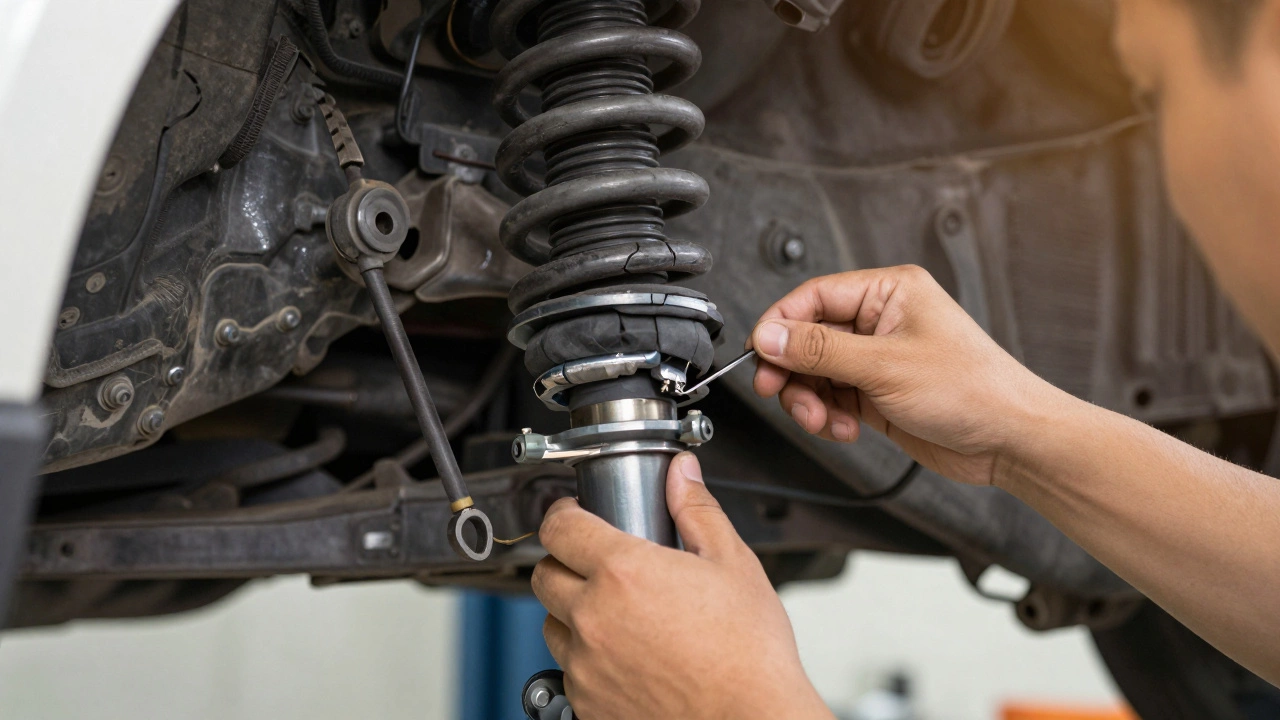
- Shock Absorbers and Struts: These dampen the bouncing motion of the springs. They don’t usually "break" in a way that allows for internal repair. Once the seal fails and fluid leaks out, the unit is dead. The standard fix is replacement.
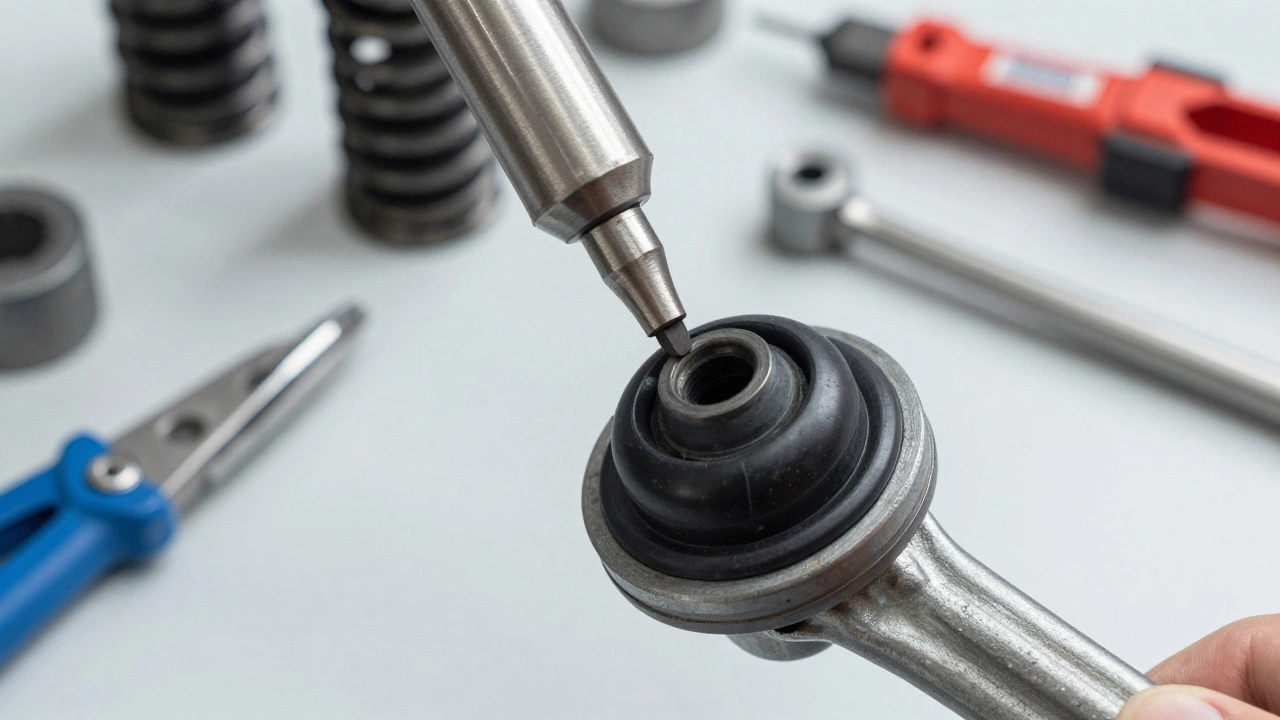
- Control Arms and Bushings: Control arms connect the wheel hub to the frame. They use rubber bushings to absorb vibration. Over time, these rubber pieces crack or tear. Here is the good news: you often don’t need to replace the entire metal arm. You can press out the old bushings and install new ones, saving significant money.
- Sway Bar Links: These small rods connect the sway bar to the control arms. They take a lot of stress and frequently develop play in their ball joints. Because they are inexpensive and easy to swap, this is a straightforward repair.
- Coil Springs: Springs support the vehicle's weight. If a spring breaks (which is rare but possible), it must be replaced. Never try to weld or bend a broken spring back into shape-it’s dangerous and ineffective.
Identifying the exact source of the noise or handling issue is half the battle. A professional inspection or a careful visual check under the car can tell you whether you’re looking at a quick bushing swap or a full strut overhaul.
Repair vs. Replacement: Making the Right Choice
This is where many drivers get stuck. Mechanics often recommend replacing entire assemblies because it’s faster for them and guarantees reliability. But as a savvy car owner, you should weigh the costs and benefits carefully.
| Component | Can It Be Repaired? | Best Approach | Cost Efficiency |
|---|---|---|---|
| Shock Absorbers | No | Replace entire unit | Medium |
| Struts | Limited (rebuild kits exist) | Replace entire assembly | Low (labor intensive) |
| Control Arm Bushings | Yes | Press in new bushings | High (saves metal cost) |
| Sway Bar Links | No | Replace link only | Very High |
| Ball Joints | Yes (pressable types) | Press out old, press in new | High |
For example, if your control arm bushings are torn, replacing just the rubber inserts is cheaper than buying a new control arm. However, if the metal arm itself is bent from hitting a pothole, no amount of bushing swapping will fix the geometry. In that case, replacement is the only safe option.
Consider the labor involved too. Pressing out old bushings requires specialized tools. If you’re doing this yourself, the savings are clear. If you’re paying a shop, their hourly rate might make the total cost of pressing bushings higher than simply swapping the whole arm. Always ask for a quote on both options.
Signs You Need Immediate Attention
You shouldn’t wait for a catastrophic failure to address suspension issues. Early detection means smaller repairs. Watch for these specific symptoms:
- Excessive Bouncing: After hitting a bump, does your car continue to bounce up and down more than twice? This indicates worn shocks or struts that aren’t damping the energy properly.
- Pulling to One Side: If your car drifts left or right when you let go of the steering wheel on a flat road, your alignment is off. This could be caused by worn control arms or ball joints pushing the wheels out of position.
- Nose Diving: When you brake hard, does the front end dip sharply? This suggests weak front shocks or struts failing to control weight transfer.
- Uneven Tire Wear: Check your tires. If you see cupping (dips across the tread) or excessive wear on the inner or outer edges, your suspension isn’t keeping the tire flat against the road. This wastes money on premature tire replacements.
- Clunking Noises: A metallic clunk when going over bumps usually points to loose hardware, worn bushings, or bad sway bar links. Don’t ignore this sound; it means parts are moving when they shouldn’t.
Ignoring these signs doesn’t just hurt your comfort. It compromises safety. Worn suspension reduces tire contact with the road, increasing stopping distances and making the car harder to control during emergency maneuvers.
The Hidden Cost: Wheel Alignment
Here is a rule every mechanic follows: whenever you touch suspension components, you must perform a wheel alignment. Why? Because suspension parts dictate the angle at which your wheels sit. Even a millimeter of play in a new bushing changes those angles.
If you replace a control arm or strut and skip the alignment, your new parts won’t last long. More importantly, you’ll ruin your tires within thousands of miles. Think of alignment as insurance for your investment. It ensures that the forces acting on your new parts are distributed evenly.
In Auckland, where our roads can be hilly and sometimes rough, maintaining proper alignment is crucial. Poor alignment leads to uneven braking force distribution, which is particularly dangerous on wet surfaces. Budget for an alignment after any major suspension work. It’s typically a separate charge, but skipping it is false economy.

DIY vs. Professional Help
Can you fix your own suspension? Absolutely, if you have the right tools and space. Swapping sway bar links or even pressing bushings is manageable for a competent DIYer. However, there are risks.
Working with coil springs requires extreme caution. Springs store massive amounts of potential energy. If not compressed correctly using dedicated spring compressors, they can fly apart and cause serious injury. Many mechanics refuse to work on vehicles with broken springs for this reason. If you lack experience with high-tension components, leave the spring-related jobs to professionals.
Also, consider torque specifications. Suspension bolts must be tightened to precise levels. Too loose, and parts vibrate loose; too tight, and you strip threads or crack cast aluminum components. A quality torque wrench is non-negotiable here.
Long-Term Maintenance Tips
Prevention is always cheaper than cure. How can you extend the life of your suspension?
- Avoid Speed Bumps: Hit them slowly. Slowing down reduces the impact force by up to 50%. It’s easier on your shocks and your passengers.
- Check Lubrication: Some older cars have grease fittings (zerks) on ball joints and tie rods. Greasing them regularly pushes out moisture and dirt, preventing premature wear. Modern cars often have sealed joints, so this applies mainly to older models.
- Inspect Regularly: Every oil change, ask your mechanic to look at your suspension. Or, if you’re handy, jack up the car and wiggle the wheels. Any play indicates worn bearings or joints.
- Upgrade Tires Carefully: Changing tire size alters the suspension geometry slightly. Stick to manufacturer-recommended sizes to avoid stressing your components.
Your suspension works silently every day, absorbing millions of micro-impacts. Treat it well, and it will keep your ride smooth and safe for years. Remember, repairing doesn’t always mean rebuilding from scratch. Often, targeted replacement of worn parts restores performance perfectly.
How much does it cost to repair car suspension?
Costs vary widely depending on the vehicle and parts. Replacing sway bar links might cost $100-$300 including labor. Rebuilding control arm bushings could run $200-$500 per side. Full strut replacements often range from $800 to $1,500 for all four corners. Always get a detailed quote specifying parts and labor separately.
Is it safe to drive with a broken suspension component?
It depends on the severity. A minor clunk from a loose link might be drivable for a few days to reach a shop. However, a broken control arm or collapsed strut is extremely dangerous. It can lead to loss of steering control or wheel detachment. If you notice severe pulling, bouncing, or visible damage, stop driving immediately.
Do I need to replace shocks in pairs?
Yes, it is highly recommended to replace shocks or struts in pairs (both front or both rear). Mixing old and new dampers creates uneven handling characteristics, which can make the car feel unstable during cornering or braking. Consistent damping on both sides ensures predictable behavior.
How long do suspension parts typically last?
Most suspension components last between 50,000 and 100,000 kilometers, depending on driving conditions. Rough roads, frequent heavy loads, and exposure to road salt accelerate wear. Rubber bushings degrade faster than metal parts, often showing cracks after 60,000 km even if the metal remains intact.
Can I mix OEM and aftermarket suspension parts?
You can, but proceed with caution. Mixing brands may result in slight variations in stiffness or fitment. For critical safety components like struts, sticking to one brand ensures consistent performance. If budget is tight, prioritize OEM-quality parts for structural elements like control arms and use reputable aftermarket brands for consumables like bushings.



Write a comment