Brake Pad Cost Calculator
Calculate Your Brake Pad Costs
Results will appear here after calculation
Brake pads aren’t something you think about until they start squealing or your car takes forever to stop. But when it’s time to replace them, the question isn’t just how much are brake pads? It’s: How much should you actually pay? And why does one set cost $30 while another runs $200?
Brake Pad Prices: What You’ll Actually Pay
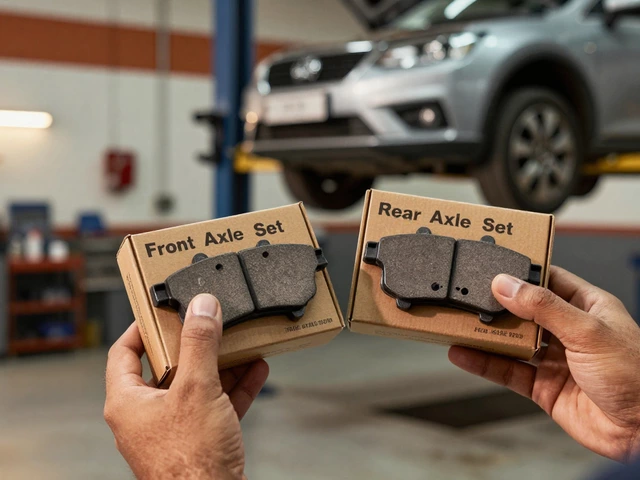
Brake pads vary wildly in price because they’re not all made the same. On average, a single set of brake pads (front or rear) costs between $30 and $150. But that’s just the part. If you’re getting them installed, add another $80 to $150 in labor. So total? Expect $110 to $300 per axle.
Here’s the breakdown you won’t find on Amazon:
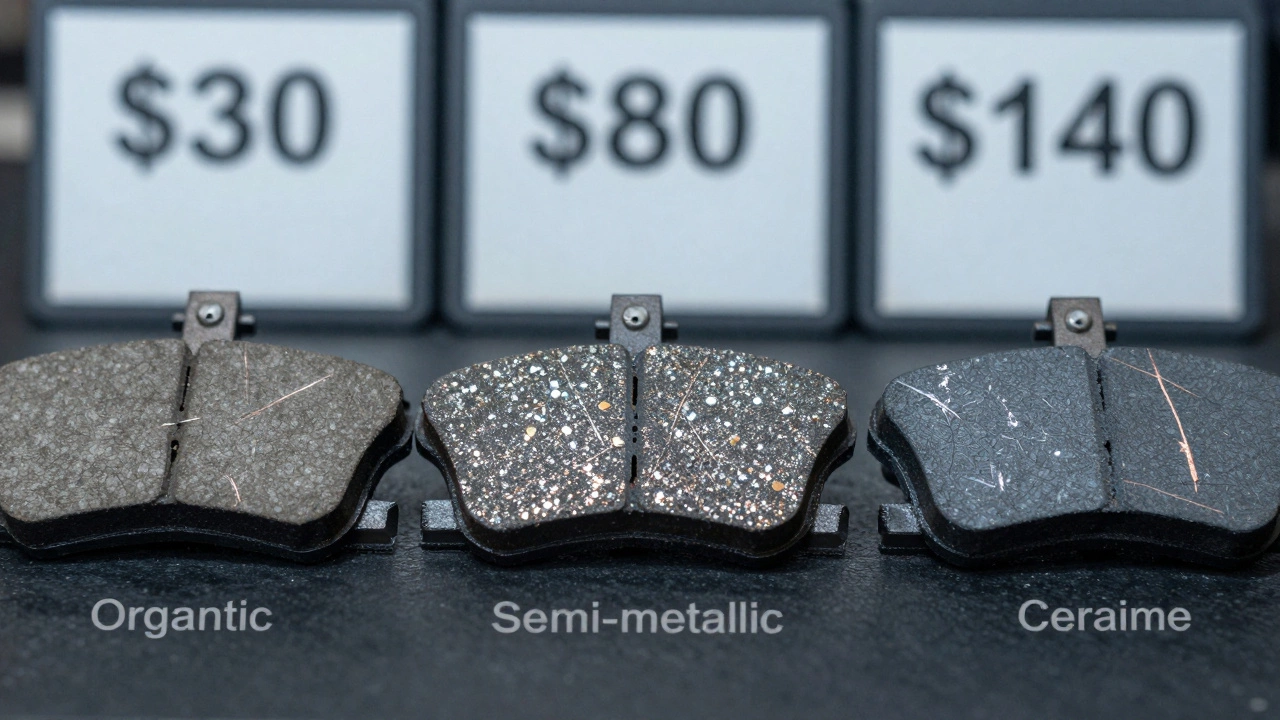
- Economy pads: $25-$50. Made from organic or low-metal materials. These are the cheapest, but they wear out faster, create more dust, and don’t handle heat well. Good for city driving with light braking.
- Standard pads: $50-$90. Most common for everyday cars. Semi-metallic blends offer better stopping power and heat resistance. These are what mechanics install by default.
- Performance pads: $90-$150. Used in sports cars, towing vehicles, or high-performance driving. Ceramic or high-copper blends. Quieter, longer-lasting, and handle heavy braking better. Ideal if you drive in mountains or haul gear.
Don’t be fooled by “lifetime warranty” claims. Those usually mean the pad is covered for as long as you own the car-but you still pay for labor when they wear out. And labor costs more than the pads themselves in most cases.
Why Brake Pads Cost So Much (It’s Not Just Brand Name)
Not all brake pads are created equal. The material inside them makes all the difference.
Organic pads-made from rubber, glass, and resins-are soft and quiet. But they fade under heat. You’ll feel it when you’re going downhill and your brakes start to feel mushy. These are common on older cars and budget replacements.
Semi-metallic pads are the workhorses. They’re made of 30-70% metal-steel, copper, iron. They handle heat better, last longer, and give strong stopping power. But they’re noisier and wear down rotors faster. Most factory replacements are semi-metallic because they’re reliable and cheap to produce.
Ceramic pads are the premium choice. They use ceramic fibers and copper filaments. They’re quieter, produce less dust, last longer, and handle extreme heat without fading. They’re what you’ll find on luxury cars like BMWs and Audis. The catch? They cost 2-3x more than standard pads. But if you drive daily and hate cleaning brake dust off your wheels, they’re worth it.
Brake Pad Brands: Who Makes the Best?
It’s not about the name on the box-it’s about who actually made them. Most brake pads sold under big names are made by just a few manufacturers. Here’s the truth:
- ACDelco: Made by General Motors’ parts division. Solid semi-metallic pads. Good for GM trucks and sedans.
- Bosch: German engineering. Ceramic and semi-metallic options. Reliable, quiet, and widely used in European cars.
- Raybestos: One of the oldest names in brakes. Their Advanced line is ceramic and performs well under heavy use.
- Padmate: A budget brand. Often sold at auto parts stores. Fine for light drivers, but avoid if you tow or drive aggressively.
- StopTech: High-performance. Used in racing and modified cars. Not for daily drivers unless you need max stopping power.
Here’s a trick: Look at the packaging. If it says “OEM Equivalent,” it means it matches the factory part. That’s usually a safe bet. If it says “Premium” or “Performance,” check the material. A ceramic pad labeled “premium” is worth the extra cash. A semi-metallic one? Not so much.
What Your Car Type Really Costs
Not all cars need the same brake pads. A Honda Civic doesn’t need the same pads as a Ford F-150. Here’s what you can expect based on your vehicle:
| Vehicle Type | Pad Type | Part Cost (Front Set) | Labor Cost | Total Estimate |
|---|---|---|---|---|
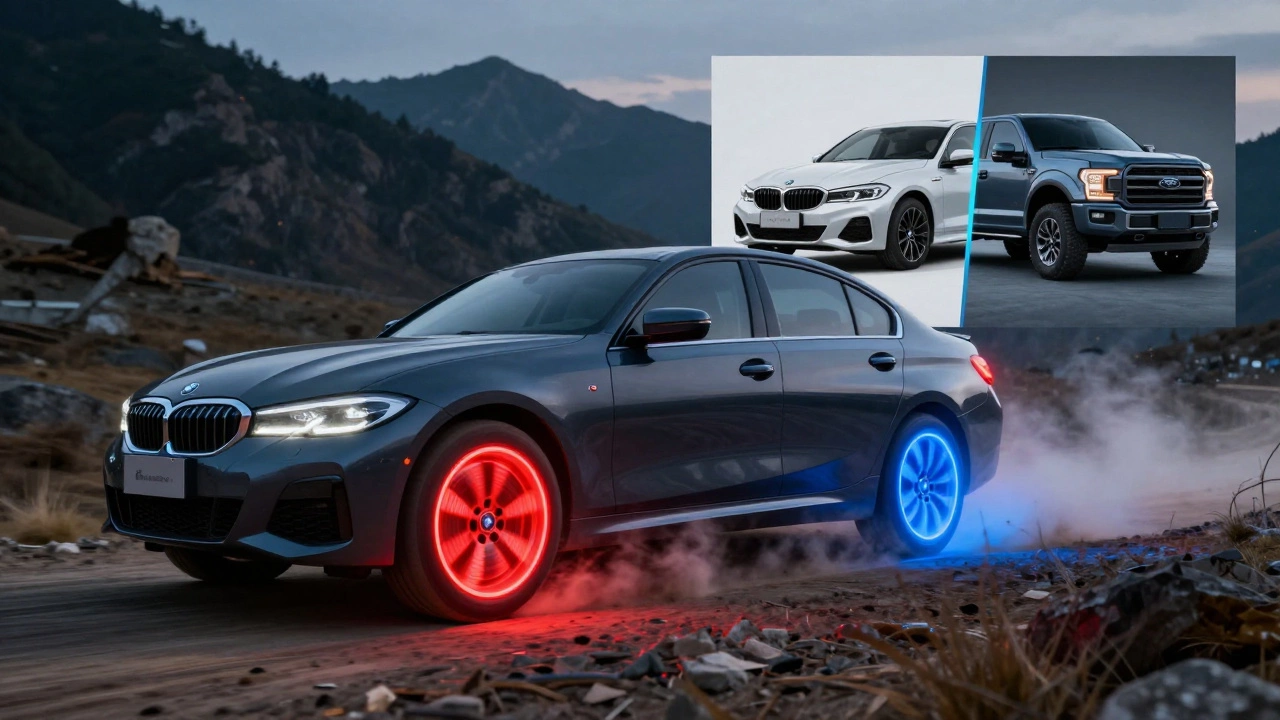
| Compact Car (e.g., Toyota Corolla) | Standard Semi-Metallic | $45 | $90 | $135 |
| SUV (e.g., Honda CR-V) | Heavy-Duty Semi-Metallic | $75 | $110 | $185 |
| Truck (e.g., Ford F-150) | Heavy-Duty Semi-Metallic | $110 | $130 | $240 |
| Luxury Sedan (e.g., BMW 3 Series) | Ceramic | $140 | $140 | $280 |
| Performance Car (e.g., Subaru WRX) | Performance Ceramic | $160 | $150 | $310 |
Trucks and SUVs cost more because their brake systems are bigger. Luxury cars use ceramic pads, which cost more to produce. Performance cars need pads that don’t fade under hard braking-so you pay for the engineering.
When to Replace Brake Pads (And How to Tell)
You shouldn’t wait until you hear squealing. That’s already too late. Brake pads have a wear indicator-a small metal tab that rubs against the rotor when the pad is worn down to 2mm. That’s the squeal.
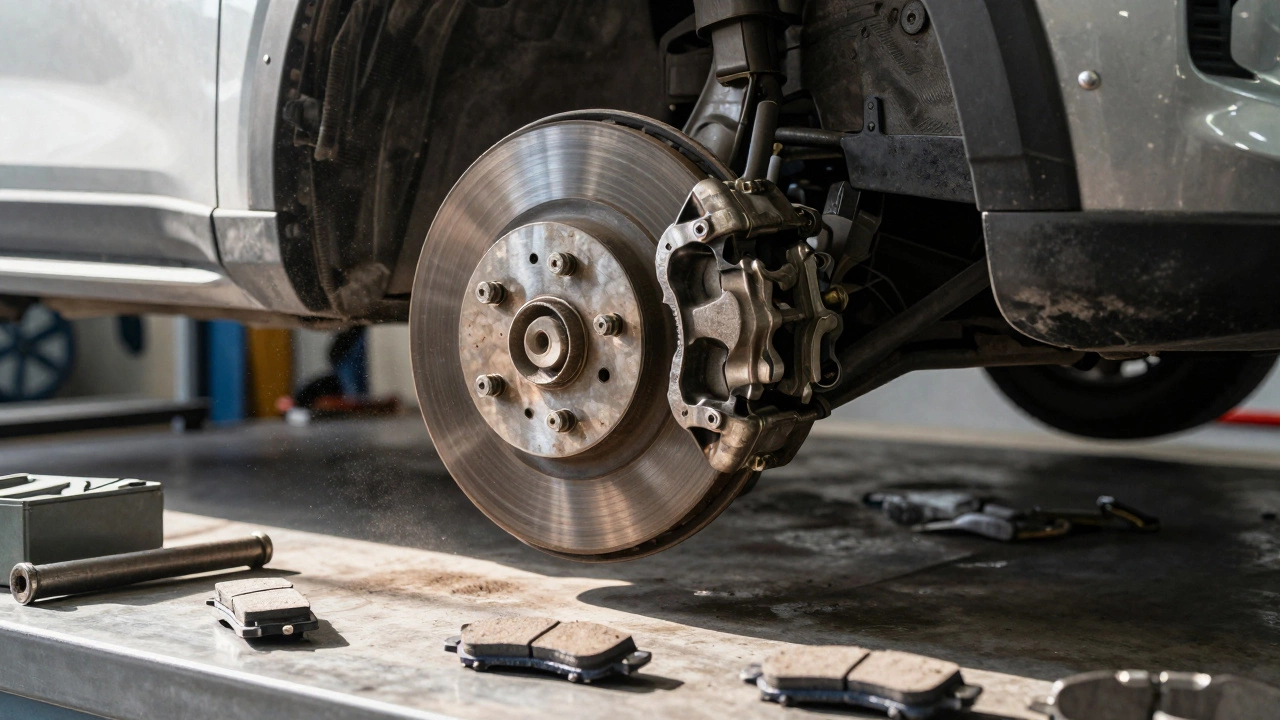
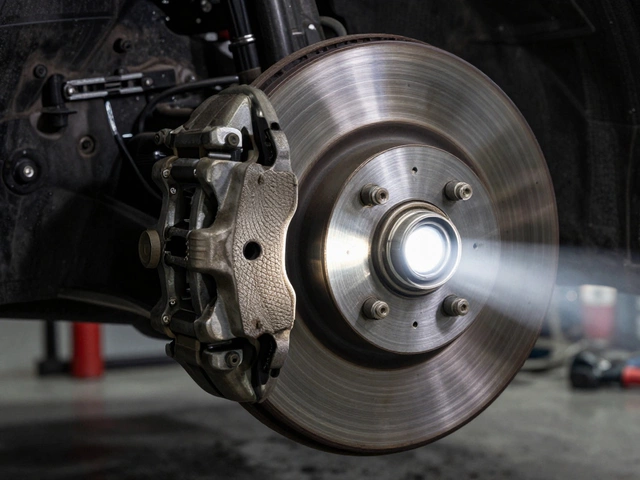
But here’s what most people miss: You can check them yourself. Pop off the wheel and look through the spokes. You should see at least 1/4 inch of pad material. If it’s thinner than a penny, replace them. If it’s down to the metal backing plate? You’ve already damaged your rotors. And replacing rotors adds $100-$200 to your bill.
Also, pay attention to how your car stops. If it pulls to one side, vibrates, or feels spongy, it’s not just the pads. It could be warped rotors, stuck calipers, or air in the brake lines. Don’t just replace the pads-get the whole system checked.
DIY vs. Professional Installation
Can you replace brake pads yourself? Yes. But it’s not as simple as changing oil.
You need:
- Jack and jack stands
- Socket set
- C-clamp or brake piston tool
- Brake cleaner
- Anti-squeal paste
- Patience
If you’ve never done it before, you’ll likely mess up the caliper bolts, damage the sensor wires, or not compress the piston correctly. And if you don’t bleed the brakes afterward, you risk air in the system-which means spongy brakes and dangerous stopping.
Most people save $100-$150 by doing it themselves. But if you’re not confident, pay the labor. A bad brake job can cost you more than a new car.
What You Shouldn’t Do
- Don’t mix pad types. Never put ceramic pads on the front and semi-metallic on the rear. Your car will brake unevenly.
- Don’t buy used pads. Even if they look new, they’ve been heated and cooled. Their performance is unpredictable.
- Don’t ignore the rotors. If your pads are worn down to metal, your rotors are scored. Replacing pads without resurfacing or replacing rotors is a waste of money.
- Don’t assume all brake pads fit all cars. Even within the same model year, trim levels can use different calipers and pad sizes. Always check your VIN or part number.
How Long Do Brake Pads Last?
There’s no fixed number. Some last 25,000 miles. Others last 70,000. It depends on:
- Driving style: Aggressive braking? You’ll burn through pads faster.
- Climate: Wet, salty roads corrode pads and rotors.
- Load: Towing? Carrying heavy cargo? More wear.
- Pad material: Ceramic lasts longer than organic.
Most manufacturers recommend inspection every 12,000 miles. If you drive 15,000 miles a year, check them every 8 months. That’s cheaper than replacing rotors.
Final Advice: What to Buy
If you drive a daily driver and live in the city? Go with standard semi-metallic pads from Bosch or ACDelco. You’ll get good performance, decent life, and no surprises.
If you drive a lot on highways, haul gear, or live in hilly areas? Upgrade to ceramic. You’ll notice less noise, less dust, and more consistent stopping.
If you’re on a tight budget? Don’t go for the cheapest. Buy the mid-range. It’s the sweet spot between cost and reliability.
And always replace them in pairs-front or rear. Never just one side. Uneven braking is dangerous.


Write a comment