If your car is losing coolant and you see puddles under it, the radiator is probably the culprit. But where exactly is it leaking? Most people assume it’s the radiator itself, but the real issue is often something simpler - and cheaper - to fix. Knowing where radiators usually leak from can save you time, money, and a tow truck visit.
Top of the Radiator: The Radiator Cap
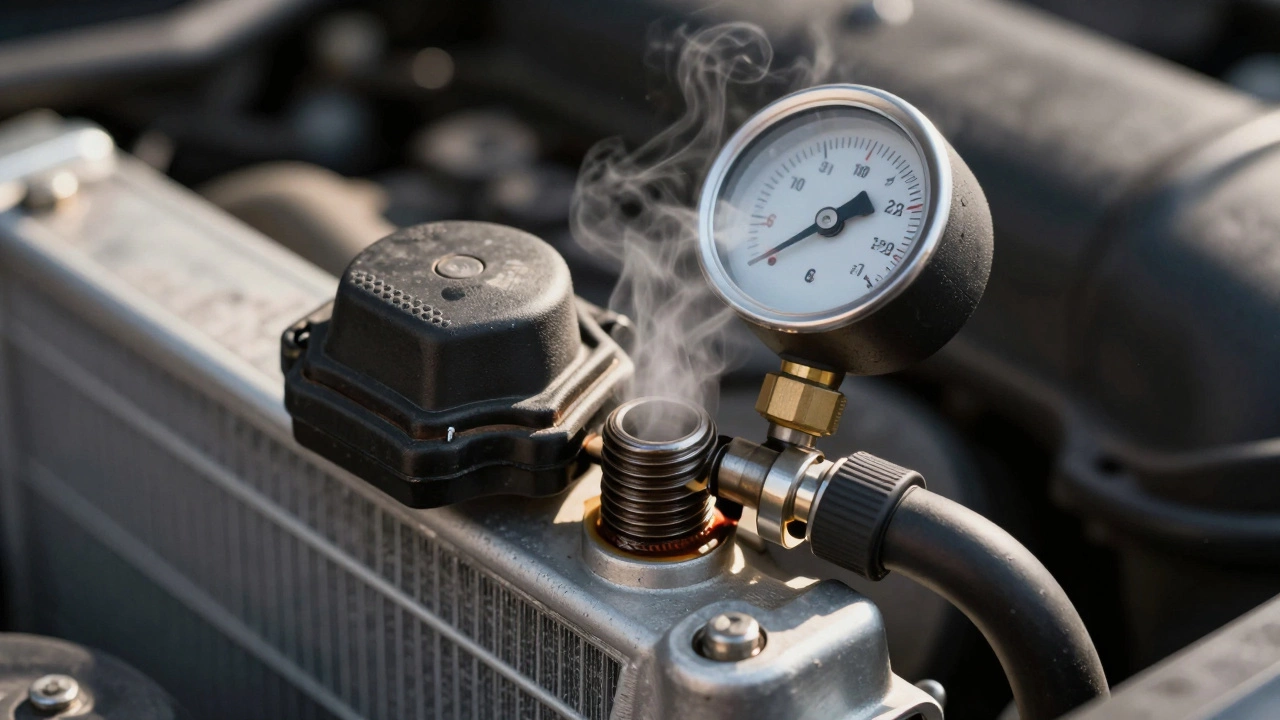
The radiator cap is one of the most overlooked parts. It’s not just a cover - it’s a pressure valve that keeps coolant from boiling at normal engine temperatures. When it fails, pressure builds up and forces coolant out through the overflow tank or seams. A worn-out cap might not seal properly, or its spring could be weak. You can test it with a pressure tester from any auto parts store. If it doesn’t hold the pressure listed on the cap (usually 13-18 psi for most cars), replace it. It costs less than $20 and takes two minutes to install.
Side Seams: Cracks in the Plastic Tanks
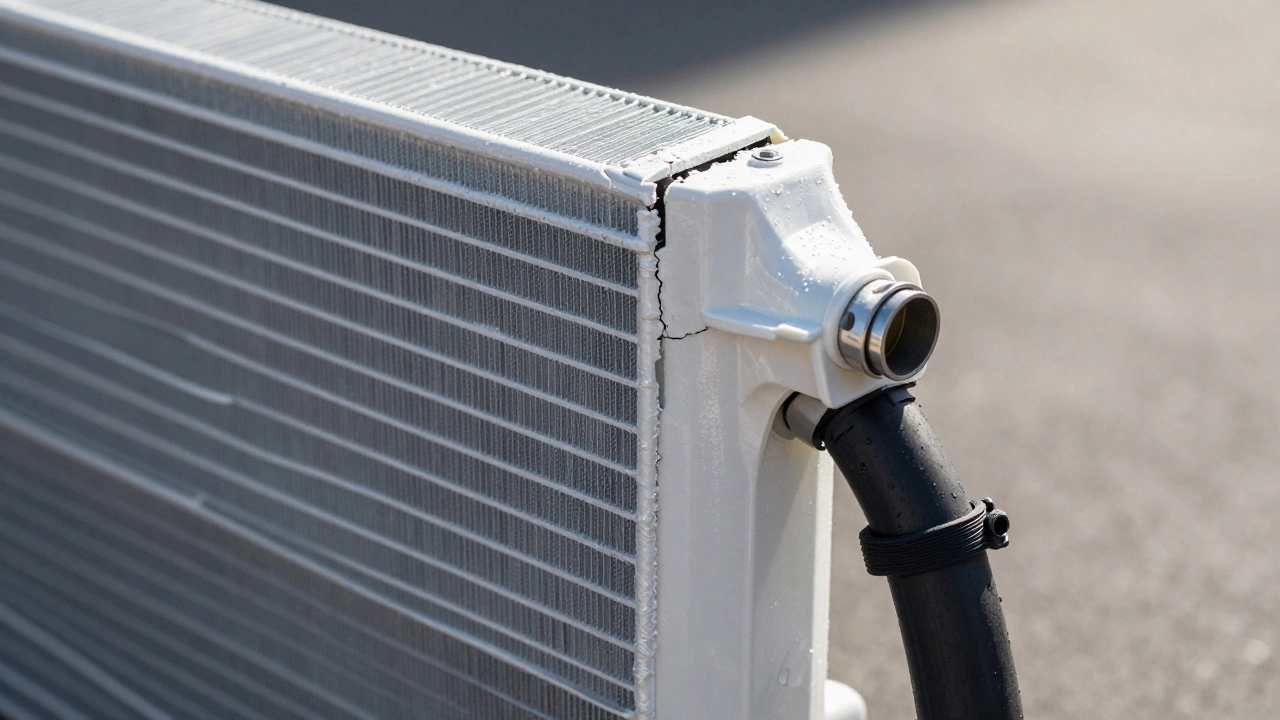
Most modern radiators have aluminum cores with plastic end tanks. Over time, heat cycles cause the plastic to become brittle. You’ll often find leaks along the seam where the plastic tank meets the metal core. These cracks are tiny at first - maybe just a drip after the engine cools down. But they get worse. A visual inspection with a flashlight helps. Look for white, crusty residue around the edges of the tank. That’s dried coolant. If you see it, the radiator is leaking there. Replacing the whole unit is usually the fix, since patching plastic tanks rarely lasts.
Bottom: Hoses and Clamps
Let’s be honest - most coolant leaks aren’t even from the radiator. They’re from the hoses connected to it. The upper and lower radiator hoses are under constant pressure and heat. After 60,000 to 100,000 kilometers, the rubber starts to soften, crack, or bulge. A loose or corroded clamp can also let coolant seep out. Squeeze the hoses when the engine is cool. If they feel soft, spongy, or have cracks, they need replacing. Check the clamps too. A rusted screw or missing spring clamp is a classic leak source. Replacing hoses and clamps together costs under $50 and prevents bigger problems.
Inside: Corrosion and Pinhole Leaks
Inside the radiator, coolant flows through thin metal tubes. Over years, rust and scale build up, especially if you’ve used water instead of proper coolant mix. This corrosion eats through the metal, creating tiny pinholes. These leaks are hard to spot from outside. You might notice a drop in coolant level without any visible puddle. That’s because the leak happens under pressure - coolant sprays into the engine bay and evaporates. A pressure test with a hand pump can reveal these hidden leaks. If the radiator holds pressure for 10 minutes, it’s likely fine. If it drops, internal corrosion is probably the issue.
Water Pump: The Silent Culprit
Many people blame the radiator when the water pump is leaking. The water pump sits right next to the radiator, and coolant from its seal can drip down onto the radiator’s surface. Look for wetness around the pump shaft - especially near the weep hole. A small drip there means the internal seal is failing. If you replace the radiator without checking the pump, you’ll be back in a few weeks. Always inspect the water pump when you’re diagnosing a coolant leak. It’s cheaper to fix early.
Heater Core: Not the Radiator, But Still a Leak
The heater core is a small radiator inside your dashboard. If it leaks, coolant doesn’t pool under the car - it fills the cabin with a sweet, syrupy smell. You might also see foggy windows or wet floor mats on the passenger side. It’s not a radiator leak, but it’s related. A failing heater core often happens at the same time as radiator issues because both are part of the same cooling system. If coolant levels drop fast and you smell antifreeze inside the car, the heater core is likely the problem.
What to Do When You Find the Leak
Don’t drive with low coolant. Even a small leak can lead to overheating, warped cylinder heads, or a seized engine. Here’s what to do:
- Check the coolant level daily. Top off with the correct type if needed.
- Look for green, orange, or pink residue around hoses, caps, and seams.
- Run the engine and watch for steam or drips - be careful, it’s hot.
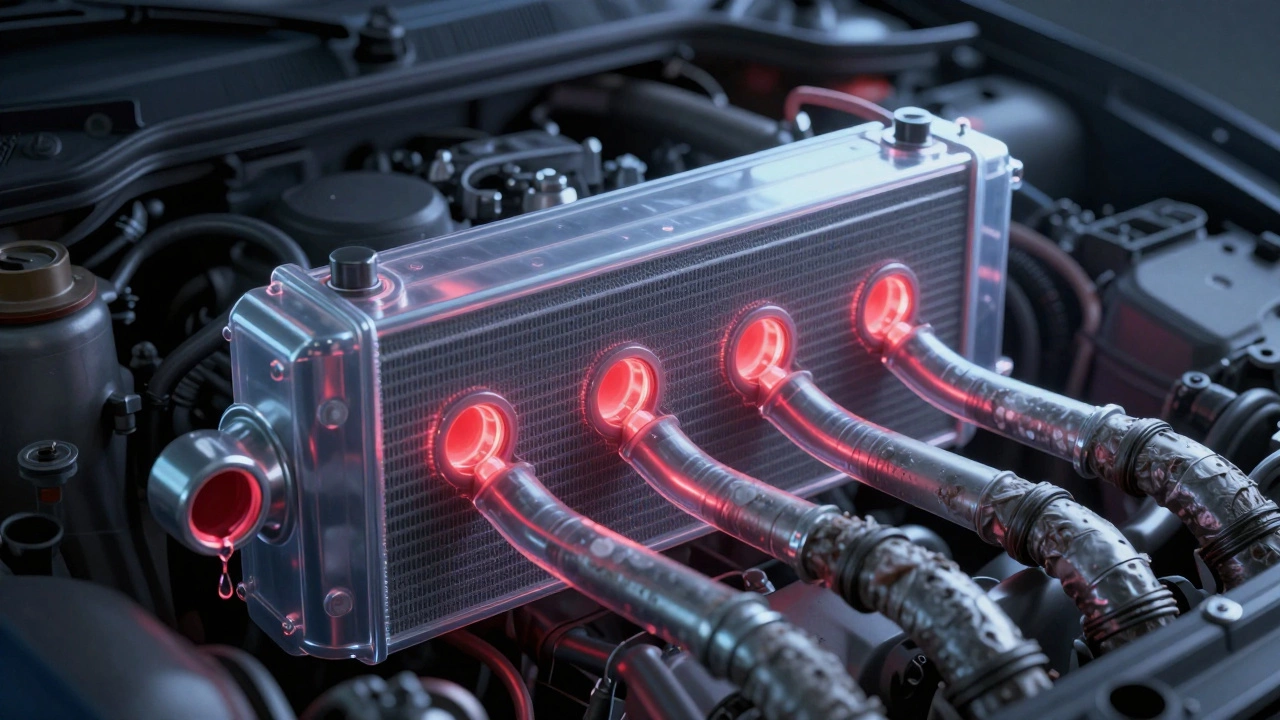
- Use a UV dye kit if you can’t find the leak. Add it to the coolant, then shine a UV light on the system. The leak glows.
- Replace the cap, hoses, and clamps first - they’re the cheapest fixes.
- If the radiator itself is cracked or corroded, replace it. Don’t try to solder aluminum.
Prevention: How to Keep Your Radiator From Leaking
Most radiator leaks are preventable. Here’s how:
- Flush and replace coolant every 50,000 to 80,000 kilometers. Use the type your car’s manual says.
- Never use plain water. Even distilled water causes corrosion over time.
- Inspect hoses and clamps during oil changes. A quick visual check saves big repairs.
- Keep the radiator clean. Dirt and bugs block airflow, making the engine run hotter.
- Replace the radiator cap every 3-5 years. It’s a wear item, just like brake pads.
Many people wait until their car overheats before acting. That’s too late. A small drip today is a $2,000 engine repair tomorrow. Pay attention to warning signs - a rising temperature gauge, a sweet smell, or low coolant. Fixing a radiator leak early is simple. Ignoring it isn’t.
Can a radiator leak be fixed with sealant?
Radiator sealants are a temporary fix at best. They work on tiny pinholes in the core, but won’t stop leaks from cracked tanks, bad hoses, or failed caps. They can also clog the heater core or thermostat. Don’t use them unless you’re stuck on the side of the road. Even then, get the real repair done within a week.
Why does my radiator leak only when the engine is hot?
Coolant expands when heated, increasing pressure inside the system. Leaks that are invisible when cold become obvious under pressure. A cracked tank, weak seal, or failing hose will only drip when the engine is running and hot. Always check for leaks after driving - not when the car is cold.
How do I know if it’s the radiator or the water pump?
Look at the location. Radiator leaks are usually near the top, bottom, or side seams. Water pump leaks happen near the front of the engine, often below the pulley. You’ll see coolant dripping from the pump shaft or around the weep hole. If coolant is leaking from the center of the engine, not the radiator, it’s likely the pump. Replace both if they’re old - they’re often replaced together.
Can I drive my car with a small radiator leak?
Only for a very short time - and only if you keep topping up coolant. Even a small leak can cause overheating if the coolant level drops too low. Overheating can warp the cylinder head or blow the head gasket. That’s a $2,000+ repair. If you see coolant loss, get it fixed before driving more than 50 kilometers.
What coolant should I use in my car?
Always use the type specified in your owner’s manual. Common types are OAT (orange or red), HOAT (yellow or green), or IAT (traditional green). Mixing types can cause gelling or corrosion. If you don’t know, check the bottle - modern coolants list compatible vehicles. Using the wrong type is one of the top causes of radiator corrosion.
Next Steps
If you’ve checked the cap, hoses, and seams and still can’t find the leak, use a UV dye kit. They’re inexpensive and sold at most auto parts stores. Add it to the coolant, drive for 10-15 minutes, then shine the UV light under the hood. The leak will glow brightly. If you still can’t find it, take it to a shop. A pressure test with professional equipment can pinpoint hidden leaks in 15 minutes. Don’t guess - test.



Write a comment