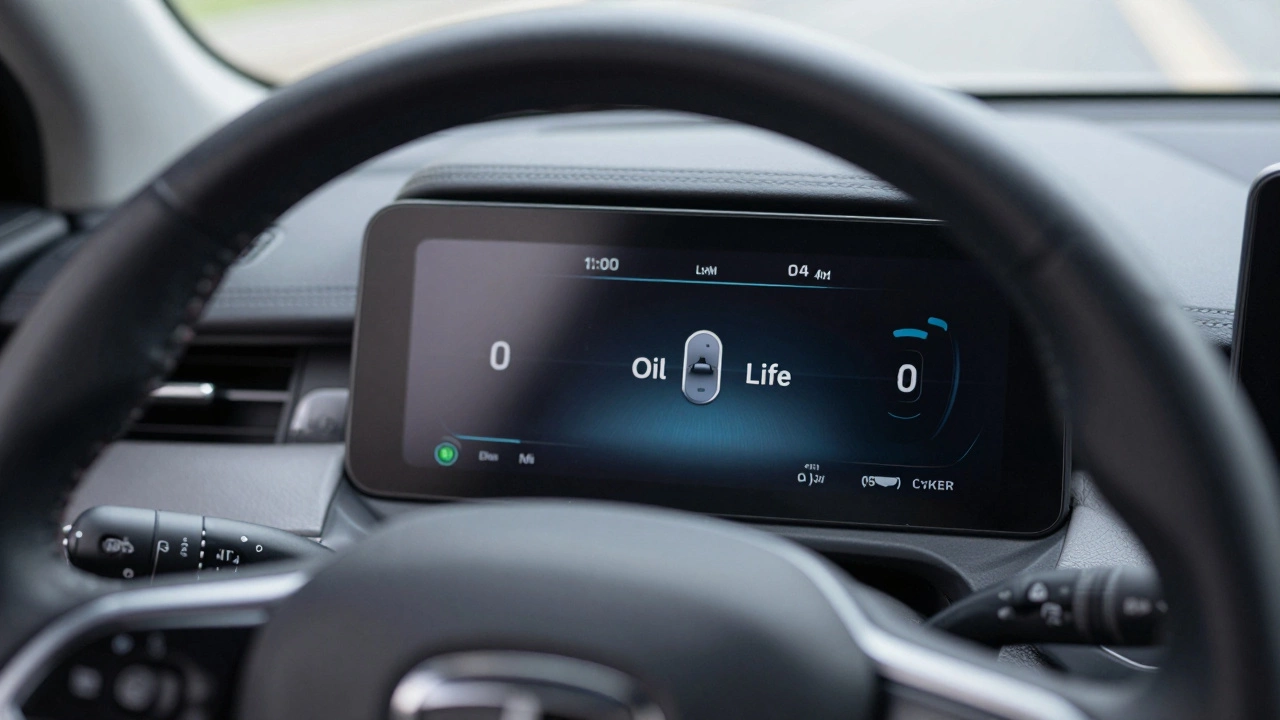
Oil Change Interval Estimator
- Short trips (<5 miles)
- Stop-and-go city traffic
- Extreme heat or cold
- Towing or hauling heavy loads
- Dusty/dirt roads
Recommended Interval
Always consult your vehicle's owner manual as the final authority.
Quick Takeaways for Your Next Service
- Modern Synthetic Oil: Often lasts 7,500 to 15,000 miles depending on the car.
- Conventional Oil: Generally needs changing every 3,000 to 5,000 miles.
- Severe Conditions: Short trips, extreme heat, or heavy towing cut these intervals in half.
- The Golden Rule: Your owner's manual is the ultimate authority, not the mechanic's sticker.
Understanding the Lubrication Game
Before we talk numbers, we need to understand what's actually happening under the hood. Engine Oil is a chemically engineered lubricant designed to reduce friction between moving metal parts, dissipate heat, and clean internal engine components. It acts as the lifeblood of your Internal Combustion Engine. Without it, the heat from friction would weld your pistons to the cylinder walls in minutes.
Over time, oil breaks down. It gets contaminated by soot, moisture, and tiny metal shards. When the oil loses its viscosity-basically its thickness-it can no longer maintain the protective film that keeps your engine from eating itself. This is why the interval matters. Change it too early, and you're throwing away perfectly good oil. Change it too late, and you're risking a catastrophic engine failure that could cost thousands in repairs.
The Great Oil Debate: Conventional vs. Synthetic
The biggest factor in determining your oil change interval is the type of oil you pour into the filler cap. Not all lubricants are created equal, and the gap between them has widened significantly over the last ten years.
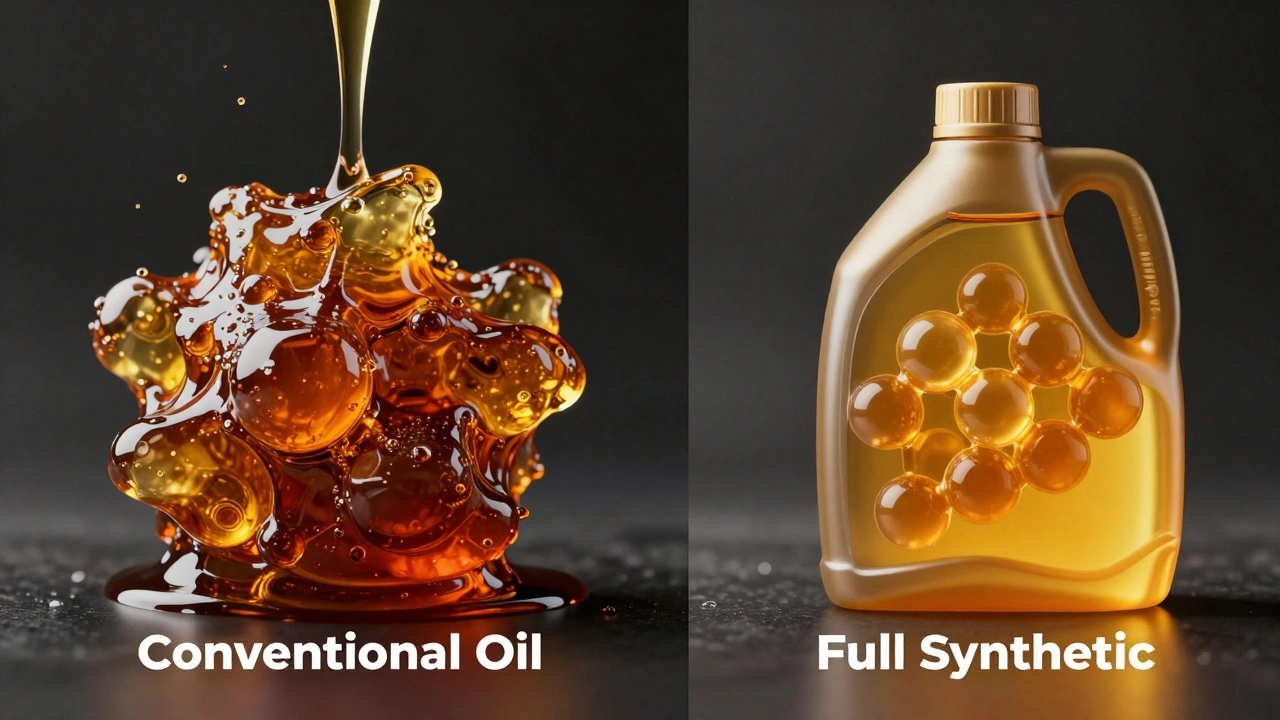
Conventional Oil is a mineral-based lubricant refined from crude oil, typically used in older vehicles or small engines. Because it's made of varying molecule sizes, it breaks down faster under heat and stress. If you're running a classic car or a budget-friendly older model, you're likely looking at a change every 3,000 to 5,000 miles.
Full Synthetic Oil, on the other hand, is a man-made lubricant engineered for high performance and stability across extreme temperatures. It's designed with uniform molecules that resist thermal breakdown. This is why many modern cars from brands like BMW or Toyota now suggest intervals of 10,000 miles or more. You're paying more upfront, but you're visiting the shop far less often.
| Oil Type | Average Interval | Best For... | Price Point |
|---|---|---|---|
| Conventional | 3,000 - 5,000 Miles | Old engines, low-mileage driving | Low |
| Synthetic Blend | 5,000 - 7,500 Miles | Daily commuters, mixed driving | Medium |
| Full Synthetic | 7,500 - 15,000 Miles | New cars, towing, extreme weather | High |
What is 'Severe Driving' and Why Should You Care?
Most people think "severe driving" means racing on a track or driving through a desert. In reality, your daily commute might actually be a severe condition. If you live in a city with stop-and-go traffic or have a commute shorter than five miles, your oil never reaches its full operating temperature. This allows moisture and unburnt fuel to build up in the crankcase, creating a sludge that ruins the oil's effectiveness.
Other severe factors include:
- Extreme Cold: Idling for long periods to warm up the car.
- Dusty Environments: If you live on a dirt road, your Air Filter and oil work overtime to keep grit out of the engine.
- Heavy Loads: Towing a boat or hauling construction materials puts immense heat stress on the lubricant.
Don't Forget the Unsung Hero: The Oil Filter
Changing the oil without changing the Oil Filter is like taking a shower and then putting your dirty clothes back on. The filter's job is to trap contaminants-microscopic metal shavings and carbon deposits-so they don't circulate through your engine.
Once a filter becomes saturated, a bypass valve opens to ensure the engine still gets oil. The problem? This means unfiltered, dirty oil is now flowing through your engine. While some high-end synthetic filters claim to last for two oil changes, the general rule of thumb is to replace the filter every single time you change the oil. It's a cheap insurance policy against engine wear.
How to Read the Signs Your Oil is Done
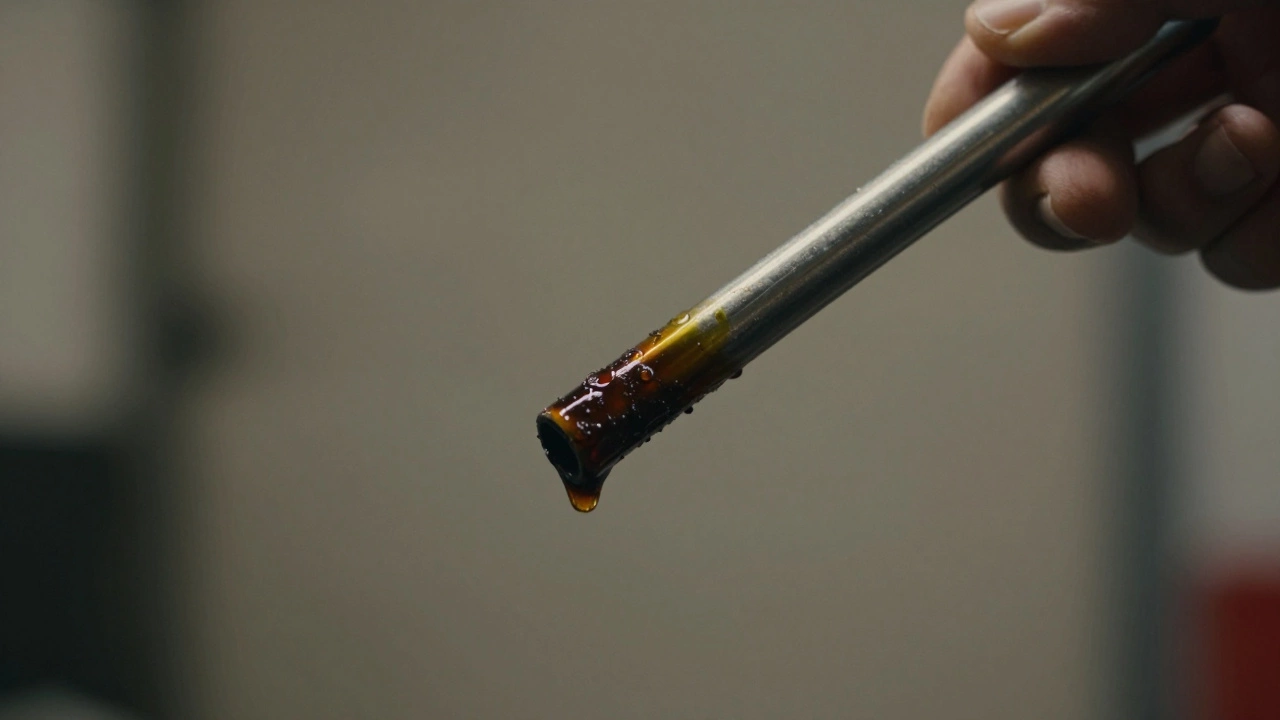
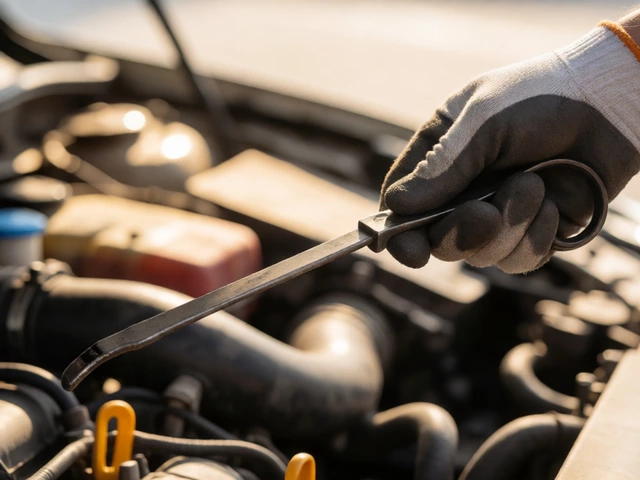
You don't have to guess. Your car gives you clues, provided you know where to look. The most reliable method is the dipstick. Pull it out, wipe it clean, re-insert it, and pull it out again.
Look at the color and texture. New oil is a transparent honey-gold. As it ages, it turns dark brown and eventually black. While black oil doesn't always mean it's "dead" (diesel engines turn oil black almost immediately), a gritty texture or a milky appearance (which indicates coolant leaks) is a red flag. Also, keep an eye on your Oil Pressure Light. If that flickers, stop immediately. You're not just out of "fresh" oil; you're likely out of oil entirely.
The Myth of the 'Oil Flush
You'll often be asked at the shop if you want an "engine flush." Be careful here. A flush involves pumping a chemical solvent through the engine to dissolve sludge. While this can be helpful for a neglected engine with thousands of miles of missed changes, it's rarely necessary for a well-maintained car. In some cases, these harsh chemicals can dislodge large chunks of sludge that then get stuck in the small oil passages, effectively choking your engine. Unless your oil looks like molasses, a standard oil and filter change is all you need.
Does it really matter if I use a different brand of oil?
The brand matters far less than the specification. Look for the API (American Petroleum Institute) starburst symbol or the manufacturer's specific certification (like dexos for GM). As long as the oil meets the viscosity (e.g., 5W-30) and the quality standards listed in your manual, the brand name is mostly marketing.
Can I extend my oil changes if I only drive a few miles a year?
Actually, no. This is a common mistake. Oil degrades not just through mileage, but through time (oxidation) and moisture buildup. If you don't drive much, the oil doesn't get hot enough to evaporate the condensation that builds up in the engine. You should change your oil at least once a year, regardless of the mileage.
What happens if I go 1,000 miles over my limit?
In most modern cars, 1,000 miles over won't kill your engine instantly. However, the protection level drops off a cliff once the additives (like detergents and anti-wear agents) are depleted. It's better to be 500 miles early than 500 miles late.
Is synthetic oil better for the environment?
Yes, in a way. Because synthetic oil lasts longer, you produce fewer used oil filters and less waste oil over the life of the vehicle. Additionally, its better lubrication improves fuel efficiency, which reduces your carbon footprint.
Should I trust the 'Oil Life Monitor' on my dashboard?
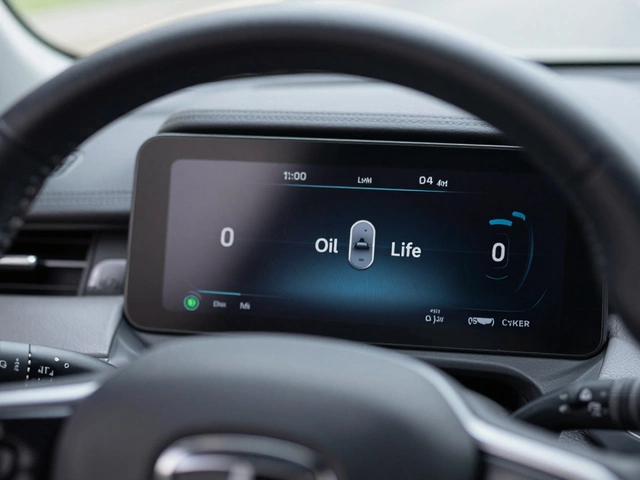
These monitors are generally smart-they track engine revolutions, temperature, and trip length. However, they can't "see" the oil. They are calculating an estimate. Use them as a guide, but if you notice the oil is low or dirty on the dipstick, change it regardless of what the screen says.
Next Steps: Planning Your Maintenance
If you're unsure where you stand, start by finding your owner's manual. Look for the "Maintenance Schedule" section. If you've recently bought a used car and the previous owner didn't keep records, do a "baseline change." Put in a high-quality synthetic oil and a new filter, then set your own calendar based on your driving habits. If you frequently tow or live in a harsh climate, set a reminder for every 5,000 miles. If you have a highway commute and a modern engine, 7,500 to 10,000 miles is a safe bet. Your engine will thank you with a much longer life and better resale value.



Write a comment