DIY Car AC Troubleshooter
Use this guide to identify why your car's air conditioning isn't blowing cold air. Answer the questions below to get a recommended action plan.
It’s June in Auckland, and while the weather isn’t scorching hot like it will be in January, a warm breeze through your vents is still annoying. You turn the dial to max cool, press the AC button, and all you get is room-temperature air. It feels like breathing into a hair dryer on low. This happens to almost every driver at some point, and it’s rarely a catastrophic engine failure. Usually, it’s a simple fix involving a missing component or a stuck part.
The goal here is straightforward: you want ice-cold air blowing from your dashboard within the next hour, preferably without spending hundreds of dollars at a mechanic. Most of the time, the problem isn’t the complex machinery inside your car; it’s something accessible like a dirty filter, a loose hose, or a fan that stopped spinning. Let’s walk through the checks you can do yourself, starting with the easiest and cheapest solutions.
Check the Cabin Air Filter First
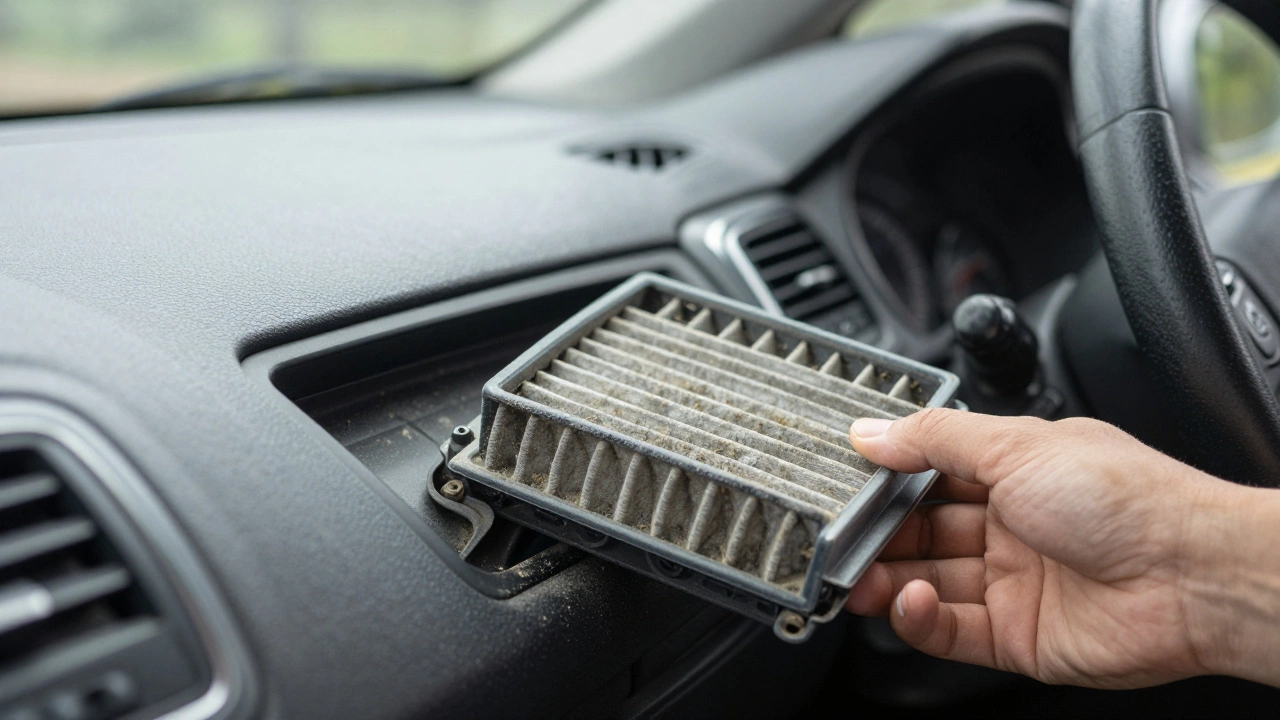
Before you worry about expensive refrigerant leaks or broken compressors, look at the most overlooked part of your climate system: the cabin air filter. Think of this as the mask for your car’s lungs. It sits behind your glove box or under the dashboard and traps dust, pollen, and leaves. When it gets clogged, airflow drops drastically. Even if the AC system is making perfectly cold air, that air can’t push through a brick-like filter fast enough to cool the cabin.
Replacing this filter takes five minutes and costs less than $20. Here is how to check it:
- Open your glove box and remove the contents.
- Look for a plastic flap or cover on the back wall of the glove compartment.
- Pull out the old filter. If it looks gray, fuzzy, or covered in dirt, it’s done.
- Insert a new filter, ensuring the arrow on the frame points down (towards the floor), unless your manual says otherwise.
If your airflow was weak before and strong after, you’ve solved half the battle. Strong airflow helps the evaporator core work efficiently, which is essential for dropping the temperature.
Listen for the Condenser Fan
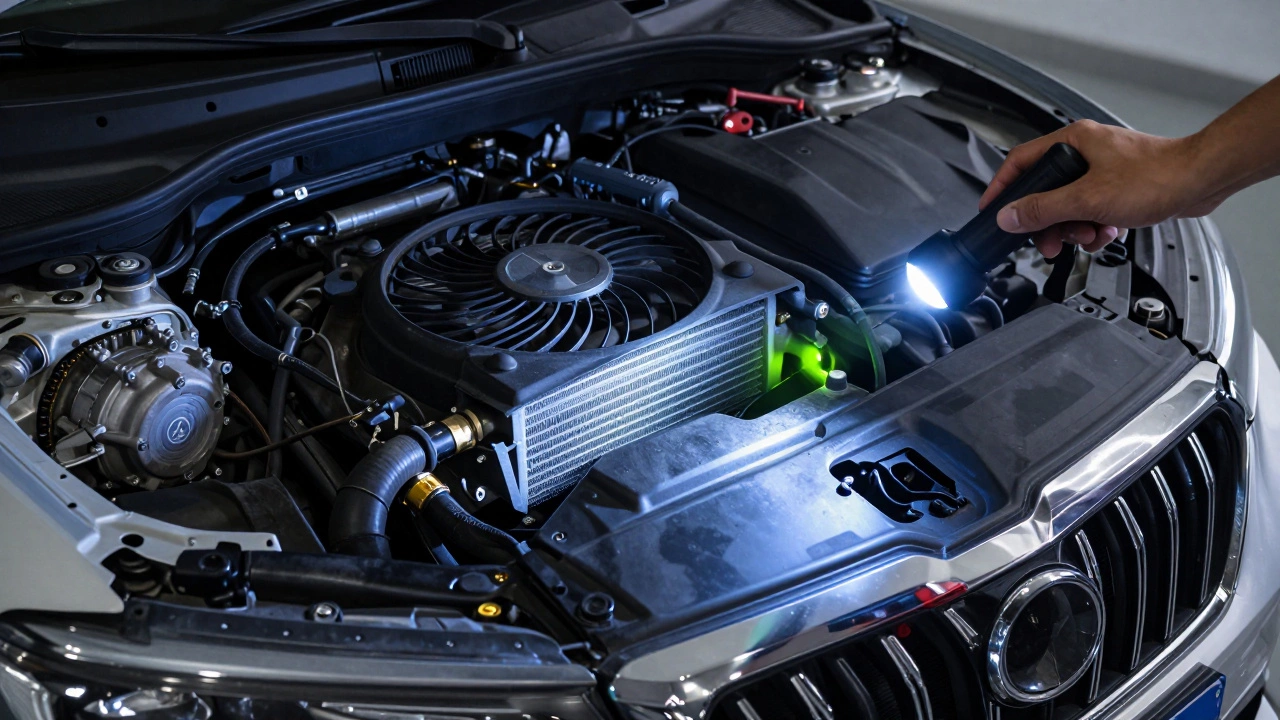
Now, let’s talk about heat exchange. Your car’s AC doesn’t just create cold air; it moves heat from inside the car to the outside. The key player here is the condenser fan. This fan sits right behind your radiator grille, often sharing space with the engine cooling fan. Its job is to pull ambient air through the AC condenser, which is a large radiator-looking component at the very front of your car.
Start your car and turn the AC on high. Stand safely near the front of the vehicle (keep hands and clothes away from moving parts) and listen. Do you hear a second fan kick in? In many modern cars, there are two fans: one for the engine radiator and one specifically for the AC condenser. If the engine fan spins but the AC fan stays silent, your condenser can’t shed heat. The refrigerant remains hot and pressurized, meaning no cooling happens inside the car.
A failed condenser fan motor or a blown fuse is a common culprit. Check your fuse box first-look for a fuse labeled "AC" or "Fan." If the fuse is good, the fan motor itself might need replacing. This is a relatively inexpensive part compared to other AC repairs.
Inspect for Refrigerant Leaks
If the fan is running and the filter is clean, but the air is still warm, you likely have a refrigerant leak. Modern cars use R134a or the newer R1234yf gas. This gas circulates through the system, absorbing heat inside the cabin and releasing it outside. If you lose too much gas, the system has nothing left to cool.
You don’t need special tools to spot a major leak. Look under your car after parking it for a few hours. Do you see oily puddles near the firewall or under the dashboard area? AC oil mixes with the refrigerant. If the gas escapes, the oil follows, leaving a dark, greasy stain on components like hoses, the compressor, or the condenser.
For smaller leaks, you can buy an AC leak detector kit at any auto parts store. These kits include a UV dye and a blacklight. You inject the dye into the low-pressure port, drive the car for 15 minutes to circulate it, and then shine the light over the AC lines. Wherever the leak is, it will glow bright green or yellow under the UV light. Common leak points include:
- Schraeder valves (the tire-valve-like stems on the AC lines)
- Hose connections where rubber meets metal
- The rear of the compressor shaft seal
If you find a leak, simply adding more gas is a temporary band-aid. You need to fix the leak source, then recharge the system properly. Overcharging the system can actually damage the compressor, so precision matters here.
Test the Compressor Clutch
The heart of your AC system is the AC compressor. It’s driven by a belt connected to your engine. However, the compressor doesn’t run all the time. It has a clutch on the front that engages only when the AC needs cooling. When you turn the AC on, you should hear a distinct "click" from the engine bay, and the center hub of the compressor pulley should start spinning along with the outer rim.
Stand by the engine (safely) and watch the compressor pulley. If the outer rim spins but the inner hub stays still, the clutch isn’t engaging. This could be due to:
- Low refrigerant pressure (safety switch prevents engagement)
- A faulty clutch coil
- A bad relay or electrical connection
If the clutch is burnt or worn, the compressor won’t pump the refrigerant. Without pumping, there is no phase change, and therefore no cooling. Replacing a clutch assembly is cheaper than replacing the entire compressor, but it requires removing the serpentine belt and cleaning the mounting surfaces meticulously to ensure proper alignment.

Consider the Expansion Valve or Orifice Tube
If your AC blows cold for a minute and then turns warm, or if the evaporator core inside your dashboard freezes up, the issue might be the expansion valve or orifice tube. This tiny component meters the flow of refrigerant into the evaporator. If it gets clogged with debris or moisture, it restricts flow. This causes high pressure on one side and low pressure on the other, leading to poor cooling or complete shutdown.
This is harder to diagnose without gauges. You’ll need manifold gauges to connect to the high and low-pressure ports. Normal readings vary by temperature, but generally, if the low-side pressure is near zero while the compressor is running, you have a restriction. Flushing the system and replacing the expansion valve/orifice tube usually resolves this. Always replace the receiver-drier or accumulator at the same time, as these components absorb moisture that ruins the system.
| Symptom | Likely Cause | DIY Difficulty | Estimated Cost |
|---|---|---|---|
| Weak airflow | Clogged cabin filter | Easy | $10 - $20 |
| Warm air, fan runs | Low refrigerant / Leak | Medium | $50 - $150 (repair + gas) |
| No click from engine | Bad clutch or relay | Hard | $100 - $300 |
| Cold then warm | Expansion valve issue | Very Hard | $200+ (professional recommended) |
When to Call a Professional
While checking filters and fuses is easy, working with refrigerant requires care. In New Zealand, handling certain refrigerants may require certification depending on the type and amount. If you suspect a major leak or compressor failure, taking it to a specialist is wise. They have vacuum pumps to remove air and moisture, which is critical for long-term reliability. Air in the system creates sludge and reduces efficiency. Moisture causes acid formation that eats away at copper lines.
Also, consider the age of your car. If your vehicle is older than 15 years, the seals and hoses may be brittle. Fixing one leak might lead to another appearing next week. Sometimes, a full system overhaul is more cost-effective than chasing individual leaks.
Can I add AC refrigerant myself?
Yes, you can buy DIY AC recharge kits at auto parts stores. Connect the hose to the low-pressure port (usually marked 'L' or with a blue cap). Shake the can and follow the instructions carefully. Do not overcharge the system, as this can damage the compressor. Only do this if you are sure there is no major leak; otherwise, you’re just wasting money.
Why does my AC smell musty?
A musty smell usually comes from mold or mildew growing on the evaporator core inside your dashboard. This happens when moisture accumulates and doesn’t dry out. Use an AC disinfectant spray designed for automotive systems. Spray it into the intake vents (usually near the windshield wipers) with the fan on high. Replace your cabin air filter to prevent future buildup.
Is it safe to drive with a broken AC?
Generally, yes. The AC system is separate from your engine’s ability to run. However, if the AC compressor is seized, it can snap the serpentine belt, which might also power your alternator or water pump. Listen for grinding noises. If the belt breaks, you risk overheating the engine, so check your belt tensioner and condition regularly.
How often should I service my car AC?
It’s good practice to check your AC system once a year, ideally before summer starts. Run it for 10 minutes monthly to keep the seals lubricated. If you notice a drop in cooling performance or strange smells, address it immediately. Small issues become expensive repairs if ignored.
What is the difference between R134a and R1234yf?
R134a is the older refrigerant used in most cars until around 2017. R1234yf is the newer, more environmentally friendly standard with lower global warming potential. They are not interchangeable. Using the wrong type can damage the system and void warranties. Check your service sticker under the hood to see which type your car requires.









Write a comment