Suspension Noise Diagnostic Tool
Select the sound you are hearing to diagnose the likely cause and urgency.
Loud Clunk
Heavy metallic thud over bumps
High-Pitched Squeak
Chirping on small bumps or turns
Constant Rattle
Buzzing on gravel or rough roads
Creaking Groan
Deep stretching sounds under load
Diagnosis
Likely Culprits
What's Happening?
Estimated Cost
Quick Check
Have you ever heard a loud clunk from your car’s undercarriage when hitting a bump and wondered if it was just a loose floor mat or something serious? That gut feeling that something is wrong with your ride quality is usually right. A broken suspension doesn’t always announce itself with a check engine light; instead, it speaks through sound. Understanding what those noises mean can save you from expensive secondary damage to your tires, alignment, and even the frame of your vehicle.
Suspension systems are complex assemblies of springs, struts, shocks, bushings, and ball joints designed to absorb road imperfections. When any of these components wear out, break, or lose lubrication, they create distinct acoustic signatures. By learning to identify these sounds, you can diagnose issues early, often before they turn into safety hazards.
The Loud Clunk: Ball Joints and Control Arm Bushings
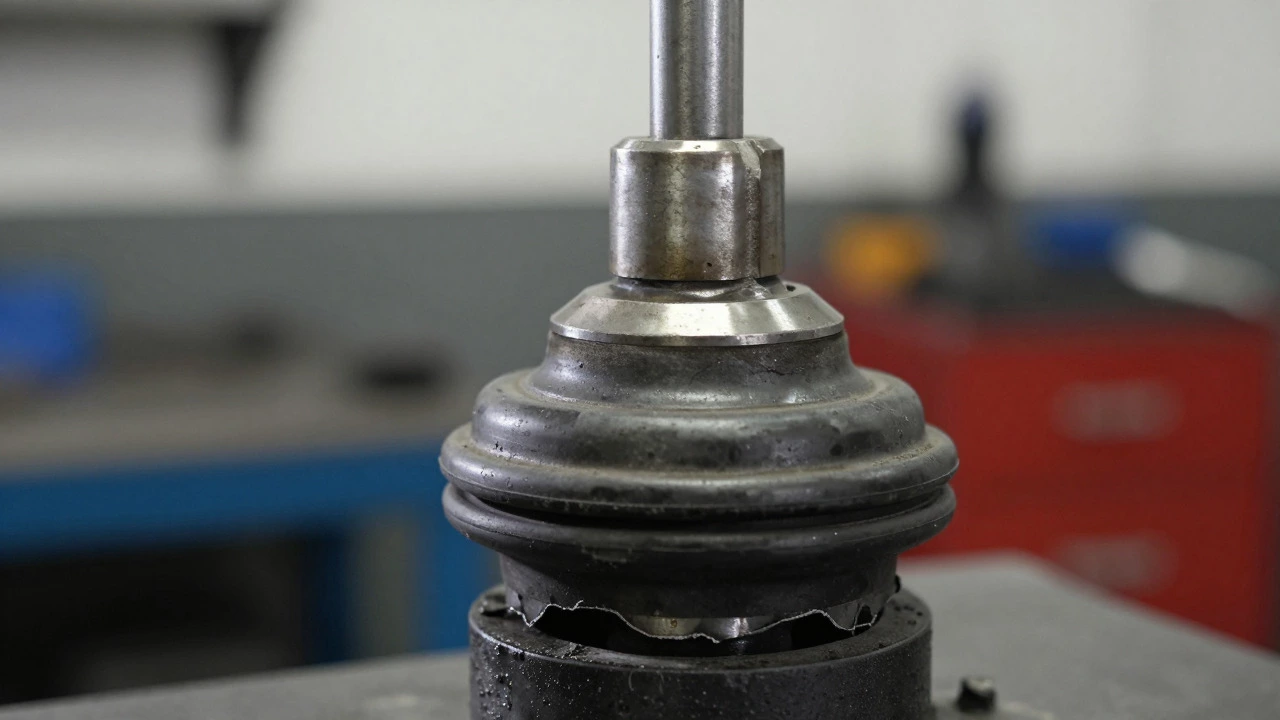
If your car makes a heavy, metallic thud or clunk when driving over speed bumps, potholes, or even rough pavement, the culprit is likely in the lower control arm assembly. This is one of the most common suspension failures because these parts bear the entire weight of the vehicle while allowing for vertical movement.
Control arm bushings also produce similar clunks. These rubber or polyurethane cushions isolate the chassis from the control arm’s movement. Over time, heat cycles and road debris degrade the rubber, causing cracks and gaps. When the gap becomes large enough, the metal control arm slams against the mounting point on the subframe or chassis. You’ll notice this sound specifically when transitioning from acceleration to coasting or when braking hard over uneven surfaces.
- Diagnosis Tip: Have someone bounce the front of the car vigorously while you listen near the wheel wells. If you hear repeated clunks without visual leakage, inspect the ball joint boots for tears and grease leaks.
- Safety Risk: High. A separated ball joint can lead to immediate wheel detachment.
The High-Pitched Squeak: Worn Shock Absorbers and Struts
A high-pitched squeak or chirping noise that happens every time you go over a small bump is typically associated with shock absorbers or strut mounts. Unlike the violent clunk of a ball joint, this sound is more annoying than immediately dangerous, but it indicates significant wear.
Shocks and struts work by compressing hydraulic fluid through tiny valves to dampen spring oscillations. Inside the assembly, there are internal pistons and external bump stops. When the dust boot-the protective rubber sleeve around the shock shaft-tears, dirt and moisture enter the assembly. This contamination dries out the internal seals and causes friction between moving parts. Additionally, the upper strut mount bearings can dry out. These bearings allow the strut to rotate smoothly when you turn the steering wheel. Without proper lubrication, the metal races grind together, creating a squeal that worsens at low speeds during turns.
You might also hear this squeak if the jounce bumper-a foam ring inside the strut tower-is cracked or missing. Its job is to prevent the coil spring from slamming into the strut housing during full compression. Without it, the metal spring contacts the metal housing, sometimes producing a squeak before progressing to a louder bang.
The Constant Rattle: Loose Components and Stabilizer Bars
If you hear a continuous rattling or buzzing sound that seems to come from everywhere at once, especially on gravel roads or cracked asphalt, look toward the stabilizer bar links and bushings. The stabilizer bar (also known as an anti-roll bar) reduces body roll during cornering. It connects to the control arms via slender rods called sway bar links.
These links have ball joints at both ends, similar to the main suspension ball joints but smaller. Because they operate in a high-vibration environment and are exposed to road salt and grime, their joints wear out quickly. Once the play exceeds tolerance, the link vibrates excessively against its mounting points. This creates a rapid-fire rattling noise that increases with vehicle speed and road texture.
Stabilizer bar bushings, which hold the bar itself to the chassis, can also fail. When these rubber sleeves crack, the metal bar moves laterally within its mounts, causing a hollow knocking or rattling sound. This issue is particularly prevalent in older vehicles or those driven in climates where de-icing salts accelerate corrosion.
- Identification: Try driving slowly over a series of small bumps. If the rattle is rhythmic and tied to each impact, it’s likely a sway bar link. If it’s constant regardless of bumps, check the bushings.
- Cost Factor: Low to moderate. Sway bar links are inexpensive and relatively easy to replace, often requiring only basic hand tools.
The Creaking Groan: Old Rubber Bushings
Deep, groaning creaks that sound like old leather stretching or a door hinge needing oil usually point to aged rubber bushings. Every major suspension component uses bushings to isolate vibration and allow controlled movement. As rubber ages, it loses elasticity and develops micro-cracks. When the suspension compresses or extends, these hardened bushings flex poorly, generating friction-based creaks.
This is especially noticeable in rear suspensions equipped with leaf springs or multi-link setups. Leaf spring shackles use bushings to allow the spring to lengthen and shorten as it arcs. When these bushings dry rot, the metal eyes of the spring rub against the shackle brackets, producing loud groans during acceleration and braking. Similarly, rear axle U-bolts or perches can shift slightly if their insulating pads deteriorate, adding to the chorus of creaks.
While creaking isn’t always an immediate safety threat, it signals that the isolation properties of your suspension are compromised. You’ll likely feel more road vibration in the seat and steering wheel, leading to driver fatigue on long trips.
Comparison Table: Common Suspension Noises
| Noise Type | Likely Cause | When It Happens | Urgency Level |
|---|---|---|---|
| Loud Clunk/Thud | Ball Joint, Control Arm Bushing | Hitting bumps, potholes, hard braking | High (Safety Critical) |
| High-Pitched Squeak | Shock Dust Boot, Strut Mount Bearing | Small bumps, turning at low speed | Medium (Comfort/Steering) |
| Rattling/Buzzing | Sway Bar Links, Stabilizer Bushings | Gravel roads, cracked pavement, constant | Low (Handling/Noise) |
| Creaking/Groaning | Dry Rotting Rubber Bushings | Acceleration, braking, slow compression | Medium (Vibration Isolation) |
| Metallic Scraping | Broken Spring, Missing Retainer Clip | Constant, worsening with load | High (Structural Damage Risk) |
Why Ignoring Suspension Noise Costs More Later
Many drivers postpone suspension repairs because the car still drives straight and brakes adequately. However, a failing suspension component alters the geometry of the wheel alignment. For example, a worn control arm bushing allows the wheel to wander forward and backward unexpectedly. This induces uneven tire wear, often destroying a set of tires in half the normal mileage. Replacing four tires costs significantly more than fixing a single ball joint or bushing.
Furthermore, uncontrolled suspension movement stresses other components. A leaking shock absorber fails to dampen spring rebound, causing the springs to oscillate violently. This excess energy transfers to the CV axles, wheel bearings, and steering rack. What starts as a $150 bushing replacement can escalate into a $1,500 overhaul involving new tires, an alignment, and damaged steering components.
Modern vehicles also rely on precise suspension positioning for electronic stability control (ESC) and anti-lock braking systems (ABS). If the suspension geometry shifts due to worn parts, sensors may send inaccurate data to the computer, potentially triggering false warnings or reducing the effectiveness of safety interventions during emergency maneuvers.
How to Perform a Basic Visual Inspection
Before visiting a mechanic, you can perform a simple visual check to narrow down the source of the noise. Park the car on level ground and ensure the engine is off. Look closely at each wheel area.
- Check for Leaks: Inspect the outside of shock absorbers and struts for oily residue. While minor weeping can be normal, dripping fluid indicates failure.
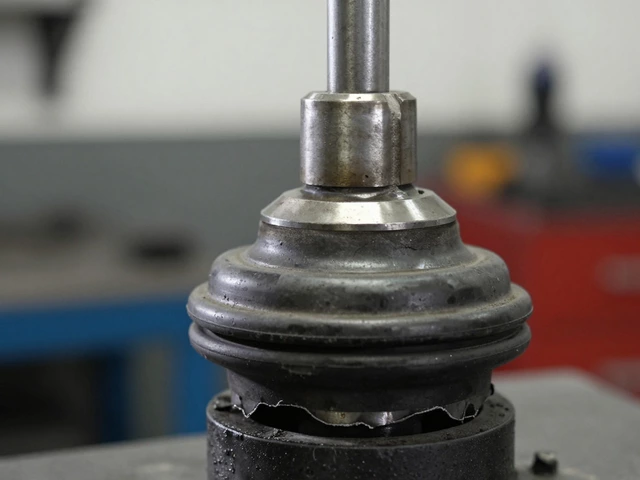
- Inspect Rubber Boots: Look at the bellows covering ball joints and tie rod ends. Torn boots expose internal bearings to grit, accelerating wear.
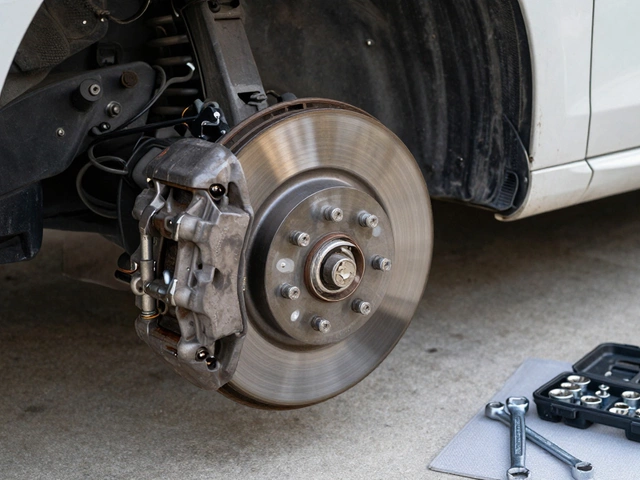
- Examine Bushings: Shine a flashlight into the gaps between control arms and the chassis. Visible cracks, separation, or daylight showing through rubber bushings confirm deterioration.
- Test Play: With the car safely jacked up and supported on stands, grab the tire at the 3 o’clock and 9 o’clock positions. Try to rock it side-to-side. Excessive movement suggests bad wheel bearings or ball joints. Grabbing at 12 and 6 o’clock and rocking up/down tests the same components plus tie rods.
Keep in mind that some play is normal, especially in high-mileage vehicles. If you’re unsure, compare the amount of movement across all four corners. Significant differences indicate localized failure.
Preventive Maintenance Tips
Extending the life of your suspension starts with awareness. Avoid unnecessary impacts by slowing down for potholes and railroad tracks. Hitting obstacles at speed multiplies the force exerted on suspension parts exponentially. Regularly cleaning the undercarriage after winter driving removes corrosive salts that eat away at bushings and joints. Finally, address minor noises promptly. A squeak today prevents a clunk tomorrow, saving both money and peace of mind.
Is it safe to drive with a broken suspension?
It depends on the severity. Minor squeaks from dried-out strut mounts are uncomfortable but generally safe for short distances. However, loud clunking from ball joints or control arms poses a serious safety risk. A failed ball joint can cause the wheel to detach, leading to a crash. If you hear heavy clunks, limit driving to essential trips and seek repair immediately.
How much does it cost to fix suspension noises?
Costs vary widely based on the part and labor. Replacing sway bar links typically ranges from $100 to $250 total. Ball joints run $150 to $400 per side. Full strut assemblies, including labor and alignment, can cost $800 to $1,200 per corner. Early diagnosis keeps costs on the lower end by preventing collateral damage to tires and alignment.
Can a bad suspension cause tire wear?
Yes, absolutely. Worn suspension components alter wheel alignment angles such as camber, toe, and caster. This causes tires to scrub against the road surface unevenly, leading to cupping, feathering, or rapid inner/outer edge wear. Fixing the suspension and performing a professional alignment restores proper tire contact and extends tread life.
Why does my car squeak when I turn the steering wheel?
Squeaking during low-speed turns is often caused by dry strut mount bearings or power steering pump issues. Since strut mounts rotate with the wheel, lack of lubrication creates friction noise. Power steering problems usually present as whining rather than squeaking and change pitch with engine RPM. Inspecting the strut tops is the first step in diagnosing turn-related squeaks.
How long do suspension parts last?
Lifespan varies by driving conditions and part type. Rubber bushings typically last 75,000 to 100,000 miles before cracking. Ball joints and sway bar links may fail sooner, around 50,000 to 80,000 miles, especially in salty environments. Shock absorbers degrade gradually over 50,000 to 100,000 miles, losing damping efficiency before making obvious noise. Regular inspections help catch wear before catastrophic failure.



Write a comment