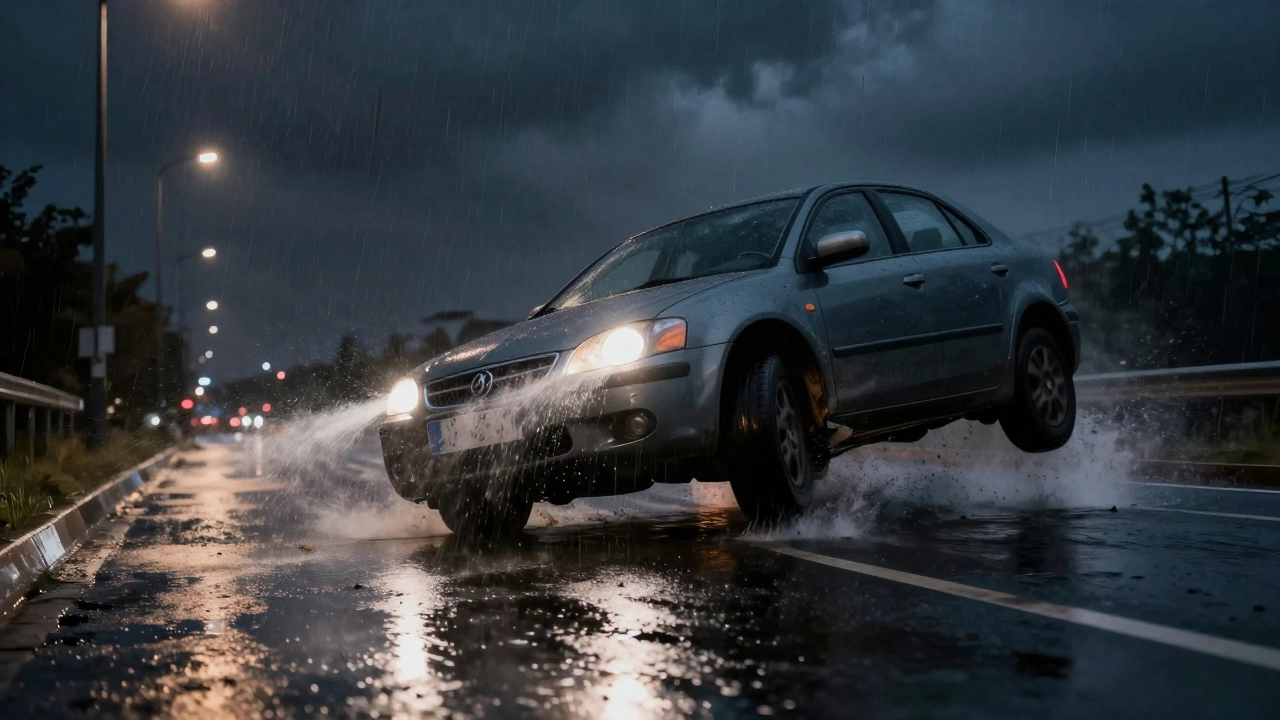
You feel it every time you hit a bump-the car bounces like a basketball, the steering feels loose, or the front dips hard when you brake. You’ve been ignoring it. Maybe you’re waiting for payday. Or you think, it’s just a little rough. But here’s the truth: driving with bad suspension isn’t just uncomfortable. It’s dangerous.
What Happens When Suspension Fails?
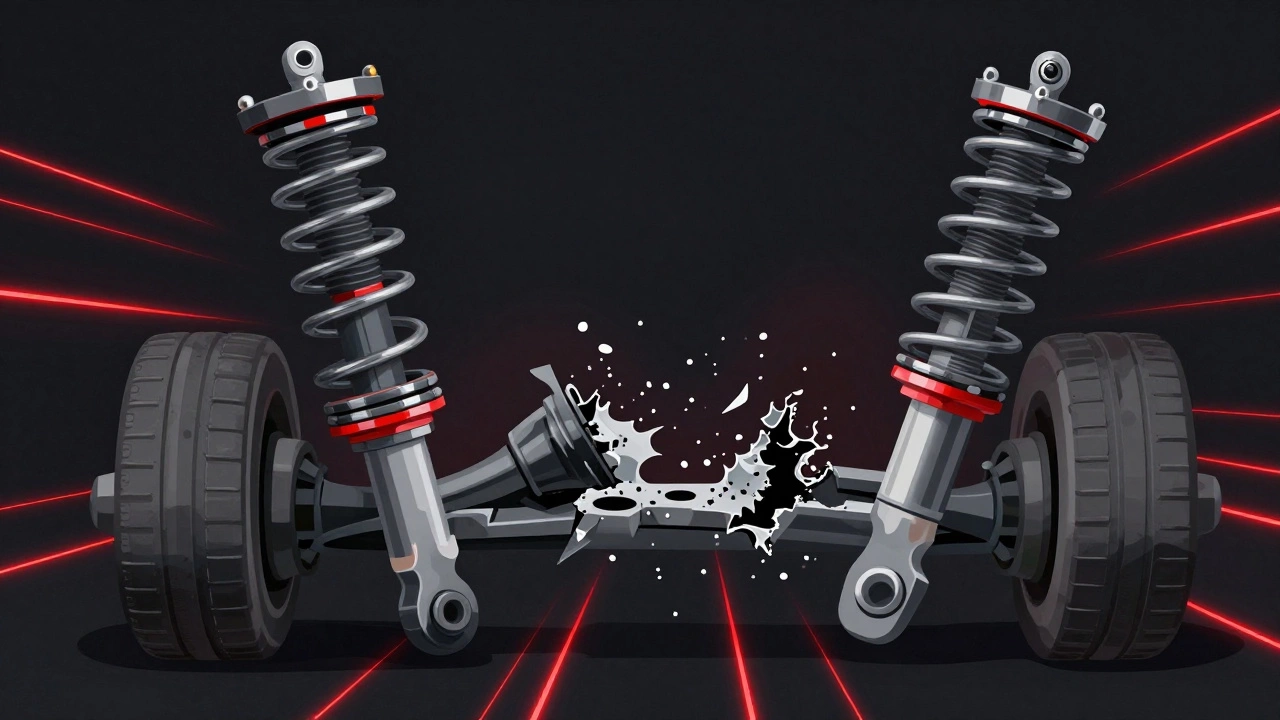
Your suspension isn’t just there to make the ride smooth. It’s a critical safety system. It keeps your tires in contact with the road, helps you steer accurately, and stops your car from rolling or flipping during sudden maneuvers. When shocks, struts, springs, or control arms wear out, all of that falls apart.Think of your suspension like a spring-loaded harness holding your car to the pavement. If the springs are broken or the shocks are gone, that harness snaps. Your tires bounce. They lose grip. And when tires lose grip, you lose control.
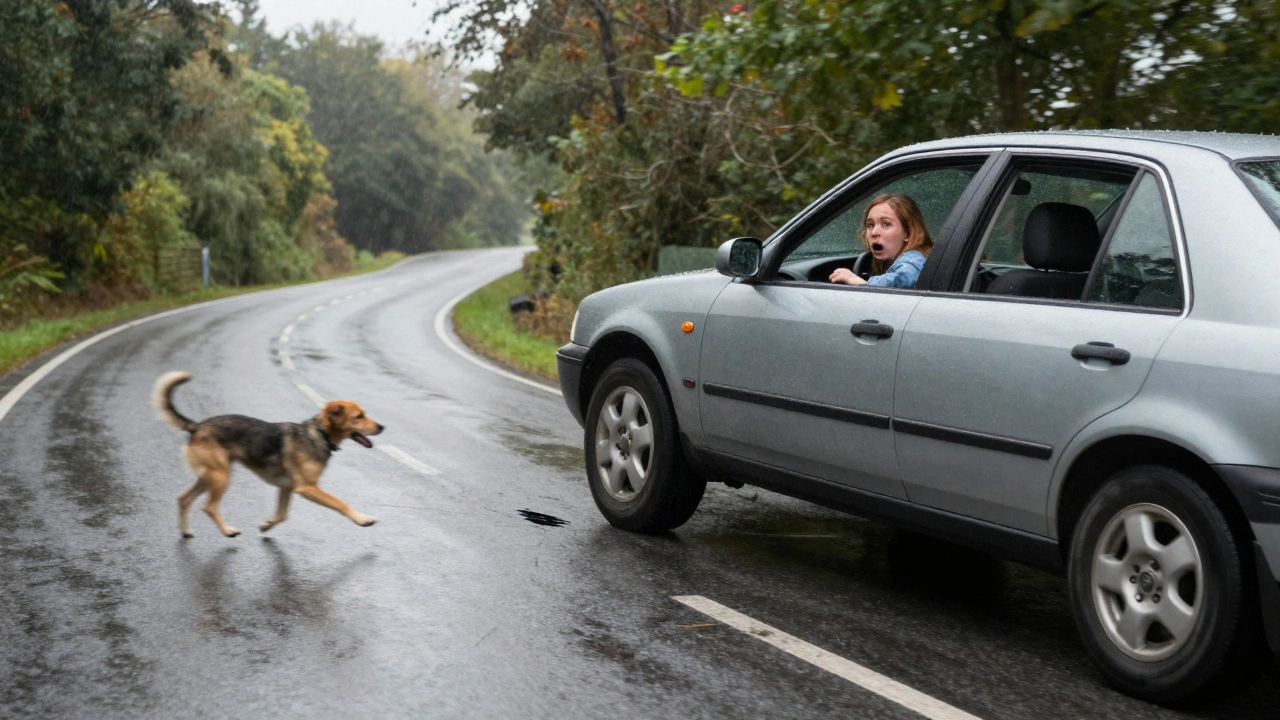
Take a simple scenario: you’re driving down a wet Auckland road at 60 km/h. A dog darts out. You slam the brakes. With good suspension, your car stops in a straight line. With bad suspension, the front end dives hard, the rear lifts, and your tires skid. You don’t stop-you slide. And you can’t steer out of it.
Signs Your Suspension Is Failing
You don’t need a mechanic to tell you something’s wrong. Your body knows. Here’s what to listen and feel for:- Bouncing too much after hitting a bump-if you press down on the hood and it rebounds three or four times, your shocks are dead.
- Uneven tire wear-especially cupping (scalloped dips along the edge). This isn’t a tire issue. It’s suspension.
- Nose dive when braking-the front of the car dives down like a diving board. That’s not normal.
- Steering feels loose or wobbly-especially at highway speeds. You’re not just drifting-you’re fighting the wheel.
- Clunking or knocking noises over bumps. That’s metal hitting metal because bushings or ball joints are shredded.
- Car leans heavily in turns-like it’s going to tip over. That’s worn springs or struts losing their tension.
These aren’t "maybe" signs. They’re red flags. If you notice two or more of these, your suspension is already compromised.
What You’re Really Risking
Driving with bad suspension doesn’t just risk your car. It risks your life-and others’.- Longer stopping distances: Worn shocks can add up to 20% to your braking distance. That’s the length of a car on a 60 km/h road. In wet conditions, that’s enough to hit someone who’s already stopped.
- Loss of control in emergencies: Swerving to avoid a crash requires precise tire contact. Bad suspension makes your car unpredictable. You might oversteer, understeer, or spin.
- Damage to other parts: Bad suspension puts stress on your tires, wheels, brakes, and steering components. You’re not just fixing suspension-you’ll end up replacing tires, brake rotors, or even ball joints because of the extra wear.
- Increased chance of rollover: Especially in SUVs and trucks. Worn suspension raises the center of gravity during turns. In New Zealand’s winding rural roads, that’s a recipe for disaster.
Insurance companies in New Zealand track this. They’ve found that vehicles with known suspension issues are 3.7 times more likely to be involved in single-vehicle crashes. That’s not a coincidence. That’s physics.
How Long Can You Really Drive Like This?
Some people say, "I’ve driven like this for six months." Maybe. But that doesn’t mean it’s safe.There’s no magic number-like "replace at 100,000 km." Suspension wears based on road conditions, load, and driving style. If you drive on gravel roads, potholes, or mountain passes often, your shocks could be done by 60,000 km. If you mostly drive smooth city streets, maybe 80,000 km.
But here’s the hard truth: once you start feeling symptoms, you’ve already lost 60-80% of your suspension’s effectiveness. That’s not "a little worn." That’s critical failure.
Don’t wait for the part to break. By then, you’re already driving on borrowed time.
What Happens If You Ignore It?
I’ve seen it too many times. A customer comes in with a clunking noise and says, "I’ll fix it next month." Two weeks later, they roll in with a bent control arm, a cracked wheel, and a blown tire because the suspension failed mid-turn on State Highway 1.Bad suspension doesn’t just wear out. It fails suddenly. A ball joint snaps. A spring breaks. A strut collapses. And when it does, you’re not in control. Not even for a second.
And the cost? Replacing a pair of shocks might be $600. Replacing a bent control arm, new tire, and wheel alignment after a crash? That’s $3,000 minimum. Plus lost wages. Plus insurance hikes. Plus the trauma.
What Should You Do?
If you suspect bad suspension, don’t delay.- Get a professional inspection. A good mechanic will check shocks, struts, springs, bushings, ball joints, and tie rods. It takes 30 minutes. Cost? Around $80-$120 in New Zealand.
- Don’t drive long distances. If you must drive, stick to quiet roads. Avoid highways, wet surfaces, and high speeds.
- Replace in pairs. Never replace just one shock or strut. They work as a team. Replacing one creates imbalance. That stresses the other side and leads to faster wear.
- Use OEM or quality aftermarket parts. Cheap shocks might save you $100 now, but they’ll wear out in 20,000 km. Stick with brands like Monroe, Bilstein, or KYB.
- Get an alignment after replacement. Worn suspension changes your wheel angles. Without an alignment, your new parts won’t last, and your tires will wear unevenly again.
Most people think suspension is a luxury. It’s not. It’s the most important safety system you never think about.
Bottom Line
Can you drive with bad suspension? Technically, yes. You can keep the car moving. But should you? No.Every kilometer you drive with failing suspension is a gamble. You’re not saving money-you’re risking lives. Your family’s. Other drivers’. Your own.
If your car bounces, dives, or sways like it’s drunk, it’s not a "quirk." It’s a warning. Fix it now. Not next month. Not when you can afford it. Now.
Your tires need to stay on the road. Your brakes need to work. Your steering needs to respond. And none of that happens without good suspension.
Can bad suspension cause tire wear?
Yes. Worn shocks or struts let your tires bounce instead of staying flat on the road. This causes a pattern called cupping-scalloped dips along the tire edge. It’s not a tire problem. It’s a suspension problem. Replacing tires without fixing the suspension means they’ll wear out again in months.
How long do suspension parts usually last?
Shocks and struts typically last 80,000 to 100,000 km under normal driving. But if you drive on rough roads, carry heavy loads, or drive aggressively, they can wear out as early as 50,000 km. There’s no fixed timeline-only symptoms.
Is it safe to drive with a broken spring?
No. A broken spring means your car is sitting unevenly. The wheel alignment is off, the tire is under extreme stress, and the suspension can’t absorb impacts. You risk losing control, damaging the wheel, or even causing a blowout. Stop driving immediately.
Can bad suspension affect fuel economy?
Yes. When your suspension is worn, your car doesn’t sit level. This increases rolling resistance and drag. You might see a 3-5% drop in fuel efficiency. It’s not much, but it’s money you’re losing every week.
Should I replace shocks and struts together?
Always. Shocks and struts work as a pair. Replacing only one side creates imbalance, leading to uneven handling, premature wear on the other side, and a bumpy ride. It’s like having one good brake and one bad one-unsafe and ineffective.
What’s the cost to fix bad suspension in New Zealand?
Replacing a pair of shocks or struts costs between $500 and $900, including labor and alignment. Control arms or bushings can add $200-$500 each. It’s expensive, but far cheaper than the cost of an accident caused by ignoring it.
If you’re unsure whether your suspension is bad, take your car to a trusted mechanic. Ask them to show you the worn parts. See the cracks. Feel the play. Then decide if you want to keep driving like this.
It’s not just about the car. It’s about getting home safely.





Write a comment