
MERV Filter Compatibility Calculator
Filter Compatibility Calculator
Select your system details to determine which air filter is safe for your HVAC system.
Important Warning
Standing in the aisle at the hardware store, you stare at the boxes. They all look the same, but the numbers on the front differ. You see MERV 8, MERV 11, and MERV 13. The price jumps significantly between them. You need to know which one protects your home without breaking your furnace. This is the most common question homeowners ask when upgrading their indoor air quality.
The choice isn't just about catching more dust. It is about balancing filtration efficiency with airflow. If you pick the wrong rating, you might end up with a cleaner home but a broken heating system. We need to break down exactly what these numbers mean for your specific situation.
Understanding the MERV Rating System
Before comparing the two, you must understand what you are buying. MERV is the Minimum Efficiency Reporting Value, a standard developed by ASHRAE to rate the effectiveness of air filters. It measures how well a filter removes particles from the air passing through it. The scale runs from 1 to 16 for residential use. A higher number means the filter captures smaller particles.
This rating system helps you compare filters from different manufacturers. Without it, you would have to guess based on marketing terms like "premium" or "advanced." The MERV number gives you a standardized metric. It tells you the percentage of particles of a specific size that the filter catches. This standardization is crucial because it allows you to make an informed decision based on data, not just packaging.
However, the number alone does not tell the whole story. You also need to consider the physical construction of the filter. Some filters use electrostatic charges to attract dust, while others rely purely on mechanical trapping. The MERV rating accounts for the overall performance, but the material affects how long the filter lasts before it clogs.
What Does MERV 11 Actually Capture?
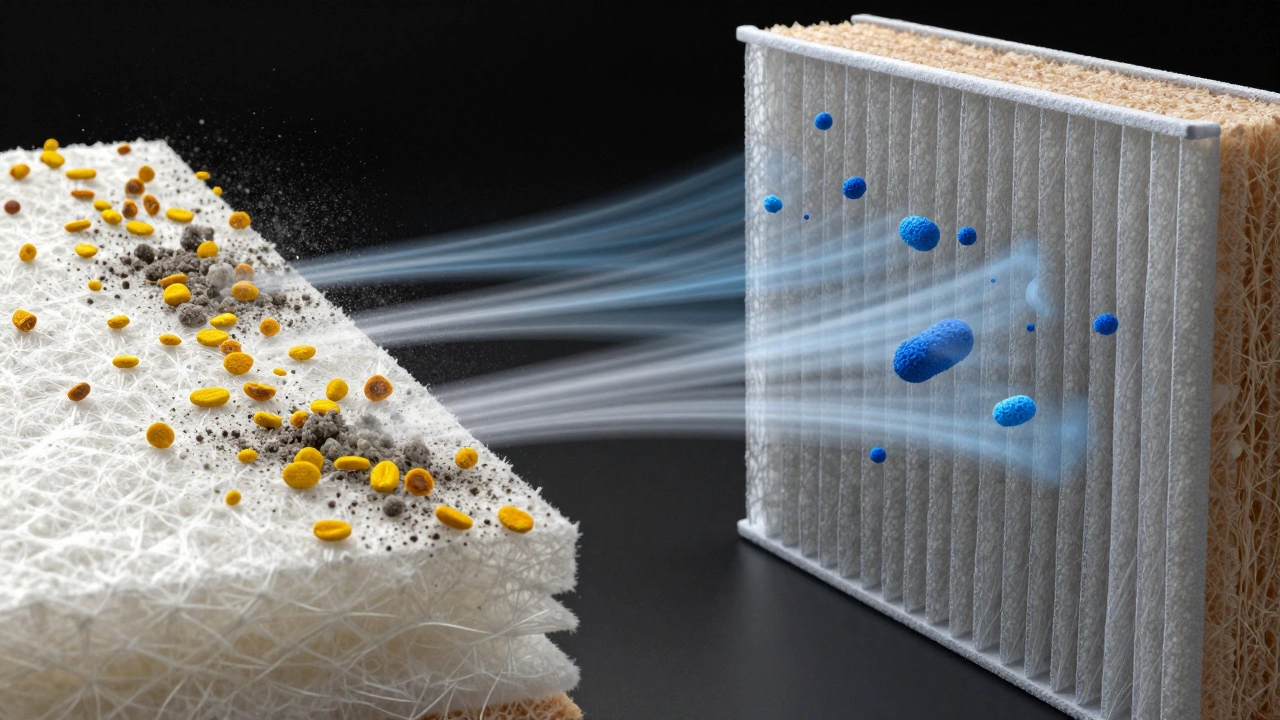
MERV 11 is a mid-range filter that captures particles between 1.0 and 3.0 microns in size. This rating is the standard recommendation for most modern residential HVAC systems. It strikes a balance between cleaning the air and maintaining proper airflow. It is designed to handle the typical dust found in a household.
Specifically, MERV 11 filters trap dust mites, mold spores, and pet dander. If you have cats or dogs that shed, this rating is often sufficient to keep the fur from circulating through your vents. It also catches a good portion of pollen. For a family without severe respiratory issues, MERV 11 keeps the air noticeably cleaner than the cheap MERV 1 filters that come with many new furnaces.
These filters are widely available and affordable. You can find them at most big-box stores or online retailers. They typically last for 90 days, though this depends on how much you run your system. Because they allow air to pass through relatively easily, they put less strain on your blower motor. This means your energy bills stay stable, and your equipment lasts longer.
What Does MERV 13 Actually Capture?
MERV 13 is a high-efficiency filter that captures particles between 0.3 and 1.0 microns in size. This rating is often marketed as the best option for allergy sufferers or those with respiratory sensitivities. It catches significantly smaller particles than MERV 11. You will find it effective against smoke, bacteria, and finer dust that passes through lower-rated filters.
Think about the air you breathe during wildfire season or when construction is happening nearby. MERV 13 handles these scenarios much better. It removes the fine particulate matter that can irritate lungs. If someone in your home has asthma, this extra filtration level can make a tangible difference in their comfort. It reduces the load of allergens circulating in your living space.
The downside is the density. To catch smaller particles, the filter media must be tighter. This creates more resistance to airflow. Your furnace has to work harder to push air through a MERV 13 filter compared to a MERV 11. This increased resistance is known as static pressure. If your system isn't designed for it, you risk overheating or freezing your coil.
The Critical Role of Airflow and Static Pressure
This is where most people make a mistake. They see the higher number and assume better is always better. That is not true for HVAC systems. HVAC System refers to the heating, ventilation, and air conditioning equipment that regulates indoor climate. These systems are engineered to move a specific volume of air at a specific pressure. Changing the filter changes the resistance.
When you install a filter with too high a MERV rating, you restrict the airflow. The blower motor has to work harder to pull air through the dense media. Over time, this extra strain can wear out the motor. In extreme cases, it can cause the heat exchanger to overheat and crack, which is a major safety hazard. It can also cause the evaporator coil to freeze because not enough warm air is passing over it.
Older systems are particularly vulnerable. If your furnace was installed more than 15 years ago, it likely was not designed for high-efficiency filters. The ductwork might be smaller or have more bends, increasing resistance naturally. Adding a dense filter on top of that can push the system past its limit. You need to check your equipment manual or consult a technician before jumping to MERV 13.
Comparing Cost and Lifespan
Price is a major factor in the decision. MERV 11 filters generally cost between $15 and $25 per pack. MERV 13 filters often cost double that, ranging from $30 to $50. Over a year, this adds up to a significant difference in your home maintenance budget. You need to decide if the health benefits justify the extra expense.
Lifespan also varies. Because MERV 13 filters are denser, they clog faster. You might need to change them every 60 days instead of every 90. This means you are buying more filters more often. A MERV 11 filter might last a full season, while a MERV 13 might need swapping mid-season. Factor in the labor cost if you hire someone to change them, and the gap widens.
However, consider the cost of poor air quality. If you are spending money on allergy medication or dealing with respiratory issues, the filter cost might be negligible. For some, the peace of mind is worth the premium. For others, the standard protection is enough. It depends entirely on your household's specific needs and health profiles.
System Compatibility Checklist
Before you buy, run through this mental checklist. First, check your current filter. If it is already MERV 11, moving to MERV 13 is a safe upgrade for most modern systems. If you are currently using MERV 8, moving to MERV 13 is a bigger jump and carries more risk. Second, look at your equipment age. Newer systems (last 10 years) often handle higher ratings better. Third, listen to your system. If it runs loudly or the air feels weak, you already have airflow issues. Do not increase the restriction.
You can also ask your HVAC technician during your annual tune-up. They can measure the static pressure and tell you the maximum MERV rating your system can handle safely. Many technicians recommend staying at MERV 11 or 12 unless you have a specific medical need. They see the damage caused by restricted airflow more often than you see the benefits of cleaner air.
Decision Matrix: Who Needs What?
If you have a standard home with no specific health concerns, stick with MERV 11. It provides excellent protection against common allergens like pollen and dust. It is cost-effective and safe for almost all residential furnaces. You will see a difference in how clean your vents stay, and your air will feel fresher without risking your equipment.
If you have severe allergies, asthma, or live in an area with high pollution, consider MERV 13. But only if your HVAC system supports it. If you have a variable-speed blower, your system can adjust to the higher resistance. These motors are more efficient and can compensate for the tighter filter. If you have a single-speed blower, be very cautious with high MERV ratings.
If you have pets, MERV 11 is usually sufficient. Pet dander is relatively large compared to smoke or bacteria. The main goal is to catch the hair and dander before it settles on furniture. MERV 11 handles this well. MERV 13 might catch finer particles, but it won't stop the hair from getting into the filter itself, which will clog it faster.
| Feature | MERV 11 | MERV 13 |
|---|---|---|
| Particle Size Captured | 1.0 to 3.0 microns | 0.3 to 1.0 microns |
| Best For | General dust, pollen, pet dander | Smoke, bacteria, fine dust |
| Airflow Resistance | Low to Moderate | Moderate to High |
| Typical Cost | $15 - $25 per pack | $30 - $50 per pack |
| Recommended Lifespan | 90 days | 60 days |
Common Mistakes to Avoid
One common error is assuming all filters fit the same slot. Even if the dimensions look right, the depth might differ. A 1-inch filter cannot be replaced by a 4-inch filter without modifying the housing. Always measure the old filter before buying. Another mistake is ignoring the arrow on the frame. This arrow indicates the direction of airflow. Installing it backward reduces efficiency and can damage the filter media.
Some people try to stack two filters to get better filtration. Never do this. It doubles the resistance and can stop airflow completely. Your furnace might shut down on a high-limit switch to prevent overheating. Stick to one filter of the correct rating. If you need better air quality, look into whole-house air cleaners or UV lights that work alongside your filtration system.
Frequently Asked Questions
Can I use a MERV 13 filter in an older furnace?
It is generally not recommended for furnaces older than 15 years. Older systems often lack the blower power to push air through dense filters. This restriction can cause overheating or coil freezing. Check your equipment manual or ask a technician before upgrading.
Does a higher MERV rating save money on energy bills?
No, a higher MERV rating usually increases energy costs. The blower motor has to work harder to overcome the resistance of the filter. This draws more electricity. MERV 11 is more energy-efficient for most residential applications.
How often should I change a MERV 13 filter?
You should change a MERV 13 filter every 60 days. Because it captures more particles, it clogs faster than lower-rated filters. If you have pets or run the system constantly, check it monthly.
Is MERV 13 the same as HEPA?
No, MERV 13 is not HEPA. True HEPA filters capture 99.97% of particles at 0.3 microns and are rated MERV 17 or higher. Most residential HVAC systems cannot handle the airflow resistance of true HEPA filters without modification.
Will a MERV 13 filter stop viruses?
It helps reduce airborne viruses but does not eliminate them completely. Viruses are often carried on larger droplets or dust particles. MERV 13 captures many of these carriers, but ventilation and humidity control are also critical for virus reduction.








Write a comment