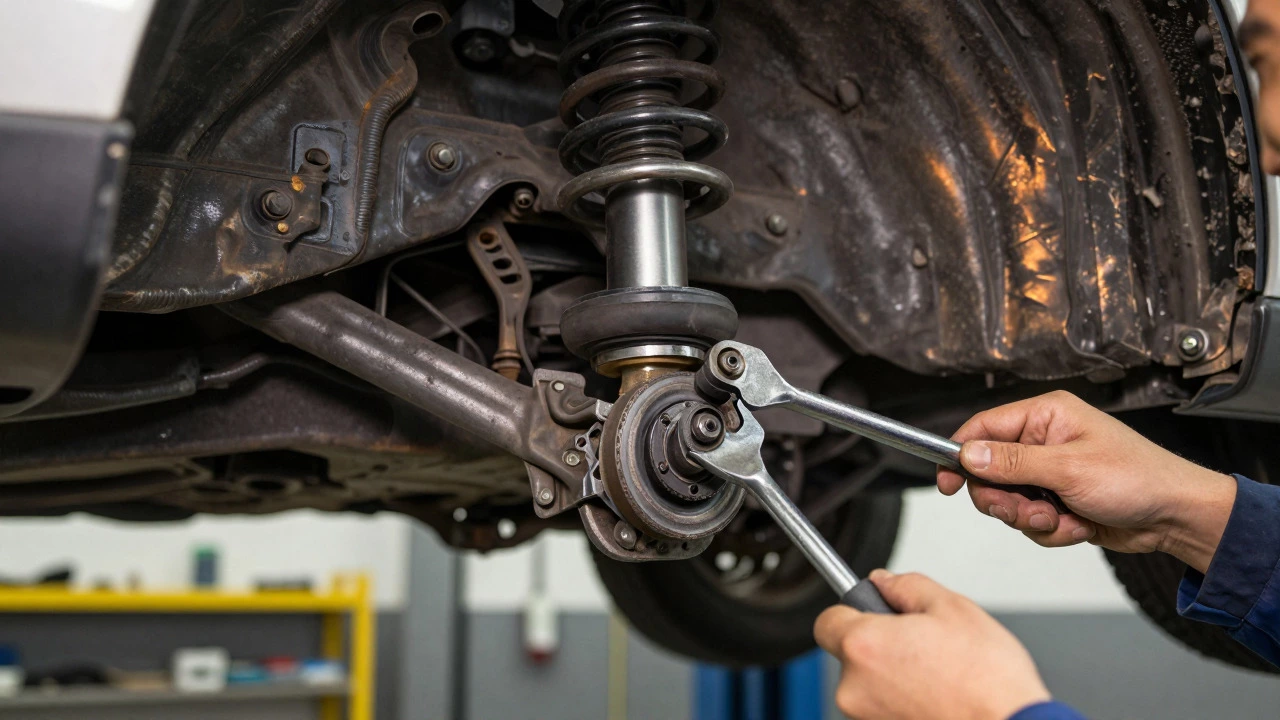
Your car feels different lately. Maybe it bounces a bit too much after hitting a pothole, or perhaps there's a new clunking sound when you turn the corner. You might be wondering if your suspension system is damaged and, more importantly, can that damage actually be fixed?
The short answer is yes, but with a big caveat. Whether you need a simple bolt tightening or a complete overhaul depends entirely on what part broke and how bad it is. Ignoring it won't make it go away; in fact, driving on a broken suspension turns a $200 repair into a $2,000 headache involving tires, alignment, and potentially other components.
Identifying the Signs of Suspension Trouble
Before you decide to fix anything, you need to know what’s wrong. The suspension is the network of springs, shock absorbers, and linkages that connects your vehicle to its wheels. It handles two jobs: keeping your tires on the road for safety and keeping you comfortable inside the cabin. When it fails, you feel it immediately.
- Excessive bouncing: If your car keeps rocking up and down after you hit a bump, your shocks or struts are likely worn out.
- Nose diving: When you slam on the brakes, does the front end dip sharply? That’s a sign of failing strut mounts or weak springs.
- Uneven tire wear: Check your treads. If one side is bald while the other looks fine, your suspension isn’t holding the wheel at the right angle (camber).
- Clunking noises: A metallic thud over small bumps usually means a loose ball joint, control arm bushing, or sway bar link.
- Pulling to one side: If the steering wheel fights you even on flat roads, your alignment is off due to bent suspension parts.
If you notice any of these, stop guessing. Drive slowly to a mechanic or a trusted garage. Driving fast on a compromised suspension risks losing control completely.
Repairable Components: What Can Be Saved?
Not every part of your suspension needs replacing when it breaks. Some components are designed to be repaired or replaced individually, which saves you money. Here is where you can often get a fix rather than a full replacement.
Bushings and Bushing Boots
Bushings are rubber or polyurethane cushions that isolate metal parts from each other to reduce vibration and noise. Over time, especially in Auckland’s damp climate, rubber cracks and dries out. Instead of replacing the entire control arm, a mechanic can press out the old bushing and install a new one. This is a cost-effective repair that restores smooth handling.
Sway Bar Links
The sway bar (or anti-roll bar) reduces body roll during turns. The links connecting the bar to the suspension wear out frequently because they take a beating from constant movement. These are cheap, easy to replace, and fixing them eliminates annoying rattles without touching expensive struts.
Strut Mounts
If your struts are still good but the top mount bearings are grinding, you don’t necessarily need new struts. Replacing just the strut mount allows the strut to pivot smoothly again. However, mechanics often recommend doing this only if you have plenty of life left in the strut itself.
When Replacement Is the Only Option
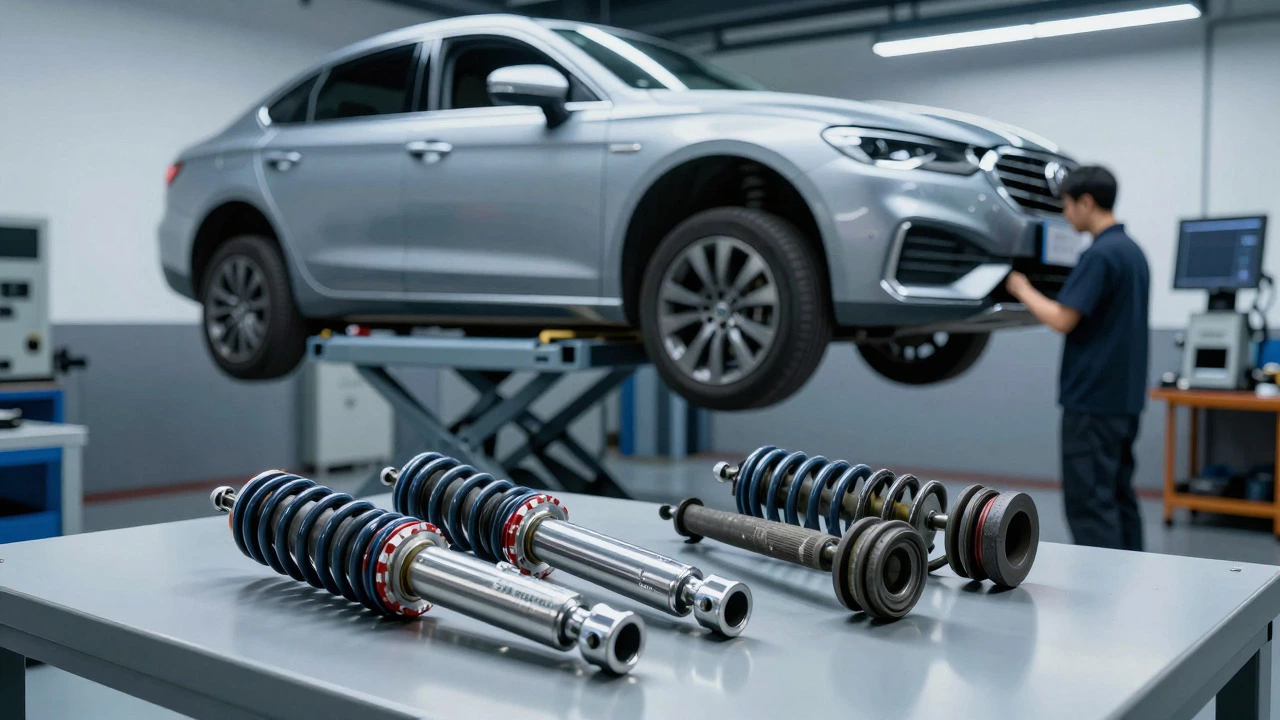
Sometimes, "fixing" isn't practical or safe. Certain parts are single-use or become too damaged to repair economically. Trying to weld a cracked spring or bend a bent control arm back into shape is dangerous and rarely holds up.
Shock Absorbers and Struts
Once a shock absorber leaks oil or loses its internal damping ability, it cannot be rebuilt reliably for daily driving. While some racing shops rebuild shocks, for regular cars, replacement is the standard. If one goes, replace both on the same axle to keep handling balanced.
Coil Springs
If a spring is sagging significantly or has snapped, it must be replaced. Springs store massive amounts of energy. Compressing them requires special tools called spring compressors. Attempting to fix a broken spring by welding is a recipe for disaster-the heat changes the metal's temper, causing it to snap under stress later.
Bent Control Arms
If you hit a deep pothole and hear a loud bang, you may have bent a control arm. Since precise geometry is critical for alignment, a bent arm usually needs replacing. Straightening it in a shop is possible but often costs nearly as much as a new part, plus labor.
| Component | Common Failure | Action | Estimated Cost Range (NZD) |
|---|---|---|---|
| Sway Bar Link | Rattle/Clunk | Replace Part | $50 - $150 |
| Bushing | Cracking/Wear | Replace Bushing | $100 - $300 |
| Strut Mount | Grinding Noise | Replace Mount | $150 - $400 |
| Shock Absorber | Leaking/Bouncing | Replace Assembly | $300 - $600 per pair |
| Control Arm | Bent/Cracked | Replace Arm | $200 - $500 |
| Coil Spring | Sagging/Broken | Replace Spring | $150 - $400 |
The Hidden Costs of Delayed Repairs
Many drivers think, "I’ll just drive it until it stops making noise." This is a costly mistake. Suspension damage cascades. A failed ball joint doesn’t just cause a clunk; it causes uneven tire wear. You might save $200 on the ball joint today but spend $400 on premature tire replacement next month.
Furthermore, a misaligned suspension forces your engine to work harder to maintain speed, slightly increasing fuel consumption. In New Zealand, where fuel prices fluctuate, every bit of efficiency counts. More critically, worn suspension increases stopping distances. On wet Auckland roads, that extra meter could mean the difference between a close call and a collision.
DIY vs. Professional Help
Can you fix suspension damage yourself? Yes, if you have the right tools and knowledge. Replacing sway bar links or strut mounts is manageable for a handy homeowner with a jack stands and basic wrenches. However, working on springs requires caution. Always use spring compressors rated for your vehicle’s weight.
For most people, professional help is safer and faster. Mechanics have lifts, impact wrenches, and alignment machines. After any suspension work, an alignment check is non-negotiable. Even if you replace identical parts, the angles change slightly. Without an alignment, your new parts will wear out quickly, and your tires will die prematurely.
Maintaining Your Suspension Long-Term
Prevention is cheaper than cure. Here’s how to extend the life of your suspension:
- Avoid Potholes: It sounds obvious, but slowing down before known rough patches saves thousands in repairs.
- Check Tire Pressure: Under-inflated tires act like soft springs, putting extra strain on your shocks and struts.
- Inspect Regularly: Every 6 months, look under your car. Are there oil leaks on the shocks? Cracks in the rubber bushings?
- Get Alignments Annually: Or sooner if you hit a major curb or pothole.
- Don’t Overload: Carrying heavy loads constantly sags springs and wears out bushings faster.
In summary, suspension damage can often be fixed, but not always by repairing the broken piece. Sometimes, the "fix" is replacing a specific component like a bushing or link. Other times, the part must be swapped out entirely. The key is early detection. Listen to your car, watch how it drives, and address issues before they spiral into expensive, dangerous problems.
How long does it take to fix suspension damage?
Simple replacements like sway bar links or strut mounts can take 1-2 hours. Replacing shocks or struts typically takes 2-4 hours per axle, depending on the vehicle. If springs are involved, add another hour for compression and installation. Always factor in time for a post-repair wheel alignment.
Is it safe to drive with a broken suspension?
It depends on the severity. A minor rattle from a sway bar link is uncomfortable but not immediately dangerous. However, a leaking shock, broken spring, or loose ball joint compromises handling and braking. Driving with these issues risks losing control, especially in emergency maneuvers or wet conditions. Drive cautiously to a repair shop as soon as possible.
What is the average cost to repair suspension in New Zealand?
Costs vary widely based on the part and labor rates. Minor fixes like sway bar links range from $50 to $150. Bushing replacements cost $100 to $300. Full strut or shock replacements run $300 to $600 per pair, including parts and labor. Always get a detailed quote that includes taxes and alignment fees.
Can I replace just one shock absorber?
Technically yes, but it is highly recommended to replace shocks and struts in pairs (both front or both rear). Mismatched damping causes uneven handling, pulling to one side, and accelerated wear on the newer part. For consistent performance and safety, always do both sides.
How do I know if my bushings are bad?
Bad bushings often cause vague symptoms: clunking noises over bumps, a loose or imprecise feeling in the steering, or uneven tire wear. Visually, you can inspect them for cracks, tears, or separation from the metal sleeve. A mechanic can also perform a pry-bar test to check for excessive movement in the control arms.





Write a comment