Spark Plug Maintenance & Cost Calculator
Configuration
Maintenance Analysis
By doing it yourself, you save the labor fees while paying only for parts.
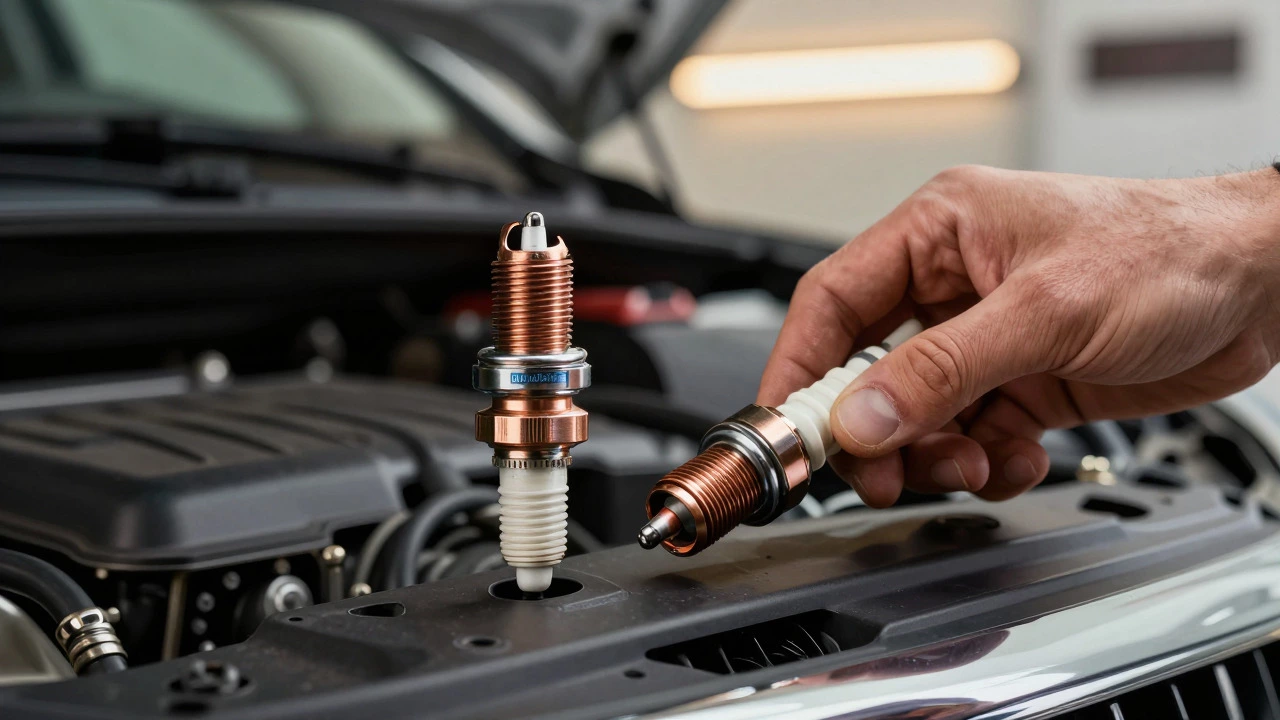
There is a specific moment in every driver’s life when the car starts feeling... off. It doesn’t start quite as smoothly on cold mornings. You press the accelerator, and instead of that crisp surge of power, you get a slight hesitation or a shudder. Most people ignore it for weeks, blaming bad fuel or just "old age." But if you pop the hood and look closely at the spark plugs small but critical components responsible for igniting the air-fuel mixture in your engine's combustion chambers, you might find they are worn out. This is one of the most common, yet most misunderstood, parts of car maintenance the routine care required to keep a vehicle running efficiently and safely.
The question isn't really "should" I change them. The answer is always yes. The real question is: how often? If you rely on old-school advice, you might think every 30,000 kilometers is the golden rule. That was true twenty years ago. Today, with modern engine technology, sticking to that outdated schedule could mean you’re spending money unnecessarily, or worse, waiting too long and causing expensive damage to your ignition system the electrical system that generates high voltage to ignite the fuel-air mixture in an internal combustion engine.
The Short Answer: It Depends on Your Plug Type
If you want a quick number without reading the manual, here is the general breakdown based on the material used in the electrode tip. This is the single biggest factor determining lifespan.
- Copper (Non-Iridium) Plugs: Replace every 30,000 to 48,000 km (20,000-30,000 miles).
- Platinum Plugs: Replace every 60,000 to 100,000 km (40,000-60,000 miles).
- Iridium or Double Platinum Plugs: Replace every 100,000 to 160,000+ km (60,000-100,000+ miles).
Most cars built after 2015 come from the factory with iridium or platinum-tipped plugs because they last longer and provide a more consistent spark. If you have an older vehicle or a budget performance build, you likely have copper. Always check your owner’s manual first. Manufacturers like Toyota, Ford, and Volkswagen specify exact intervals for their specific engines. Ignoring this can void warranties on newer vehicles.
Why Do Spark Plugs Wear Out?
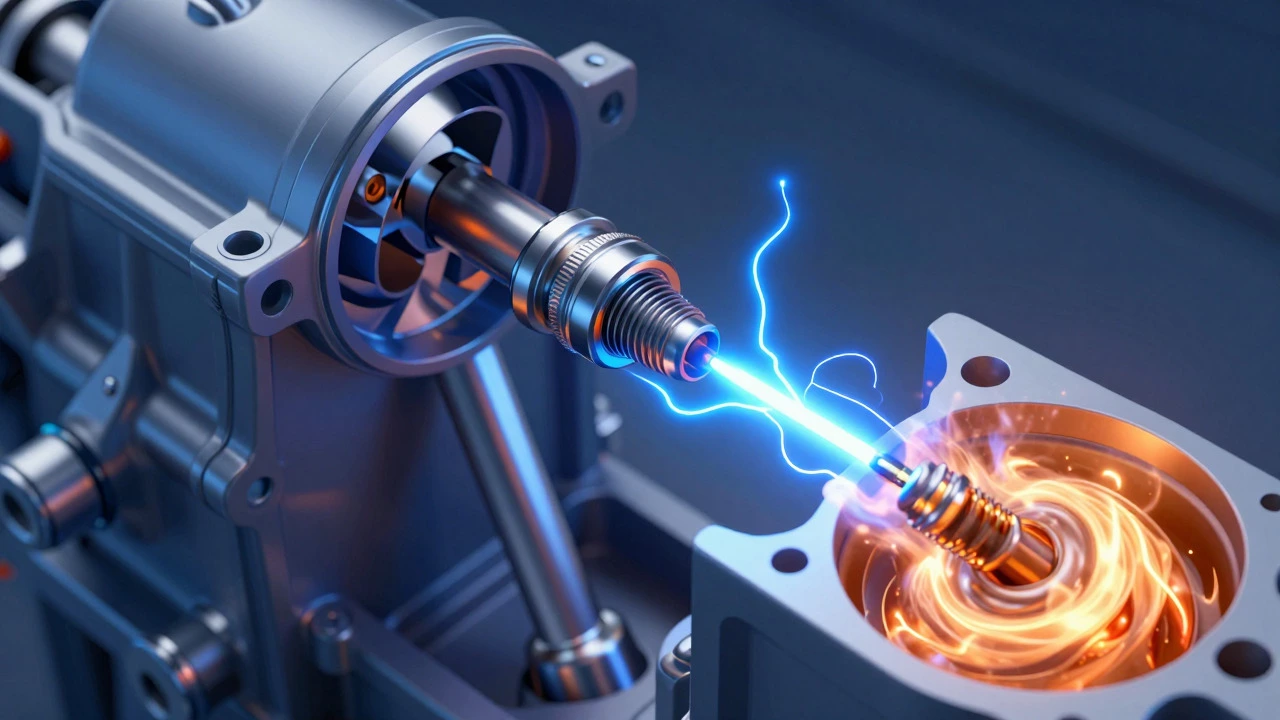
To understand the schedule, you need to understand what happens inside the cylinder. Every time your engine runs, thousands of times per minute, the spark plug creates an electric arc across a tiny gap between two electrodes. This arc jumps through the compressed air-fuel mixture, creating a controlled explosion that pushes the piston down.
This process is violent. The heat is intense-often exceeding 2,000 degrees Celsius during combustion. Over time, this extreme heat and constant electrical discharge cause the electrode tips to erode. The center electrode wears down, and the ground electrode erodes slightly. As they wear, the gap between them widens.
When the gap gets too wide, the electricity has a harder time jumping across it. The spark becomes weaker. A weak spark means incomplete combustion. Incomplete combustion means unburnt fuel dripping into your exhaust system. This leads to poor acceleration, rough idling, and significantly higher emissions. Eventually, the spark fails entirely in one or more cylinders, leading to a "misfire" condition that can damage your catalytic converter-a repair that costs hundreds of dollars more than the plugs themselves.
Signs Your Spark Plugs Need Replacing Now
Don’t wait for the odometer if your car is screaming at you. These symptoms indicate your current plugs are failing prematurely or have reached the end of their life.
- Rough Idling: When you stop at a red light, does the engine feel like it’s vibrating excessively or sounding uneven? This is often caused by misfires due to weak sparks.
- Poor Acceleration: If you step on the gas and the car feels sluggish or hesitates before taking off, the engine isn’t burning fuel efficiently.
- Increased Fuel Consumption: Are you filling up more often? Poor combustion efficiency means you’re wasting fuel. You might see a 10-15% drop in fuel economy with severely worn plugs.
- Difficulty Starting: If the engine cranks longer than usual before firing up, especially in cold weather, the spark may be too weak to ignite the mixture quickly.
- Check Engine Light: A flashing or steady check engine light with codes like P0300 (random misfire) or P0301-P0304 (cylinder-specific misfire) is a direct indicator of ignition issues.
Copper vs. Iridium: Is the Upgrade Worth It?
You might be tempted to upgrade from standard copper plugs to premium iridium ones. Here is the reality check. Copper plugs conduct electricity very well and are cheap. However, copper is soft and erodes quickly under high heat. Iridium is a dense, hard metal that can withstand much higher temperatures and erosion. Because iridium is so hard, manufacturers can make the center electrode extremely fine-sometimes thinner than a human hair.
A finer electrode concentrates the electrical energy, creating a hotter, stronger spark that requires less voltage from your coil. This improves combustion efficiency. So, yes, upgrading to iridium is worth it if you plan to keep the car for many years. You save labor costs over time because you replace them less frequently. Plus, you get better throttle response and potentially slightly better fuel economy.
| Material | Lifespan (km) | Cost Level | Best For |
|---|---|---|---|
| Copper | 30,000 - 48,000 | Low | Older vehicles, budget builds, frequent tuning changes |
| Platinum | 60,000 - 100,000 | Medium | Standard daily drivers, moderate driving conditions | g
| Iridium | 100,000 - 160,000+ | High | Modern engines, high-performance cars, long-term ownership |
Can You Change Them Yourself?
Replacing spark plugs is considered one of the few intermediate DIY jobs that actually saves significant money. Labor rates for mechanics in Auckland and other major cities can range from $80 to $120 per hour. Changing eight plugs on a V6 or V8 engine can easily cost $200-$300 in labor alone, even if the parts only cost $50.
However, it is not risk-free. The biggest danger is cross-threading the plug into the cylinder head. If you force a plug in crookedly, you can strip the threads in the aluminum head. Fixing that requires pulling the head and welding new threads-a job that can cost over $1,000. To avoid this:
- Use a torque wrench. Always tighten to the manufacturer’s specification (usually 15-25 Nm). Never guess.
- Use a spark plug socket with a rubber insert to grip the plug securely.
- Blow out the area around the plug well with compressed air before removing the old plug. Dirt falling into the cylinder can destroy the engine.
- Check the gap on new plugs with a feeler gauge, even if they are pre-gapped. Shipping vibration can knock them out of spec.
If your engine has deep-well plugs (common in some BMW, Mercedes, and modern Ford engines), where the plugs sit deep behind other components, consider leaving it to a pro. The access is tight, and the risk of dropping tools or stripping bolts is higher.

Does Driving Style Affect Replacement Intervals?
Absolutely. The numbers in the manual assume "normal" driving. What is normal? Mostly highway cruising at steady speeds. If you drive differently, you need to adjust your schedule.
Heavy Load Towing: If you tow a caravan or trailer regularly, your engine works harder, generating more heat. This accelerates electrode wear. Cut the recommended interval by 20-30%.
Short Trips: Frequently driving short distances where the engine never fully warms up causes moisture and fuel residue to build up on the plugs. This leads to fouling (carbon buildup) rather than erosion. Fouled plugs fail faster and cause starting problems.
Track Days / High RPM: Revving an engine to the redline increases combustion temperature and frequency. While iridium handles heat well, the sheer volume of sparks reduces lifespan. Inspect plugs after every few track days.
The Hidden Cost of Neglect: Catalytic Converter Damage
Here is why ignoring spark plugs is financially dangerous. When a plug misfires, raw, unburnt gasoline enters the exhaust stream. This fuel hits the hot catalytic converter an emission control device that converts toxic gases and pollutants in exhaust gas from an internal combustion engine into less-toxic exhaust gases. Inside the converter, this fuel ignites. The sudden spike in temperature can melt the ceramic honeycomb structure inside the converter.
A new catalytic converter costs anywhere from $800 to $2,500 depending on the vehicle. Replacing spark plugs costs less than $150 in parts. Doing it yourself brings that down to under $50. The math is simple. Regular plug replacement is insurance against catastrophic exhaust system failure.
Frequently Asked Questions
What happens if I don't change my spark plugs?
If you ignore worn spark plugs, your engine will begin to misfire. This leads to poor acceleration, rough idling, and reduced fuel economy. Over time, unburnt fuel can enter the exhaust system and overheat the catalytic converter, potentially destroying it. This results in expensive repairs far beyond the cost of new plugs.
Can I use any spark plug in my car?
No. You must use the correct heat range, thread size, reach, and gap specified by your vehicle manufacturer. Using a plug with the wrong heat range can cause pre-ignition (knocking) or fouling, both of which can damage the engine. Always consult your owner's manual or a reputable parts catalog.
How much does it cost to replace spark plugs?
Parts typically cost between $20 and $100 depending on the type (copper vs. iridium) and quantity. Labor varies by location and engine complexity, usually ranging from $100 to $300. DIY replacement is cheaper but requires basic tools and caution to avoid damaging the engine.
Do spark plugs affect fuel economy?
Yes. Worn spark plugs create a weaker spark, leading to incomplete combustion. This means your engine burns fuel less efficiently, which can reduce fuel economy by 10-15%. New, properly gapped plugs ensure optimal combustion and maximum mileage.
Should I replace all spark plugs at once?
It is highly recommended to replace all spark plugs simultaneously. Since they have been in service for the same amount of time, they are all wearing at similar rates. Replacing them together ensures uniform performance across all cylinders and avoids having to pay labor costs again shortly after.










Write a comment