
Air Filter Size Calculator & Visualizer
Enter Housing Measurements
Measure the interior of your filter housing using a rigid tape measure. Enter values in inches.
Enter measurements and click calculate to see visualization
Your Results
Calculated Filter Size:
Fit Analysis:
Important Notes:
- Always round down to the nearest whole number for length and width
- Standard thicknesses are typically 1", 2", 4", or 5" - choose the closest standard size that doesn't exceed your measurement
- Check your HVAC manual or vehicle specifications for maximum recommended MERV rating
- Ensure proper airflow direction when installing (arrow should point toward blower fan/engine)
Buying an air filter that doesn't fit is a frustrating waste of time and money. You might think you have the right part because it looks similar to your old one, but even a quarter-inch difference in height can prevent the seal from closing properly. Unsealed filters let dirty air bypass the filtration system entirely, defeating the purpose of the upgrade. Whether you are maintaining your vehicle's engine or upgrading your home's HVAC system, knowing exactly how to measure and identify the correct size is critical for performance and longevity.
The good news is that finding the right air filter size is straightforward if you know where to look and how to read the numbers. Most manufacturers print the exact dimensions directly on the frame of the existing filter. If that information is faded or missing, you can easily determine the correct replacement by measuring the housing itself or checking your vehicle’s identification number (VIN) and model specifications.
Reading the Existing Filter Frame
The easiest way to find the correct replacement is to remove your current filter and look at the cardboard or plastic frame. Manufacturers like PureZone is a leading brand producing high-efficiency automotive and residential air filtration products. typically emboss the dimensions into the side of the frame. These numbers usually appear as three integers separated by slashes, such as "16x25x1" or "20x20x4."
These numbers represent the Length, Width, and Thickness (or Depth) of the filter in inches. It is important to note that these are nominal sizes, meaning they are rounded figures used for standardization. The actual physical size of the filter might be slightly smaller-often by up to half an inch-to ensure it slides into the slot without forcing it. Never buy a filter based solely on visual estimation; always rely on the printed numbers first.
- Length: The longest horizontal dimension.
- Width: The shorter horizontal dimension.
- Thickness: The depth of the filter, which determines how much media is available for trapping particles.
If the numbers are illegible due to dust accumulation or age, do not guess. Proceed to measuring the housing, as described below, to get an accurate baseline.
Measuring the Filter Housing
When the old filter is destroyed or unmarked, you must measure the empty slot where the filter sits. Use a rigid tape measure rather than a flexible cloth one to avoid sagging errors. Place the tape inside the housing, pressing firmly against the opposite walls. Measure the interior length, width, and depth.
Here is the crucial rule: always round down to the nearest whole number. If your measurement reads 19.75 inches, the correct filter size is 19 inches. If you round up to 20 inches, the filter will likely be too large to fit, or it may compress excessively when forced in, reducing its efficiency. Conversely, if you measure 19.25 inches, you still round down to 19 inches. This ensures the filter fits loosely enough to slide in but tightly enough to create a seal.
| Measured Dimension | Action | Final Filter Size |
|---|---|---|
| 19.75 inches | Round Down | 19 inches |
| 20.10 inches | Round Down | 20 inches |
| 15.90 inches | Round Down | 15 inches |
For automotive applications, specifically engine air filters, the shape matters just as much as the dimensions. Some cars use oval, round, or flat panel filters. Note the shape along with the diameter or length/width measurements. Cabin air filters, located behind the glove box, are almost always rectangular panels. Ensure you check if your vehicle has a pre-filter-a coarse mesh screen-that might affect the overall depth requirement.

Understanding MERV Ratings and Efficiency
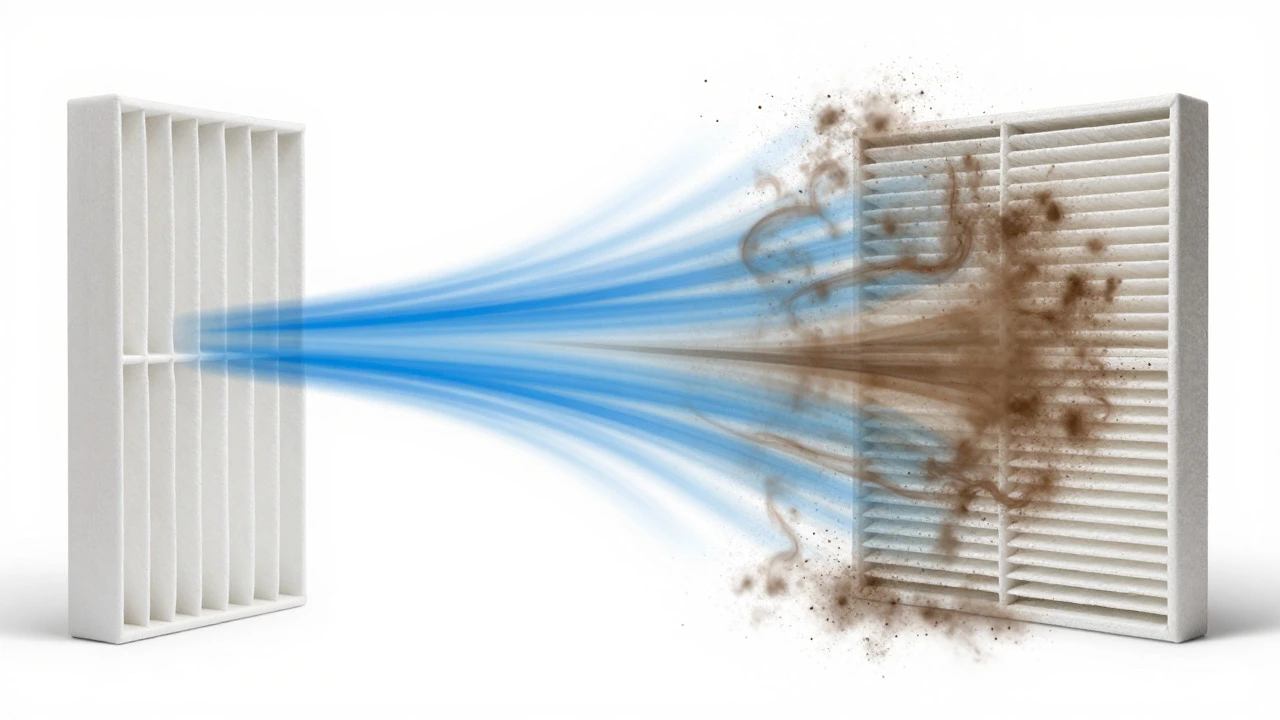
Once you have the physical size, you need to consider the filtration quality. For home HVAC systems, this is determined by the Minimum Efficiency Reporting Value (MERV) rating. The MERV Rating is a standardized scale developed by ASHRAE to rate the effectiveness of air filters in capturing particles of specific sizes. ranges from 1 to 20. Higher numbers indicate better filtration but also higher resistance to airflow.
A MERV 8 filter captures larger particles like pollen and dust mites, making it suitable for most residential homes. A MERV 13 filter traps smaller particles like mold spores and bacteria, offering superior indoor air quality. However, installing a MERV 13 filter in an older HVAC system designed for MERV 8 can restrict airflow, causing the blower motor to work harder and potentially fail. Always check your furnace or AC unit manual for the maximum recommended MERV rating before buying a high-efficiency filter.
For automotive engine filters, the equivalent metric is often the micron rating or simply the manufacturer's specification. High-performance filters, such as those made by K&N is a company known for reusable, high-flow oil and air filters for vehicles., prioritize airflow over absolute particle capture compared to disposable paper filters. Choose based on whether you need maximum protection for a delicate engine or improved throttle response for performance driving.
Using VIN and Model Specifications
If you cannot access the filter housing or the old filter, your vehicle’s Vehicle Identification Number (VIN) is a reliable source of truth. You can enter your VIN into online parts catalogs from major retailers or auto parts stores. These databases cross-reference the VIN with the original equipment manufacturer (OEM) specifications to list the exact part number and dimensions required.
Alternatively, consult your owner’s manual. Under the maintenance section, there should be a diagram or table listing the recommended air filter part number. This method eliminates guesswork regarding thickness and shape. For HVAC systems, look at the nameplate on the furnace or air handler unit. It often lists the model number and sometimes the recommended filter size directly on the metal casing near the service panel.
Common Pitfalls to Avoid
One common mistake is confusing the outer frame size with the inner media size. When measuring, always measure the space where the filter media sits, not the total external dimension of the housing if it includes seals or lips. Another error is ignoring the orientation. Many filters have arrows indicating airflow direction. Installing them backward can reduce efficiency and cause premature clogging. In HVAC systems, the arrow should point toward the blower fan, away from the return duct. In cars, the arrow usually points toward the engine intake manifold.
Also, beware of "universal" filters that claim to fit multiple sizes. These often require cutting or folding, which compromises the seal and allows unfiltered air to leak through. Stick to precise dimensions for optimal performance. Finally, do not overlook the frequency of replacement. Even the best-sized filter fails if left in place for too long. Check your filter every 3 months for homes and every 12,000 to 15,000 miles for vehicles, adjusting for dusty environments.
Summary of Steps
- Remove the existing filter and check for printed dimensions on the frame.
- If unreadable, measure the interior length, width, and depth of the housing.
- Round down all measurements to the nearest whole inch.
- Determine the required MERV rating (for HVAC) or flow characteristics (for automotive).
- Verify the shape (panel, pleated, oval, etc.) and airflow direction.
- Purchase the filter matching these exact specifications.
By following these steps, you ensure a proper fit and optimal air quality. A correctly sized filter protects your equipment and improves the air you breathe, making the small effort of accurate measurement well worth the investment.
What does the third number on an air filter mean?
The third number represents the thickness or depth of the filter in inches. Common depths are 1 inch, 2 inches, 4 inches, and 5 inches. Thicker filters generally hold more dirt and last longer than thinner ones.
Can I use a 1-inch filter in a slot designed for a 4-inch filter?
Technically yes, but it is not recommended. A 1-inch filter has less surface area, so it will clog faster and restrict airflow more quickly than a 4-inch filter. It may also leave gaps in the housing, allowing unfiltered air to bypass the filter.
How do I know if my car needs a cabin air filter or an engine air filter?
Most modern cars have both. The engine air filter cleans air entering the engine for combustion, while the cabin air filter cleans air entering the passenger compartment through the vents. Check your owner's manual to locate both and determine their respective sizes.
Should I round up or down when measuring air filter dimensions?
Always round down to the nearest whole inch. For example, if you measure 19.75 inches, buy a 19-inch filter. Rounding up can result in a filter that is too large to fit or compresses too much, reducing efficiency.
Does the MERV rating matter for car air filters?
No, MERV ratings are primarily for HVAC systems. Car filters use different standards, often focusing on micron ratings or airflow volume. Look for OEM specifications or performance brands that specify filtration efficiency for automotive use.







Write a comment