
Suspension Health Checker
Check if your vehicle shows signs of worn suspension with this quick survey. Select all symptoms you experience to get a personalized assessment.
If your car feels like it’s bouncing off every bump, or you notice it leaning too much when you turn, your suspension might be failing. It’s not just about comfort-worn suspension parts can turn a normal drive into a safety risk. You don’t need to be a mechanic to spot the warning signs. In fact, most drivers notice them long before they get checked. Here’s what to look for, based on real-world driving in New Zealand’s rough roads and pothole-filled city streets.
The Car Bounces Too Much
Try this simple test: push down hard on one corner of your car and let go. If it bounces two or three times before settling, your shocks or struts are worn out. Good suspension should absorb the push and return to normal in one smooth motion. If it keeps bouncing, the dampers have lost their ability to control spring movement. This isn’t just annoying-it means your tires aren’t staying planted on the road. On wet surfaces, that can mean longer stopping distances and a higher chance of hydroplaning.
Uneven Tire Wear
Look at your tires. If you see one side wearing down faster than the other, or if you notice cupping-a series of scalloped dips around the tread-it’s a classic sign of suspension trouble. Worn control arms, ball joints, or bushings let the wheel tilt at odd angles. That causes the tire to scrub against the road instead of rolling smoothly. I’ve seen tires replaced three times in two years on the same car, only to find out the real issue was a bent control arm. Fix the suspension first. Otherwise, you’re just throwing money away on new tires.
Steering Feels Loose or Wobbly
Does your car drift to one side when you let go of the wheel? Or does the steering feel vague, like you’re turning a rubber band instead of a solid bar? That’s not just alignment-it’s worn suspension components. Bad tie rods, worn ball joints, or loose sway bar links all make the front end feel disconnected. In Auckland, where roads are often uneven and crowned, this can make highway driving stressful. You’ll constantly correct your steering, and at higher speeds, the car might feel unstable. If you’re fighting the wheel more than usual, get it checked.
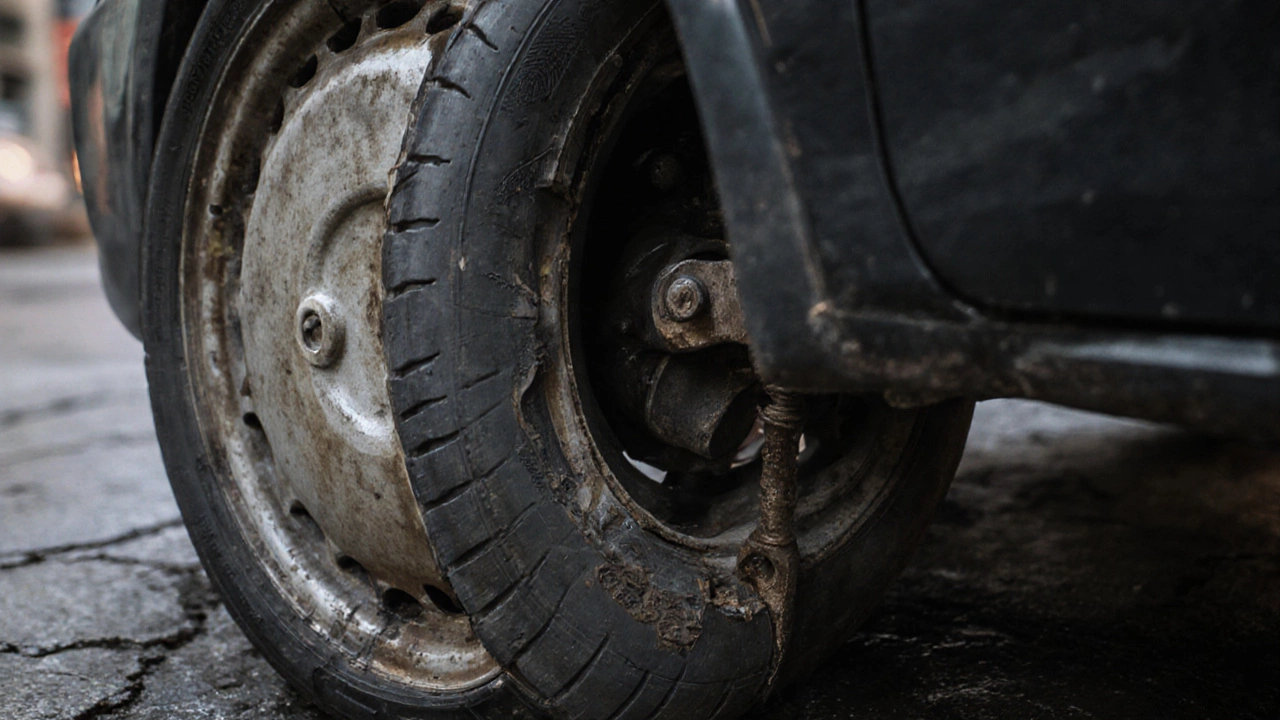
Noisy Suspension
Clunking, knocking, or creaking sounds when you go over bumps? That’s not normal. It usually means metal is hitting metal because rubber bushings have cracked or broken. The most common culprits are control arm bushings, sway bar end links, or shock mounts. You might hear it more clearly when you drive over speed bumps or gravel roads. Some people ignore these sounds, thinking they’re just road noise. But those noises are your suspension screaming for help. Left unchecked, they’ll cause more damage-like bent rods or broken mounts-and cost far more to fix later.
The Car Sinks or Leans Too Much
When you brake hard, your car should dip slightly, but not dive like a submarine. If the front end drops dramatically, your shocks are worn. Same goes for cornering: if your car leans so far you feel like you’re sliding sideways, the struts or springs are losing their support. This isn’t just about handling-it affects your visibility. When the nose dives, your headlights point upward, blinding oncoming traffic. And if the rear sags, your taillights point too low, making it harder for others to see you.
Fluid Leaks Around the Shocks
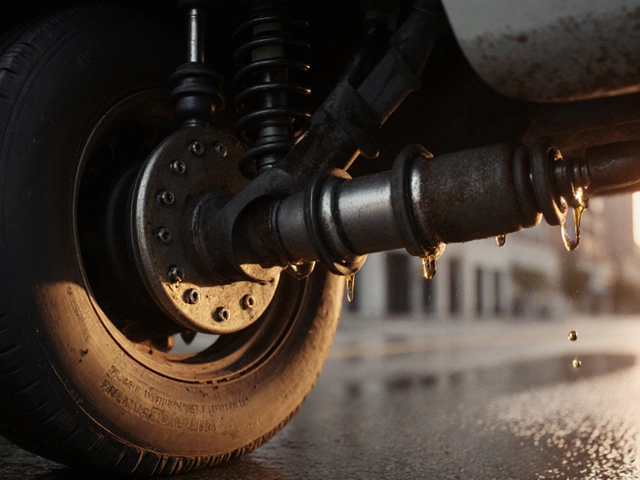
Look at the shock absorbers. If you see oil or grease on the outside of the casing, they’re leaking. Shocks work by forcing hydraulic fluid through tiny valves. When the seals wear out, fluid escapes, and the shock loses its damping power. A little oil isn’t a crisis, but if you can wipe a thick film off the shock body, it’s time to replace them. This is one of the easiest signs to spot-just clean the area with a rag, drive for a week, and check again. If it’s dirty again, you’ve got a leak.
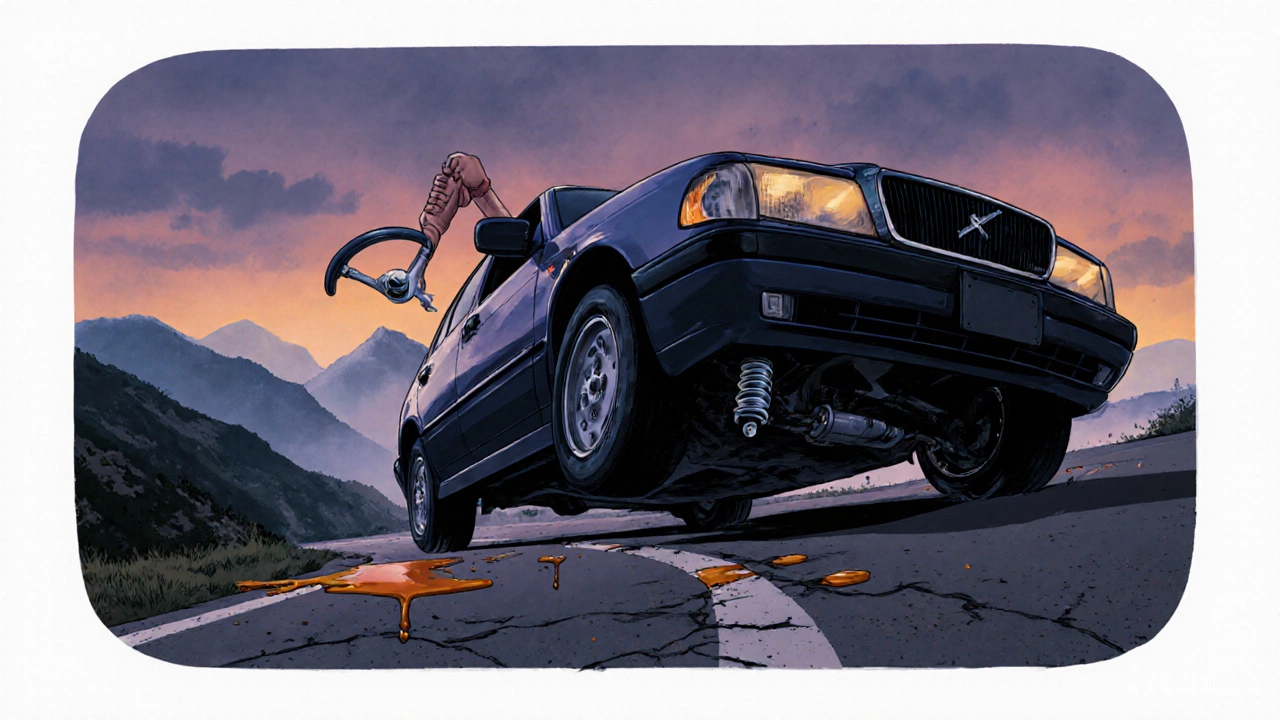
Braking Feels Less Responsive
Worn suspension doesn’t just affect how your car handles-it affects how it stops. When shocks are bad, the weight shifts unpredictably during braking. This can cause the front to dive, the rear to lift, and the tires to lose grip. You might notice longer stopping distances or the car pulling to one side when you brake. It’s not your brakes failing-it’s your suspension letting them down. In wet conditions, this can be dangerous. I’ve seen cars with perfect brake pads and rotors still take twice as long to stop because the suspension was shot.
What Happens If You Ignore It?
Driving with worn suspension isn’t just uncomfortable-it’s risky. Your tires wear out faster, your brakes work harder, and your steering becomes unpredictable. In a sudden maneuver, like swerving to avoid a pedestrian or animal, your car might not respond the way you expect. Insurance companies in New Zealand report that 12% of accidents involving loss of control are linked to suspension failure. And the cost of ignoring it? A $300 shock replacement can turn into a $2,000 repair job if you damage your wheels, steering, or alignment components.
What to Do Next
If you’ve noticed even one of these signs, don’t wait. Take your car to a trusted mechanic and ask for a full suspension inspection. A good shop will check: shocks, struts, control arms, ball joints, tie rods, bushings, and sway bar links. Most inspections take less than an hour. Don’t let them just say “everything looks fine”-ask to see the worn parts. A good technician will show you the cracked bushing or the leaking shock. If they won’t, find someone else.
Replacing suspension parts isn’t always cheap, but it’s one of the smartest investments you can make in your car. You’ll drive smoother, stop quicker, and protect your tires, brakes, and alignment. And in places like Auckland, where roads are rough and weather changes fast, good suspension isn’t a luxury-it’s a necessity.
How long do shocks and struts usually last?
Most shocks and struts last between 50,000 and 100,000 miles, but that depends on your driving. If you drive mostly on smooth highways, they can last longer. If you regularly drive on gravel roads, potholes, or mountain passes, they may wear out closer to 40,000 miles. In New Zealand, where many roads are rough, 60,000 miles is a common lifespan.
Can I drive with a bad suspension?
You can, but you shouldn’t. Driving with worn suspension reduces control, increases stopping distance, and causes uneven tire wear. It also puts extra stress on other parts like your steering and brakes. In wet or icy conditions, the risk of losing control rises significantly. If you notice multiple signs, get it fixed before your next long trip.
Do I need to replace shocks and struts in pairs?
Yes. Always replace them in pairs-front or rear. Even if only one side looks bad, the other is likely close to failing. Mismatched shocks cause uneven handling and can make your car pull to one side. It’s cheaper and safer to replace both at the same time.
Is suspension repair covered by warranty?
Most factory warranties cover suspension parts for 3 to 5 years or 60,000 to 100,000 kilometers, depending on the manufacturer. After that, it’s on you. Some extended warranties include suspension, but read the fine print. Normal wear and tear isn’t covered, only defects. If your shocks failed at 40,000 km and your warranty expired at 50,000 km, you’re likely out of luck.
Can I replace shocks myself?
It’s possible if you have experience with car repairs and the right tools. Replacing shocks is less complex than struts, which require a spring compressor. Strut replacement is best left to professionals. If you’re unsure, get it done right. A poorly installed shock can come loose while driving, which is extremely dangerous.





Write a comment