AC Filter Maintenance Calculator
Filter Type Identification
Select your filter type to get personalized maintenance guidance:
White/gray, flimsy, designed for single use
Metal frame with mesh/foam, designed for cleaning
I need help identifying my filter type
Usage Information
Maintenance Recommendation
Select your filter type and enter usage details to see your personalized maintenance plan.
5-Year Maintenance Cost Comparison
Ever opened up your air conditioner and seen that thick, dusty filter? You wonder: Can I clean my AC filter instead of replacing it? The answer isn’t simple. It depends on what kind of filter you have, how old it is, and how much gunk has built up over time. Most people assume cleaning is always better - cheaper, greener, smarter. But that’s not always true. Let’s cut through the noise.
Not All AC Filters Are Created Equal
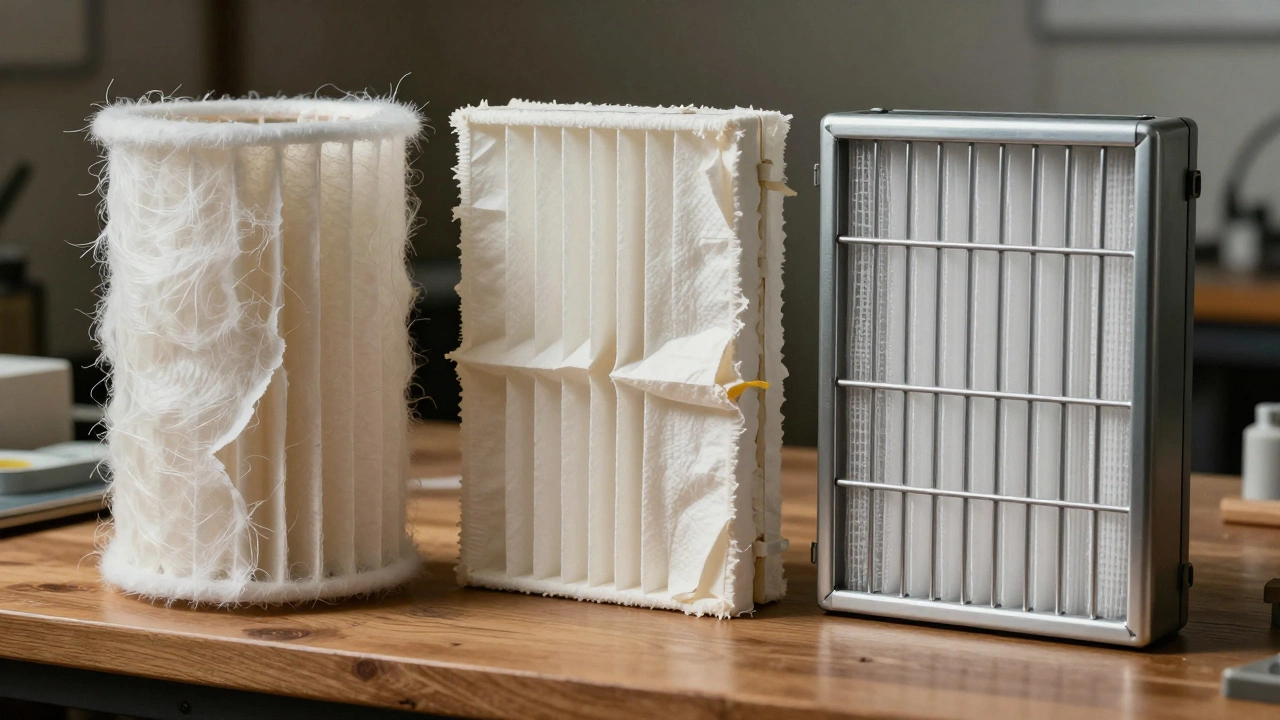
Your air conditioner doesn’t use just one type of filter. There are three main kinds you’re likely to find in a home in Auckland:- Disposable fiberglass filters - the cheapest, flimsiest ones. Usually white or gray, they’re meant to be tossed after 30 days.
- Pleated polyester or cotton filters - these are mid-range. They last longer, trap more dust, and sometimes claim to be washable.
- Reusable electrostatic filters - made of washable plastic or metal mesh. These are designed to be cleaned and reused for years.
If you’ve got the first type - disposable fiberglass - don’t even think about cleaning it. It’s like trying to wash a paper towel and expect it to hold water. The fibers break down, the structure collapses, and it stops working. You’re not saving money; you’re risking your system.
But if you’ve got a reusable filter - the kind with a metal frame and a mesh or foam insert - then yes, cleaning is not just okay, it’s required. These filters are built to last 5-10 years if you clean them every month or two.
How to Clean a Reusable AC Filter (Step by Step)
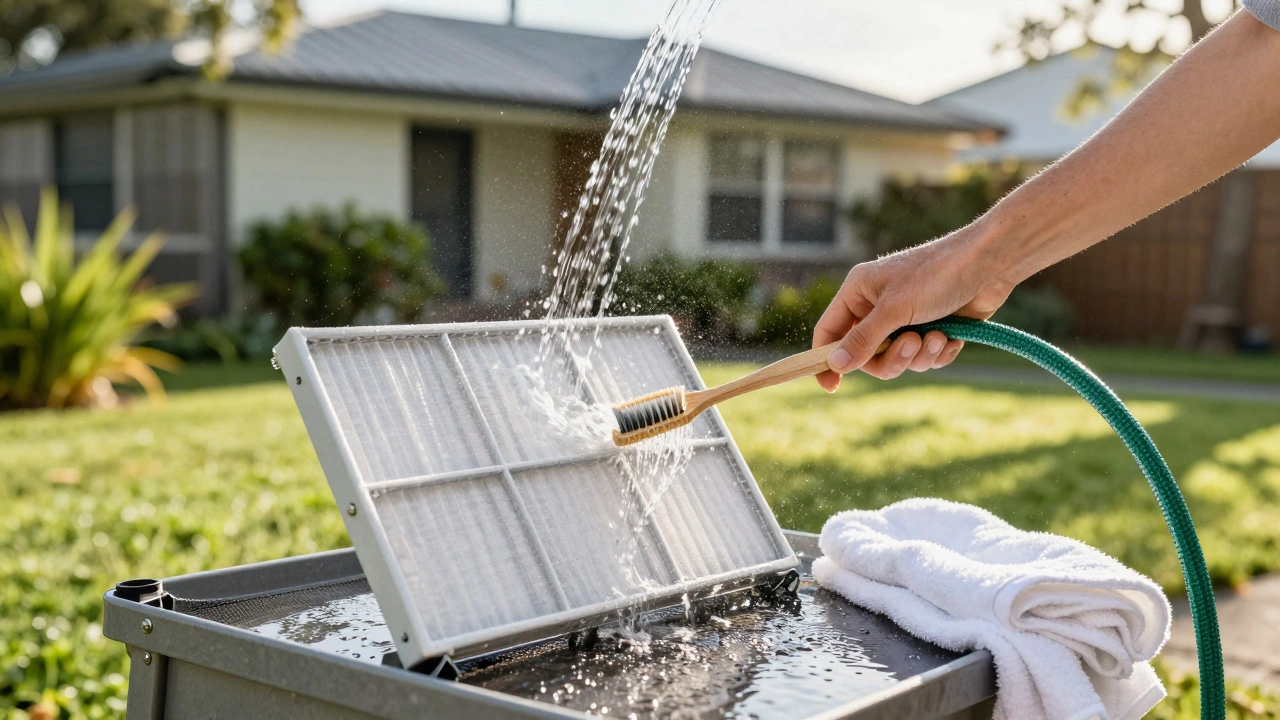
If your filter says "washable" or "reusable" on the frame, here’s how to do it right:- Turn off the AC unit. Seriously. Don’t just switch off the thermostat. Flip the breaker or unplug the unit. Safety first.
- Remove the filter gently. Don’t yank it. Some filters are stuck with dust buildup. Wiggle it side to side.
- Take it outside. You don’t want to be vacuuming dust back into your living room.
- Rinse with lukewarm water. Use a garden hose or showerhead. Don’t use hot water - it can warp the plastic frame.
- Use a soft brush. An old toothbrush works great. Gently scrub both sides to loosen trapped dust, pollen, and pet hair.
- Let it dry completely. This is the part most people mess up. Lay it flat on a towel in a shaded area. It needs at least 24 hours to dry. If you put a damp filter back in, you’re inviting mold.
- Reinstall it. Make sure it’s facing the right way. There’s usually an arrow on the frame pointing toward the blower.
Pro tip: If you’ve got pets or live near a busy road, clean it every 30 days. If you’re in a cleaner area - like a suburban Auckland home with no pets - every 60 days is fine.
When Cleaning Doesn’t Cut It
Even the best reusable filters wear out. Here’s when to stop cleaning and start replacing:- The filter looks thin or torn - if you can see light through it, it’s lost its filtering power.
- It smells musty - even after cleaning, if it still smells like wet dog or mold, it’s harboring bacteria.
- It’s been more than 5 years - material breaks down. Plastic becomes brittle. Mesh loses its electrostatic charge.
- Your energy bill spikes - a clogged or degraded filter forces your blower to work harder. That’s extra power, extra wear, extra cost.
One Auckland homeowner I spoke to replaced her filter every 3 years. She cleaned it monthly. Then, one winter, her AC started making a strange rattling noise. Turned out the filter frame had cracked from sun exposure. She didn’t even notice until the system started overheating.
What Happens If You Ignore Your Filter
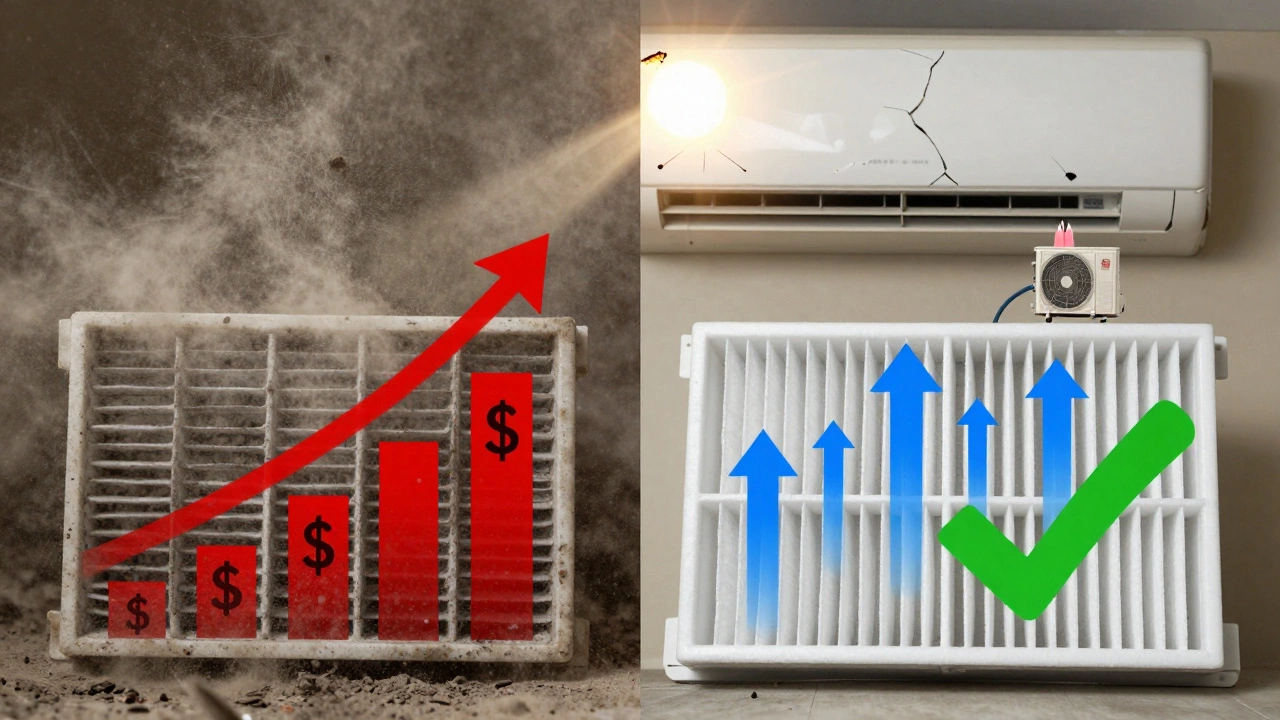
A dirty filter isn’t just about airflow. It’s about your health and your wallet.- Worse indoor air - dust, mold spores, and even insect parts get blown back into your living space. If you’ve got asthma or allergies, this makes symptoms worse.
- Higher electricity bills - a clogged filter can make your AC use up to 15% more power. In Auckland’s hot summers, that’s $50-$100 extra per season.
- System damage - your blower motor isn’t designed to push air through a brick. Over time, it overheats and burns out. Replacing a motor costs $600-$1,200. A new filter? $15.
And here’s the kicker: many HVAC technicians say that 60% of compressor failures they see are linked to dirty filters. That’s not a coincidence. That’s preventable.
Reusable vs. Disposable: The Cost Breakdown
Let’s say you run your AC 5 months a year. Here’s what you’ll spend over 5 years:| Filter Type | Cost per Unit | Replacement Frequency | Total Cost (5 Years) |
|---|---|---|---|
| Disposable fiberglass | $5 | Every 30 days | $300 |
| Pleated (disposable) | $15 | Every 90 days | $300 |
| Reusable electrostatic | $40 (one-time) | Cleaned monthly | $40 |
That’s a $260 savings in five years - just by switching to a reusable filter. And you’re not throwing plastic away every month. That’s better for the environment too.
What About Those "Washable" Pleated Filters?
You’ve probably seen them - the ones that say "washable" on the box. But here’s the truth: most of them aren’t designed to last. The pleats collapse after a few washes. The glue holding the frame together softens. The filtration efficiency drops by 50% after just 2-3 cleanings.Manufacturers market them as a middle ground. But in real-world use, they’re a trap. You pay more upfront, think you’re being smart, then end up replacing them every 6 months anyway.
If you’re going to go washable, go all in. Buy a true reusable filter - metal frame, washable foam or polyester mesh. Brands like Filtrete and Honeywell make them. Look for "permanent" or "reusable" on the packaging, not "washable."
Final Rule of Thumb
Here’s how to decide in 5 seconds:- If it’s flimsy, white, and looks like paper - replace it.
- If it’s thick, has a metal frame, and says "permanent" or "reusable" - clean it every 30-60 days.
- If it’s older than 5 years, smells bad, or looks worn - replace it.
Don’t let myths trick you. Cleaning a filter isn’t magic. It’s maintenance. And like changing your oil or replacing your wiper blades, it’s not optional if you want your system to last.
One last thing: if you’re not sure what filter you have, take a photo of it. Look at the model number on the frame. Google it. Most manufacturers list whether it’s disposable or reusable. Better yet - check the manual. If you lost it, search for your AC model + "filter type" online. Auckland’s climate is humid. Your filter works harder here than in drier cities. Treat it like your morning coffee - don’t let it go stale.
Can I clean a disposable AC filter and reuse it?
No. Disposable fiberglass filters are made of cheap, compressed fibers that break down when wet. Cleaning them doesn’t restore their structure - it just makes them weaker. They’ll let more dust through and may even fall apart inside your unit. Always replace them every 30 days.
How often should I clean my reusable AC filter?
Clean it every 30 days if you have pets, smoke indoors, or live near a busy road. If you’re in a cleaner environment, every 60 days is enough. Always let it dry completely before putting it back - damp filters grow mold.
What happens if I put a wet filter back in my AC?
You risk mold growth inside your ducts and blower housing. Wet filters also restrict airflow more than dry ones, forcing your system to work harder. This can lead to higher energy bills and even compressor damage over time. Always dry your filter for at least 24 hours before reinstalling.
Do I need to turn off the AC before removing the filter?
Yes. Even if the thermostat is off, the system might still be powered. Turning off the breaker or unplugging the unit prevents accidental startup while you’re handling the filter. It’s a simple step that avoids injury and damage.
Are washable filters worth the upfront cost?
Yes - if you buy a true reusable filter with a metal frame and durable material. A $40 filter that lasts 5-10 years saves you $200-$500 compared to buying disposable filters every month. But avoid "washable" pleated filters - they’re often a marketing gimmick that doesn’t last.





Write a comment