No. 1 Engine Oil: What Makes It the Best and How to Choose
When people talk about the no. 1 engine oil, a high-performance lubricant designed to protect modern engines under extreme heat and stress. Also known as top-tier motor oil, it’s not just about brand names—it’s about what’s inside and how it behaves when your engine is running at full throttle. The truth? There’s no single oil that wins every test, but the best ones share key traits: superior viscosity control, strong cleaning agents, and resistance to breakdown over time. These aren’t marketing buzzwords—they’re what keep your engine alive for 200,000 miles or more.
What makes one oil stand out? It’s not just the label. The synthetic oil, a chemically engineered lubricant with uniform molecules for consistent performance outperforms conventional oil because it flows better in cold weather and holds up under high heat. That’s why most carmakers now recommend it. But even among synthetics, not all are equal. Some contain extra detergents to keep carbon deposits off pistons. Others have friction modifiers to boost fuel economy. And then there are oils with additives designed for turbocharged engines—because turbos spin faster and get hotter than any part of your engine.
The motor oil types, categories defined by viscosity grades and base oil composition you choose should match your car’s needs, not your neighbor’s. A 5W-30 synthetic might be perfect for your Honda Civic, but your Ford F-150 with a 5.0L V8 needs a heavier 10W-40 with more zinc for the high-pressure valve train. And if you live where winters hit -20°C or summers hit 45°C, that matters too. Oil that’s too thick in cold weather won’t reach critical parts fast enough. Oil that breaks down too fast in heat leaves metal surfaces unprotected.
Here’s what most people miss: the no. 1 engine oil isn’t the one with the fanciest bottle. It’s the one that keeps your engine running clean, cool, and quiet for the longest time. That means looking past the ads and checking what your owner’s manual says. If your manual calls for API SP or ILSAC GF-6 certification, that’s your baseline. Anything below that is outdated. And if you’re driving in stop-and-go traffic, towing, or hauling heavy loads? You need an oil rated for severe service—even if your manual doesn’t say so.
Don’t fall for the myth that thicker oil = better protection. Modern engines are built with tight tolerances. Too thick, and the oil can’t flow where it’s needed. Too thin, and it won’t form a strong enough film. The right viscosity is a balance—and it’s different for every car.
What you’ll find below isn’t a list of top brands. It’s real-world insight from people who’ve tested oils under hard conditions—long highway hauls, freezing winters, dusty backroads, and high-mileage engines. You’ll see what happens when you stretch oil changes too far, why some oils cause more noise than others, and how to tell if your current oil is actually doing its job. No fluff. No hype. Just what works.
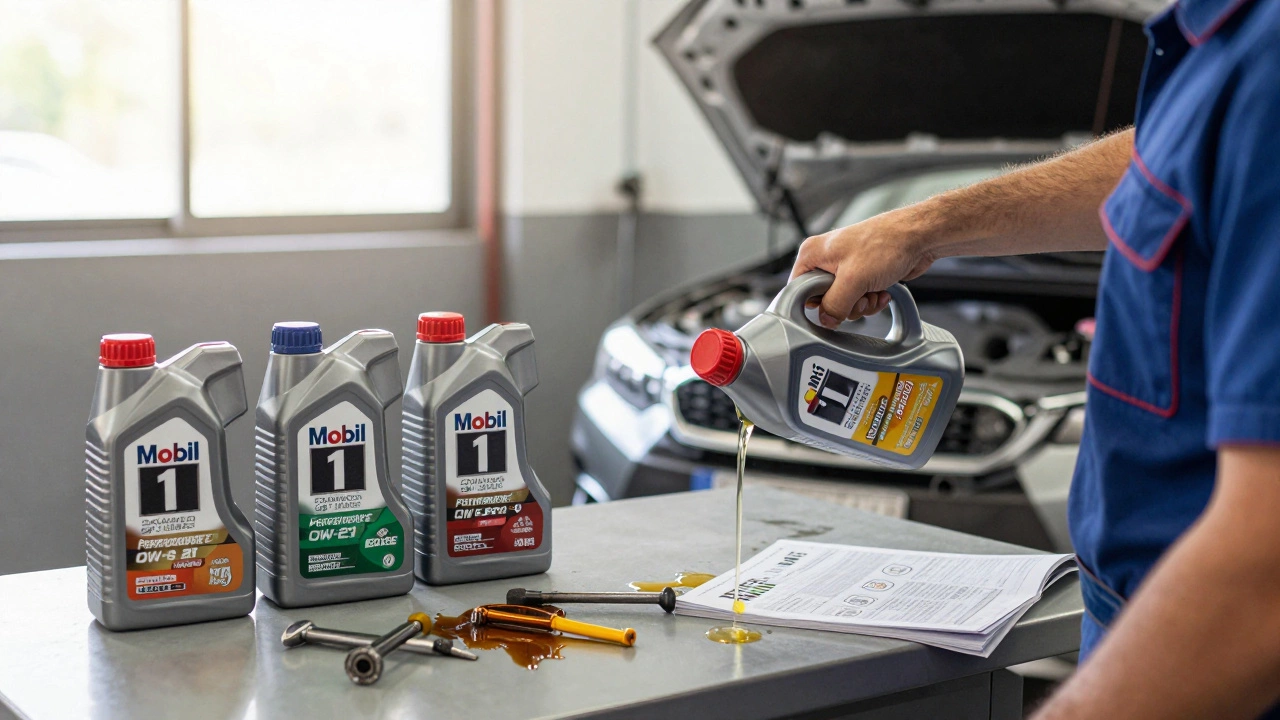
What Is the No. 1 Engine Oil? Top Choice for Performance and Longevity in 2025
There's no single 'No. 1 engine oil' for all cars, but the best choice is a full synthetic oil matched to your vehicle's specs. Learn what top mechanics use in 2025 and how to pick the right one for your engine.
CONTINUE READINGRECENT POSTS
-
Why Upgrade to Alloy Wheels? Benefits, Performance, and Style
Discover why drivers switch to alloy wheels, from improving braking and fuel efficiency to enhancing car aesthetics and resale value.
-

Is it Cheaper to Install Your Own Car Battery? Costs and Pros and Cons
Discover if installing your own car battery is actually cheaper. We compare DIY costs vs. professional shops, cover core charges, and explain the risks of modern car electronics.