Exhaust System Health Checker
Symptoms Check
Select any symptoms you're experiencing:
Select symptoms to get personalized recommendations
Every time you start your car, there’s a quiet but essential process happening beneath you. That low rumble, the slight vibration, the smell of exhaust fumes - all of it comes from one hidden part of your vehicle: the exhaust system. It’s not just a pipe that lets out smoke. It’s a carefully engineered network that handles heat, noise, and pollution. Without it, your car wouldn’t run safely - or legally.
What Exactly Is the Exhaust System?
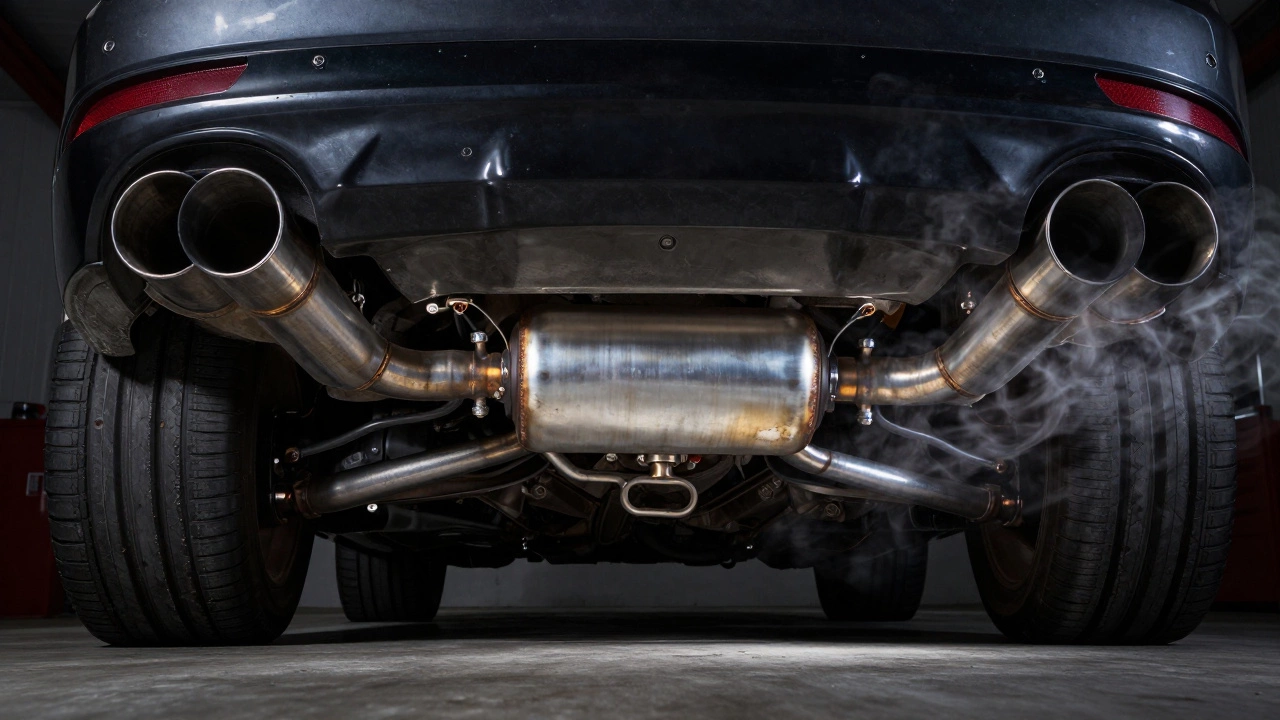
The exhaust system is a series of tubes, chambers, and components that guide harmful gases away from the engine and out of the car. It starts right at the engine’s exhaust manifold and ends at the tailpipe sticking out the back. Along the way, it does three big jobs: removes toxic fumes, reduces noise, and cleans up emissions before they hit the air.
Think of it like your car’s lungs. The engine burns fuel to make power, but that process creates waste gases - carbon monoxide, nitrogen oxides, unburned fuel, and water vapor. These gases are hot, dangerous, and loud. The exhaust system takes them, cools them down, mutes the noise, and filters out the worst pollutants before letting them out into the environment.
Key Parts of the Exhaust System
It’s not one single pipe. The exhaust system has five main parts, each with a specific job:
- Exhaust Manifold - This is the first piece. It collects hot gases from each cylinder of the engine and funnels them into one pipe. Made of cast iron or stainless steel, it handles temperatures over 800°C.
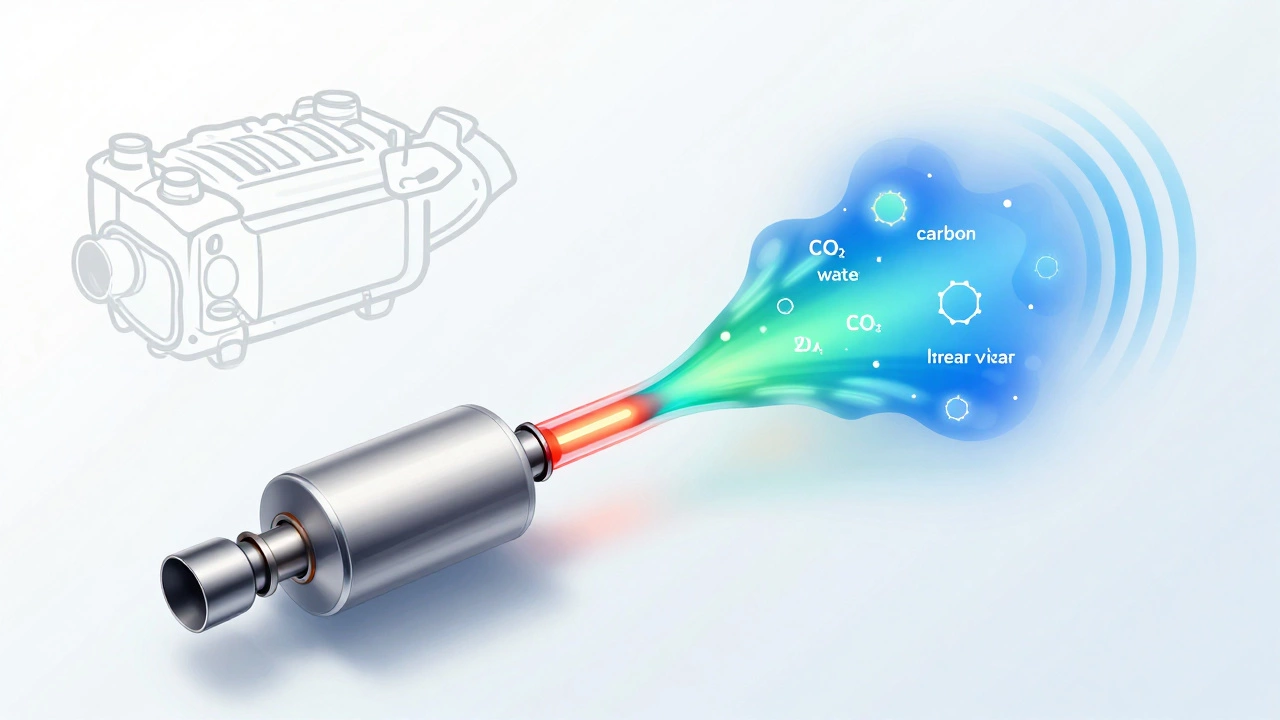
- Catalytic Converter - This is the environmental hero. Inside, it uses platinum, palladium, and rhodium as catalysts to turn toxic gases into less harmful ones. Carbon monoxide becomes carbon dioxide. Hydrocarbons turn into water and CO₂. Nitrogen oxides break down into nitrogen and oxygen. If this part fails, your car will fail emissions tests - and may even be illegal to drive.
- Muffler - This part silences the engine’s roar. It has chambers and tubes that cancel out sound waves. A loud, rattling exhaust? That’s usually a broken muffler. A good muffler doesn’t just make your car quieter - it makes it more pleasant to drive.
- Resonator - Often overlooked, this small chamber works with the muffler to cancel out specific sound frequencies. It’s not always present, but in modern cars, it helps fine-tune the exhaust note.
- Tailpipe - The final exit. It directs gases away from the car and out the back. Some tailpipes are just functional, others are polished for looks. But all of them need to be properly positioned so fumes don’t leak into the cabin.
These parts are connected by metal pipes, usually made of stainless steel or aluminized steel. The whole system hangs under the car with rubber hangers that absorb vibrations. If those hangers break, the exhaust can sag, rattle, or even scrape on the road.
Why the Exhaust System Matters
You might think the exhaust is just for noise and smell. But it does way more.
First, safety. A leak in the exhaust system can let carbon monoxide - an odorless, deadly gas - into your cabin. People have died from this. If you smell exhaust inside your car, or notice a hissing sound, get it checked immediately.
Second, performance. A clogged or restricted exhaust makes the engine work harder. That means less power, worse fuel economy, and more strain on the engine. A clean, free-flowing exhaust helps the engine breathe better. That’s why performance upgrades often start with the exhaust.
Third, the law. In New Zealand and most countries, cars must pass emissions tests. A failing catalytic converter or damaged exhaust will cause you to fail. In Auckland, the WOF (Warrant of Fitness) checks the exhaust for leaks and proper function. If your system is rusted or missing parts, you won’t pass.
Signs Your Exhaust System Is Failing
You don’t need a mechanic to tell you something’s wrong. Here are the real-world signs:
- Loud exhaust noise - A sudden roar, especially a rattling or booming sound, means a hole or broken muffler.
- Smell of exhaust inside the car - This is serious. It could mean a leak near the engine or a damaged seal.
- Decreased fuel efficiency - If you’re filling up more often and no other parts have changed, your exhaust might be restricting flow.
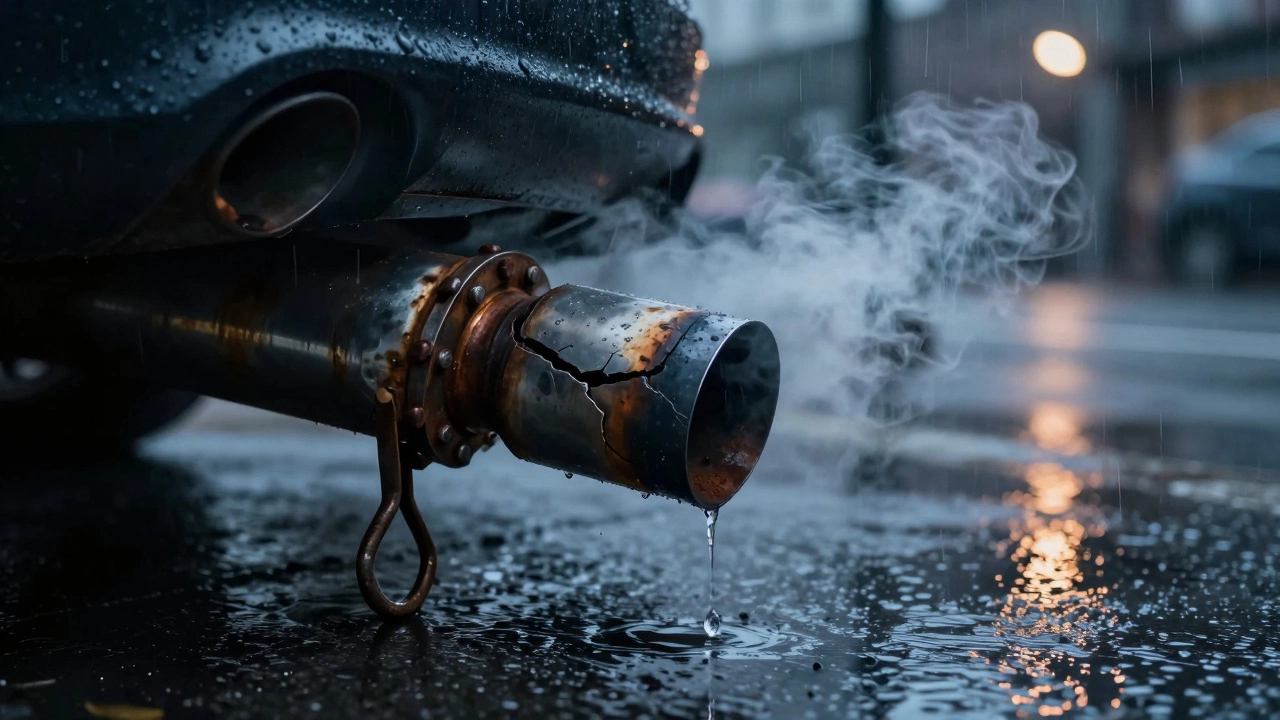
- Visible rust or damage - Salt and moisture cause rust. In Auckland’s damp climate, exhaust systems often corrode from the inside out. Look under the car for holes, sagging, or loose parts.
- Check engine light - Modern cars have oxygen sensors in the exhaust. If they detect abnormal gas levels, the light comes on. It’s often the catalytic converter failing.
One real example: A 2018 Toyota Corolla in Wellington had a slow leak near the manifold. The driver didn’t notice until they started feeling dizzy on long drives. By then, carbon monoxide had been seeping into the cabin for months. A simple inspection would’ve caught it early.
How Often Should You Check It?
There’s no set mileage for replacing the whole system - it lasts 5 to 10 years, depending on driving habits and climate. But you should inspect it every 12 months, especially if you drive in wet or salty conditions. Salt from winter roads (or sea air in coastal cities) eats through metal fast.
When you get your car serviced, ask the mechanic to look under the car. They should check for:
- Rust holes or cracks
- Loose or broken hangers
- Leaks at joints
- Condition of the catalytic converter
Replacing the whole system can cost between $800 and $2,500 depending on the car. But catching a small leak early? That might just cost $150 to weld a pipe or replace a gasket.
What Happens If You Ignore It?
Ignoring a bad exhaust isn’t just about noise or smell. It’s a chain reaction:
- Engine performance drops - you lose power and torque.
- Fuel economy falls - you spend more on gas.
- Emissions rise - you pollute more and risk failing inspections.
- Carbon monoxide leaks - you risk poisoning yourself or your passengers.
- Damage spreads - a broken hanger can cause the pipe to rub against the floor, creating more holes.
Some people think, “It’s just an exhaust - I’ll drive until it falls off.” But by then, you’re risking safety, spending more on repairs, and possibly breaking the law.
Modern Exhaust Tech
Today’s exhaust systems are smarter than ever. Many cars now have:
- Active exhaust valves - These open or close to change the sound. Quiet for city driving, loud for the open road.
- Electrically heated catalytic converters - They warm up faster after a cold start, reducing emissions in the first few minutes.
- Hybrid exhaust systems - In plug-in hybrids, the exhaust system shuts off when running on electric power.
These aren’t just for show. They help cars meet strict emissions standards while still letting drivers enjoy the sound they want.
Final Thought
The exhaust system is one of those parts you never think about - until it breaks. It’s not glamorous. It doesn’t make your car faster or look cooler. But it’s one of the most important safety systems you have. It protects you, your family, and the environment. A working exhaust means cleaner air, quieter streets, and a car that runs the way it should.
If you drive in New Zealand - especially in places like Auckland, Wellington, or Christchurch - your exhaust deals with salt, rain, and time. Don’t wait for the smell or the noise to tell you something’s wrong. Check it. Keep it clean. Keep it safe.
Can a broken exhaust system affect my car’s performance?
Yes. A clogged, leaking, or restricted exhaust forces the engine to work harder to push gases out. This reduces power, lowers fuel efficiency, and can trigger the check engine light. In extreme cases, it can cause overheating or damage to valves and pistons.
Is it illegal to drive with a loud or damaged exhaust in New Zealand?
Yes. Under New Zealand’s WOF regulations, your exhaust must be in good condition, not excessively loud, and free of leaks. Modified exhausts that exceed noise limits or remove the catalytic converter will fail inspection. Fines and forced repairs can follow.
How long does a typical exhaust system last?
A standard exhaust system lasts between 5 and 10 years. Stainless steel systems last longer - often over 12 years. Aluminized steel, common in budget cars, can rust in 3 to 5 years, especially in coastal or wet climates like Auckland.
What causes a catalytic converter to fail?
Catalytic converters fail from overheating, contamination, or physical damage. Common causes include using leaded fuel, engine misfires that send unburned fuel into the converter, or oil burning from worn engine seals. Once it’s clogged or coated, it can’t be cleaned - it must be replaced.
Can I drive my car if the exhaust is hanging off?
No. A hanging exhaust is dangerous. It can drag on the road, catch fire from heat, or break completely while driving. It also likely has leaks that let toxic fumes into the cabin. Stop driving immediately and get it towed.




Write a comment