Air Filter Recommendation Tool
Select your home's heating setup and dust concerns to find the best filtration strategy.
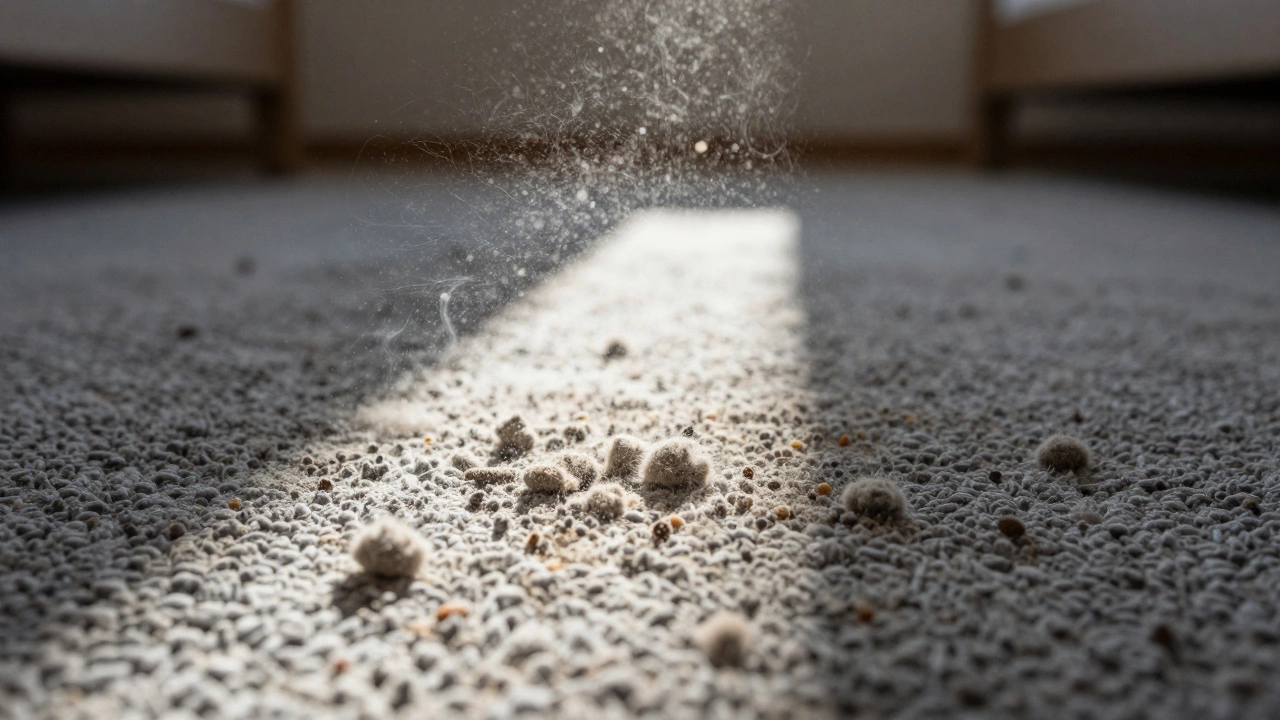
You wake up, sneeze, and look at your bedroom floor. It’s been clean for three days, yet there is a fresh layer of gray fuzz on the carpet. You aren’t imagining it. That dust is alive in your home, circulating through your HVAC system or hovering in the air until gravity pulls it down. If you are tired of wiping surfaces every other day, you have one question: which air filter actually removes the most dust?
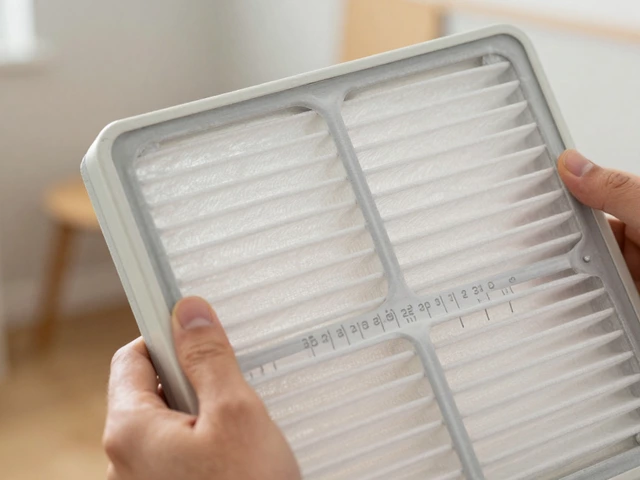
The short answer isn’t as simple as pointing to a single brand name. The best filter depends entirely on where you put it. Are you upgrading the white pleated panel in your furnace duct, or are you buying a standalone machine for your living room? The technology that works for one often fails in the other. Let’s break down the mechanics of dust capture so you stop throwing money at marketing hype.
Understanding the Enemy: What Is Dust?
Before picking a filter, you need to know what you are catching. Household dust is not just dirt from outside. It is a complex mix of biological and non-biological particles. According to research from the University of Arizona, a typical household contains about two pounds of dust mites. Your average dust cloud consists of dead skin cells, pet dander, pollen, mold spores, textile fibers from your clothes, and microscopic fragments of insects.
The size of these particles varies wildly. Visible dust bunnies are large aggregates, but the stuff that triggers allergies is tiny. We are talking about particles ranging from 0.3 microns (like smoke or bacteria) to 10 microns (like pollen). A good filter must handle this wide spectrum. If a filter only catches big stuff, you will still breathe in the allergens that make you itch. If it only catches small stuff, your floors will stay dirty. You need a balance.
The Gold Standard: True HEPA Filters
If you are looking for the absolute highest efficiency in particle removal, True HEPA is the benchmark. HEPA stands for High-Efficiency Particulate Air. This is not a marketing term; it is a strict standard defined by the U.S. Department of Energy and other international bodies.
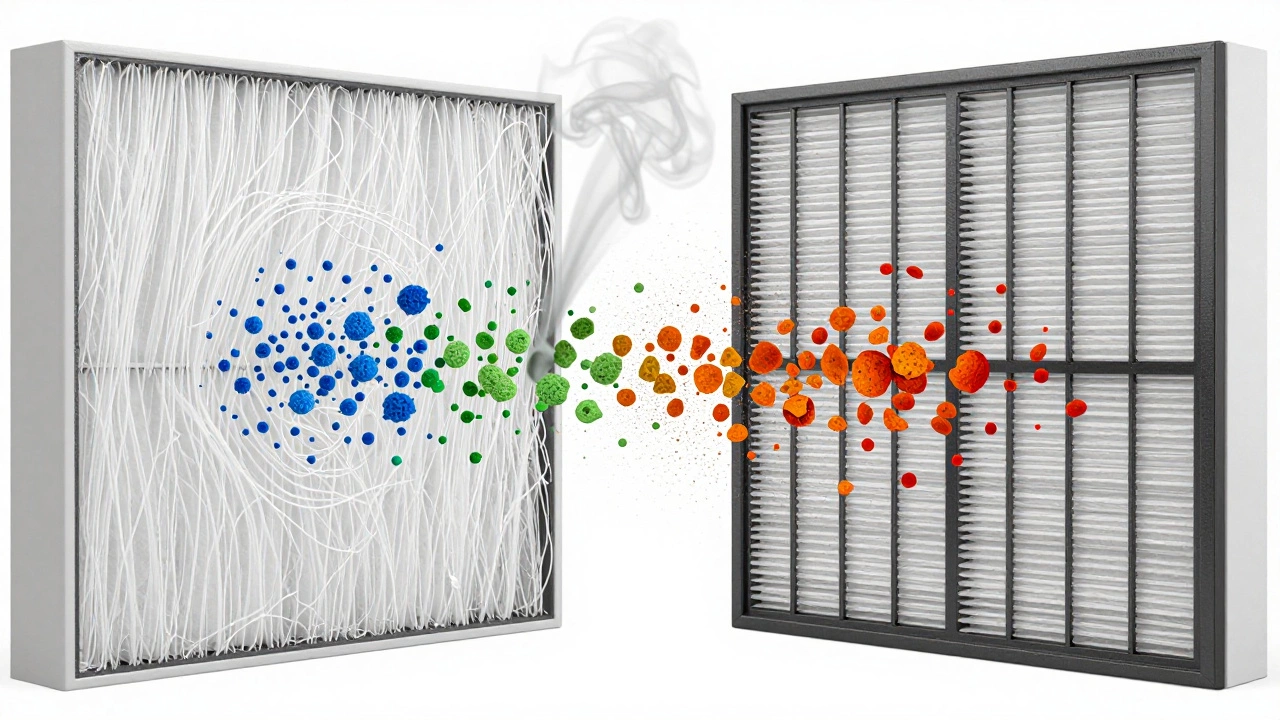
To be labeled "True HEPA," a filter must remove at least 99.97% of particles that are 0.3 microns in diameter. This specific size, 0.3 microns, is known as the Most Penetrating Particle Size (MPPS). It is the hardest size to catch because smaller particles get trapped by diffusion (they bounce around randomly and hit fibers), and larger particles get caught by interception (they are too big to slip through). The 0.3-micron particle slips through both mechanisms easily. If a filter can catch 99.97% of these difficult particles, it catches even higher percentages of both smaller and larger particles.
- Capture Rate: 99.97% at 0.3 microns.
- Mechanism: Mechanical trapping via impaction, interception, and diffusion.
- Best For: Standalone air purifiers in bedrooms or living rooms.
- Limitation: High resistance to airflow. Most central HVAC systems cannot push air through a true HEPA filter without straining the blower motor.
Do not confuse "True HEPA" with "HEPA-type" or "HEPA-like." Those terms mean nothing. They usually refer to cheap synthetic filters that might catch 50-70% of dust. If the box does not say "True HEPA" or "H13/H14 Class," it is likely a placebo.
The HVAC Solution: MERV Ratings
If you want to reduce dust entering your entire house through the heating and cooling vents, you need to look at your furnace filter. Here, we use the MERV rating. MERV stands for Minimum Efficiency Reporting Value, established by ASHRAE (American Society of Heating, Refrigerating and Air-Conditioning Engineers).
Unlike HEPA, which is a binary pass/fail for high efficiency, MERV is a scale from 1 to 16 (with specialized filters going up to 20). For residential dust control, here is how the tiers perform:
| MERV Range | Particle Size Caught | Dust Removal Capability | Airflow Impact |
|---|---|---|---|
| MERV 1-4 | >10 microns | Poor. Catches lint and large fibers only. | Low |
| MERV 5-8 | 3-10 microns | Moderate. Catches pollen and mold spores. | Low-Medium |
| MERV 9-12 | 1-3 microns | Good. Catches fine dust, lead particles, and some bacteria. | Medium |
| MERV 13-16 | 0.3-1 micron | Excellent. Approaches medical-grade filtration. | High |
For most homes, MERV 11 or MERV 12 is the sweet spot. These filters catch the majority of visible dust and allergens without restricting airflow so much that your furnace overheats. Going to MERV 13+ requires a high-static pressure rated HVAC system. If you install a MERV 16 filter in an older home, you might freeze in winter because the air simply won’t move. Check your manufacturer’s manual before buying high-MERV filters.
The Controversial Option: Electrostatic and Washable Filters
You will see many ads for washable, permanent metal mesh filters that claim to save money over time. Some of these use electrostatic charges to attract dust. While they sound eco-friendly, they generally perform worse than disposable pleated filters for fine dust.
Electrostatic filters work by charging particles as they pass through a grid, causing them to stick to collection plates. The problem? The charge dissipates over time, especially in humid environments. Once the charge drops, the filter becomes a simple screen that lets most dust pass through. Furthermore, cleaning them is labor-intensive. If you do not scrub them perfectly, residual dust acts as a seed for new accumulation, reducing efficiency further.
Disposable pleated filters made from polyester or cotton blends offer consistent performance because the fiber density is uniform. When they get clogged, you throw them away. With electrostatic filters, you are constantly battling diminishing returns.
Why Your Current Filter Might Be Failing
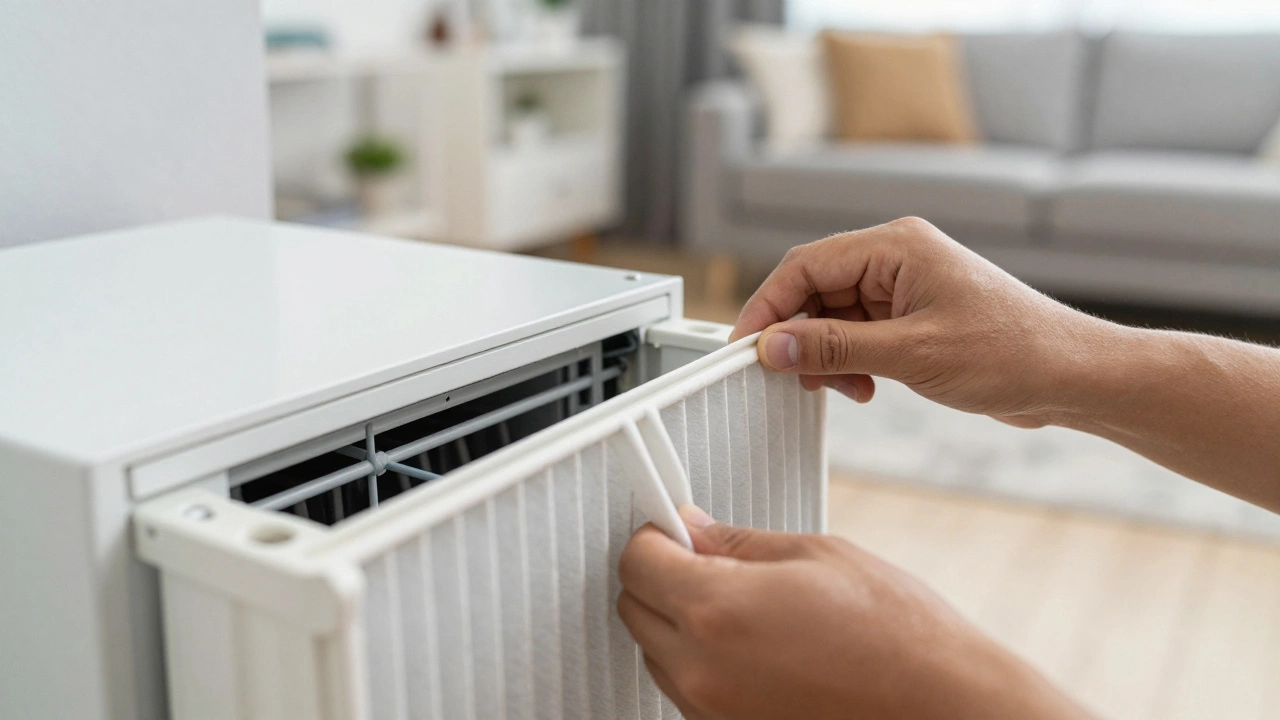
Even the best filter in the world will fail if installed incorrectly. A common mistake is leaving gaps between the filter frame and the housing slot. Air follows the path of least resistance. If there is a half-inch gap, 50% of your air will bypass the filter entirely, carrying all its dust with it.
Check the arrow on the side of your filter. It indicates airflow direction. If you install it backward, the structural support of the filter media faces the incoming air. This can cause the media to collapse under pressure, creating channels for dust to escape. Always ensure the arrow points toward the furnace blower or into the intake of your portable unit.
Another issue is pre-filtering. If you have a whole-house system, consider adding a pre-filter upstream of your main filter. This coarse screen catches hair, pet fur, and large debris, extending the life of your expensive HEPA or high-MERV filter behind it.
Choosing Based on Your Home Setup
Your decision should hinge on your infrastructure. Do you have central forced-air heating and cooling? If yes, focus on MERV ratings. Aim for MERV 11-13 if your system allows it. Replace these filters every 90 days, or sooner if you have pets.
If you rely on baseboard heaters, window AC units, or live in an apartment where you cannot change the central filter, you need standalone air purifiers. In this case, buy a unit with a True HEPA filter. Look for Clean Air Delivery Rate (CADR) numbers. A high CADR for dust means the unit moves enough air to cycle the room’s volume multiple times per hour. A fancy filter in a weak fan is useless.
For maximum dust reduction, combine both approaches. Use a MERV 12 filter in your HVAC to stop bulk dust from circulating, and run a HEPA purifier in your bedroom to capture the microscopic allergens that settle while you sleep.
Maintenance Matters More Than Marketing
A clogged filter stops working. As dust builds up, the pores in the filter media close. Airflow drops. In HVAC systems, this causes the blower motor to work harder, increasing energy bills and risk of failure. In portable purifiers, the fan slows down, reducing CADR.
Set a reminder on your phone. For standard fiberglass filters, check monthly. For pleated MERV 8-11 filters, check every two months. For high-density MERV 13 or HEPA filters, check every month. If the filter looks dark gray or black, replace it immediately. Do not try to vacuum a disposable filter; you will damage the media structure.
Can I use a HEPA filter in my furnace?
Generally, no. True HEPA filters create significant air resistance (high static pressure). Most residential furnaces are not designed to push air through such dense media. Using one can strain your blower motor, leading to costly repairs or system failure. Stick to MERV 13 or lower for central HVAC unless your manufacturer explicitly approves HEPA.
What is the difference between MERV 11 and MERV 13?
MERV 11 captures particles larger than 1 micron, including fine dust and some bacteria. MERV 13 captures particles as small as 0.3 microns, including virus-sized particles and finer smoke. MERV 13 is more efficient but restricts airflow more significantly. Choose MERV 13 only if your HVAC system has sufficient static pressure capacity.
Are washable air filters better for dust?
No. Washable metal mesh filters typically have low efficiency for fine dust. They act more like screens than filters. While they save money on replacements, they allow most allergens and fine particulates to pass through. Disposable pleated filters provide superior dust capture due to their dense fiber matrix.
How often should I change my air filter?
It depends on usage and environment. In a standard home with no pets, change 1-inch filters every 90 days. If you have pets or high dust levels, change them every 60 days. Thicker 4-5 inch filters can last 6-12 months. Always inspect visually; if it looks gray, replace it.
Does a higher MERV rating always mean better air quality?
Not necessarily. If the MERV rating is too high for your system, airflow decreases. Poor airflow reduces heating and cooling efficiency and can cause indoor humidity issues. The "best" filter is the highest MERV rating your system can handle without compromising airflow. Consult your HVAC technician if unsure.


Write a comment