
Spark Plug Calculator
Find out how many spark plugs your car has based on its engine type. Most gasoline engines have one spark plug per cylinder, but there are exceptions.
Most people don’t think about spark plugs until their car won’t start. But if you’ve ever wondered how many spark plugs are in a car, the answer isn’t as simple as "one per engine." It depends on the engine design, the number of cylinders, and even the manufacturer’s choices. Let’s break it down so you know exactly what’s under your hood.
One Spark Plug Per Cylinder - Usually
The most common setup in modern cars is one spark plug per cylinder. That means if your car has a 4-cylinder engine, you’ll find four spark plugs. A V6? Six spark plugs. A V8? Eight. This is the standard design used by nearly all gasoline-powered vehicles sold in the U.S. and Europe over the last 30 years.
Why this setup? Each cylinder needs a spark to ignite the air-fuel mixture. One spark plug does the job efficiently and reliably. It’s simple, cost-effective, and easy to maintain. Most mechanics will tell you this is the norm - and if your car has a different number, it’s worth checking why.
What About Twin Spark Engines?
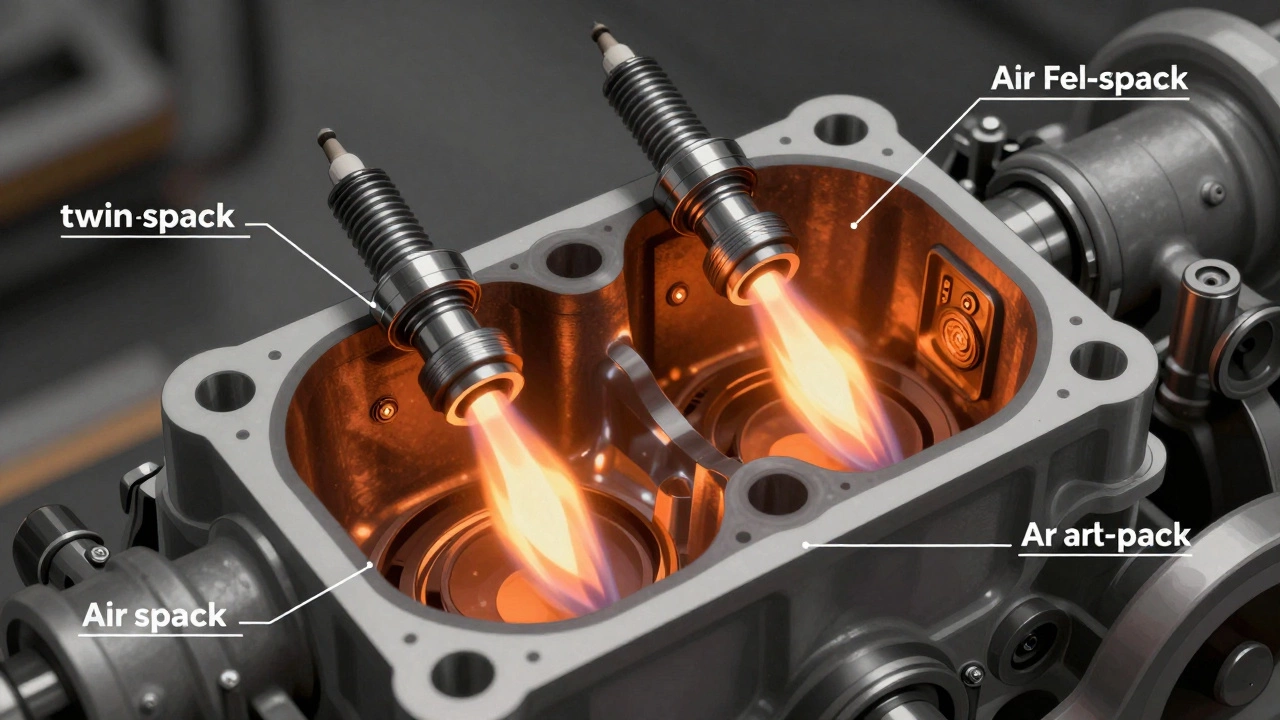
Some engines, especially high-performance or older European models, use two spark plugs per cylinder. These are called twin-spark or dual-ignition systems. Brands like Alfa Romeo, Honda (in certain models like the CBR600 motorcycle engine), and some Ferrari and Maserati engines use this setup.
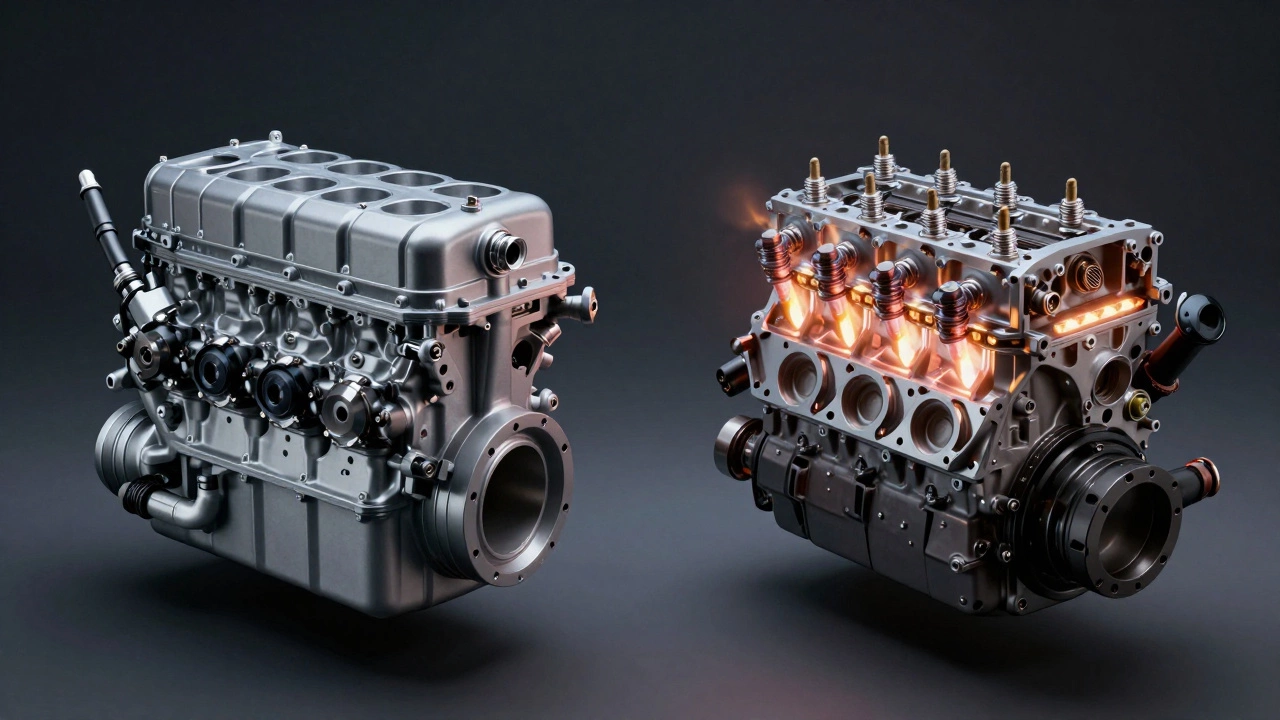
The idea? Two sparks mean more complete combustion. That leads to better fuel efficiency, lower emissions, and more power. But it also means twice the spark plugs. So a 4-cylinder engine with twin spark plugs has eight total. You’ll find these mostly in performance cars or models built before 2010. Most new cars today don’t use this design anymore - it’s been replaced by better fuel injection and engine management systems.
Do Diesel Engines Have Spark Plugs?
No. Diesel engines don’t use spark plugs at all. They rely on compression ignition. The air in the cylinder gets squeezed so hard it gets hot enough to ignite the diesel fuel without a spark. That’s why diesel trucks and SUVs don’t have spark plug wires or coils. If you’re looking under the hood of a diesel and can’t find spark plugs, that’s normal.
Some older diesel engines did use glow plugs to help start in cold weather, but those aren’t spark plugs. Glow plugs heat the air in the cylinder before startup - they don’t create a spark. Confusing them with spark plugs is common, but they’re completely different components.
How to Find Out How Many Spark Plugs Your Car Has
If you’re not sure how many spark plugs are in your car, here’s how to find out:
- Check your owner’s manual. Most manuals list engine specs, including the number of cylinders and spark plugs.
- Look at the engine. Count the number of fuel injector lines or valve covers - each usually corresponds to one cylinder.
- Search online. Type your car’s year, make, model, and engine size (e.g., "2020 Honda Civic 2.0L spark plug count"). Reliable automotive sites like RepairPal or CarBibles will give you the exact number.
- Count them yourself. Pop the hood, locate the ignition coils or spark plug wires, and follow them to the engine. Each wire or coil connects to one spark plug.
Pro tip: If you’re replacing spark plugs, always buy the exact type listed in your manual. Using the wrong plug - even by a millimeter - can cause misfires, poor fuel economy, or engine damage.
What Happens If You Have the Wrong Number?
Some people accidentally remove or install the wrong number of spark plugs. Here’s what can go wrong:
- Missing a plug: One cylinder won’t fire. Your car will run rough, shake, and lose power. You might even see a check engine light.
- Extra plug: You can’t install a spark plug where there’s no cylinder. If you’re trying to add one, you’re probably confusing a sensor or vacuum line.
- Wrong type: Even if you have the right number, using a plug with the wrong heat range or thread size can melt the electrode or strip the cylinder head.
Most modern cars have diagnostic systems that catch spark plug issues. If your car misfires, the computer will often log a code like P0301 (cylinder 1 misfire) or P0304 (cylinder 4 misfire). That tells you exactly which plug to check.
When to Replace Spark Plugs
Spark plugs don’t last forever. Most manufacturers recommend replacing them every 30,000 to 100,000 miles, depending on the type:
- Standard copper plugs: Replace every 30,000-40,000 miles.
- Platinum plugs: Last 60,000-100,000 miles.
- Iridium plugs: Can go 100,000-120,000 miles.
Iridium plugs are now the most common in new cars because they last longer and deliver a stronger spark. If your car came with iridium plugs, don’t switch to cheaper copper ones - you’ll end up replacing them twice as often.
Common Myths About Spark Plugs
There are a lot of myths floating around. Let’s clear up a few:
- Myth: More spark plugs = more power. Reality: Two plugs per cylinder only help in specific engines. In most cars, it makes no difference.
- Myth: Spark plugs can be cleaned and reused. Reality: Cleaning a spark plug with sandpaper or a wire brush damages the electrode. Replace them - they’re cheap.
- Myth: All spark plugs are the same. Reality: Thread size, reach, heat range, and electrode material vary by engine. Using the wrong one can crack the cylinder head.
Final Answer: How Many Spark Plugs Are in a Car?
For the vast majority of gasoline-powered cars on the road today, the number of spark plugs equals the number of cylinders. So:
- 4-cylinder engine? 4 spark plugs.
- 6-cylinder engine? 6 spark plugs.
- 8-cylinder engine? 8 spark plugs.
Exceptions exist - twin-spark engines, older European models, or high-performance setups - but they’re rare. If you’re not sure, check your manual or search your exact car model. And if you’re replacing them, make sure you get the right type. A few dollars spent on the correct spark plug can save you hundreds in engine damage down the road.
Do all cars have the same number of spark plugs?
No. Most gasoline engines have one spark plug per cylinder, so a 4-cylinder car has four, and a V8 has eight. But some older or high-performance engines use two spark plugs per cylinder, doubling the count. Diesel engines have zero spark plugs because they use compression ignition instead.
Can I drive my car if one spark plug is missing?
You can, but you shouldn’t. Missing a spark plug means one cylinder isn’t firing. The engine will run very roughly, lose power, and may misfire badly. Over time, unburned fuel can damage the catalytic converter. You might also trigger a check engine light. Get it fixed as soon as possible.
How do I know if my spark plugs need replacing?
Signs include poor fuel economy, rough idling, difficulty starting the engine, or engine misfires. Modern cars often show a check engine light with a misfire code (like P0302). If your car has over 60,000 miles and you’ve never changed the plugs, it’s likely time. Always follow the manufacturer’s replacement interval in your manual.
Are iridium spark plugs worth the extra cost?
Yes, if your car came with them. Iridium plugs last longer (up to 120,000 miles) and provide a more consistent spark than copper or even platinum. They’re especially good for high-compression or turbocharged engines. If you switch to a cheaper plug, you’ll need to replace them more often - which could cost more in labor over time.
Can I replace spark plugs myself?
Yes, and it’s one of the easier DIY repairs. You’ll need a spark plug socket, extension, and torque wrench. Remove the ignition coil or plug wire, then unscrew the old plug. Don’t force it - if it’s stuck, use penetrating oil. Install the new plug by hand first, then torque it to the spec in your manual. Over-tightening can crack the cylinder head.






Write a comment